
How to Choose Granulation Equipment for Fertilizer Raw Materials
A fertilizer production line‘s granulation performance depends on matching equipment to raw material properties. The same line may produce strong urea granules but suffer roller corrosion with ammonium chloride. A machine that handles organic fertilizer may shatter high-purity ammonium sulfate powder. The key question is not which machine is best, but which granulation method best matches your raw material. Understanding fertilizer granulation process fundamentals is essential before investing in any equipment.
This article covers five raw materials — urea, ammonium chloride, ammonium sulfate, humic acid, and organic waste — across moisture, viscosity, heat sensitivity, and corrosiveness. For granulator comparisons, see our article Disc Granulator vs. Rotary Drum vs. Extrusion Granulator. For organic fertilizer processing, see Complete Guide to Organic Fertilizer Production Line Equipment.
1. How Raw Material Properties Determine Granulation Method
Before choosing equipment, answer four questions about fertilizer raw material properties:
Moisture: High moisture (>25%) suits wet granulation; low moisture (<15%) suits dry extrusion.
Viscosity: Can material form granules in a drum? Low adhesion needs binders or steam.
Heat sensitivity: Will material decompose or lose activity? Bio-organic and some organics need low-temperature granulation.
Corrosiveness: Chlorides, sulfates, and other corrosive components determine contact-part materials.
2. Urea: High-Tower Melt Granulation
Urea is the world’s most widely used nitrogen fertilizer. For urea-based compound fertilizer production, high-tower melt granulation is the mainstream route. This process melts urea (and other raw materials) into a low-moisture slurry, which is sprayed from the top of a tower and solidifies into spherical granules as it falls and cools against rising air. Compared with traditional drum granulation, high-tower melt granulation offers significantly higher hourly output, stronger granules, and lower energy consumption — the melt’s low moisture content eliminates the need for a separate drying step. Granule surface is smooth and glossy, with high mechanical strength and low caking tendency. For urea granulation machine for sale options, double-roller extrusion granulators start at approximately $3,500–$9,000 per set, making them accessible for small-to-medium production.
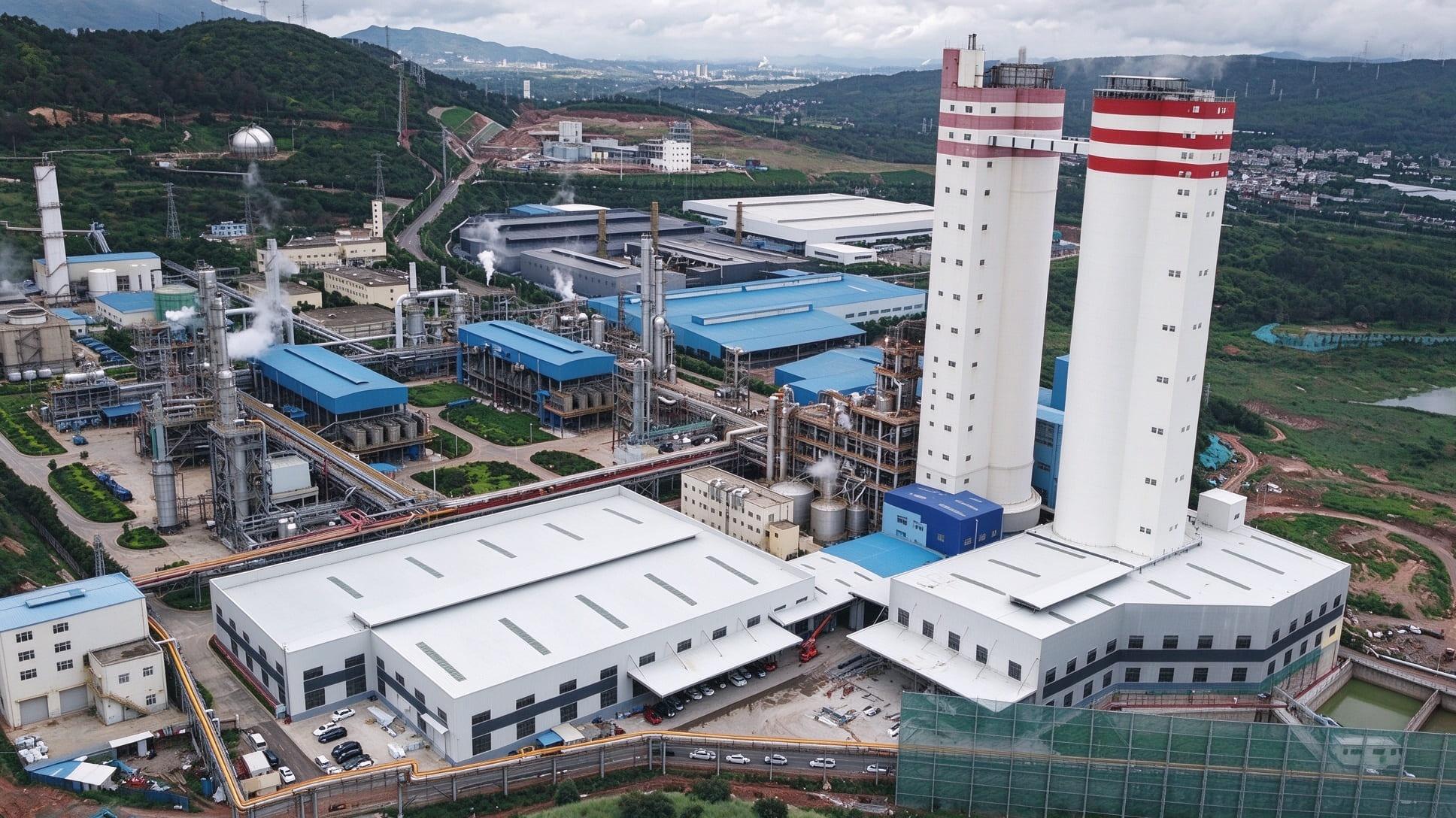
Selection advice: For large-scale, high-concentration urea or compound fertilizer production, high-tower melt granulation is the preferred route. Small blending plants purchasing urea granules as feedstock do not need in-house granulation — focus on batching and mixing instead.
3. Ammonium Chloride: Corrosion Prevention Comes First
Ammonium chloride is a byproduct of the ammonia-soda process and a common nitrogen source. It is brittle, highly hygroscopic, and slightly corrosive. Dust and moisture corrode rollers, housings, bearings, and seals. Without protection, extrusion rollers can pit and wear within months.
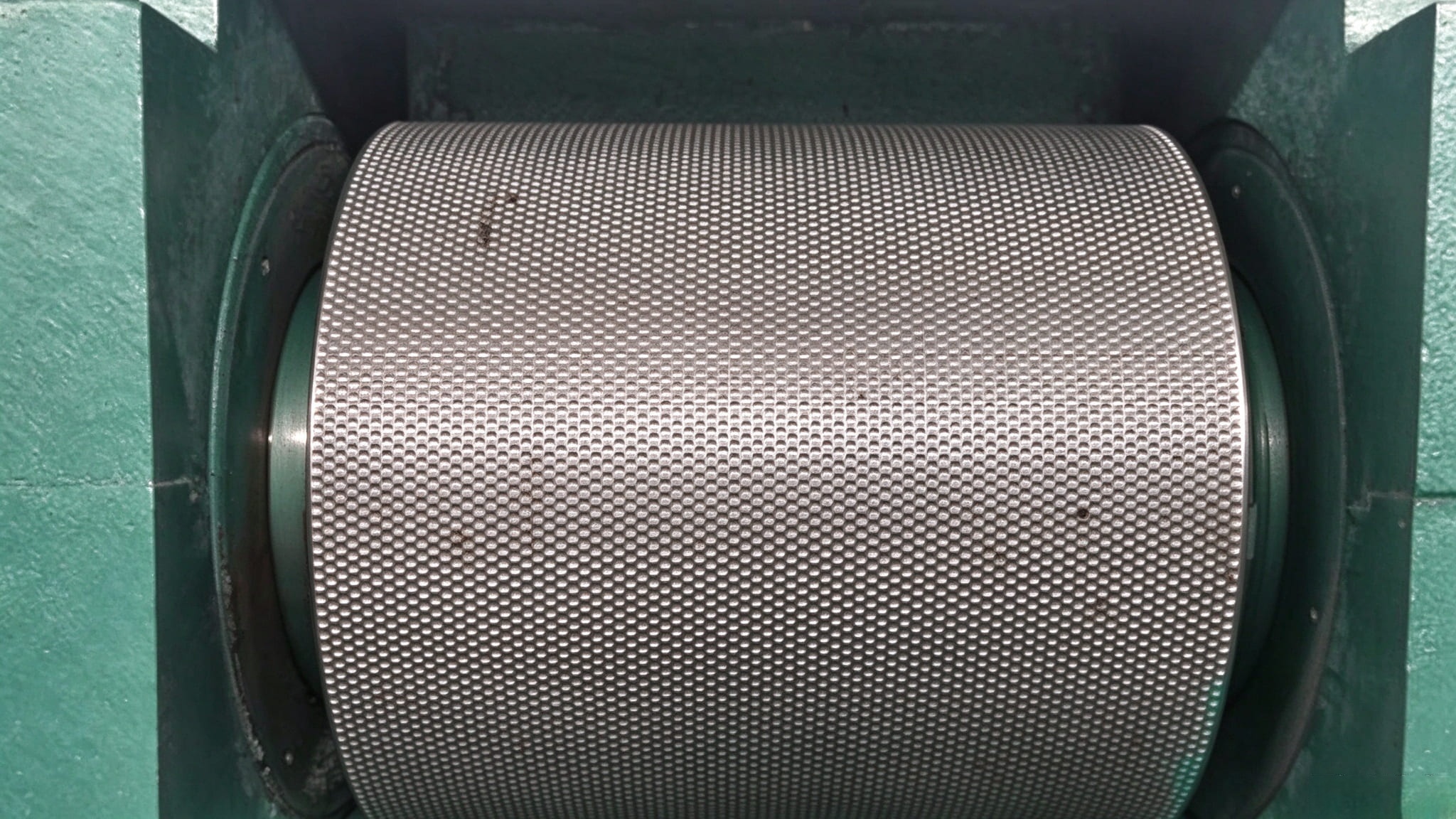
Selection advice: Double-roll extrusion granulators are preferred. They press dry powder into granules at room temperature, with no drying step. Pure ammonium chloride needs no binder. For double roller granulator price reference, equipment suitable for ammonium chloride and NPK compound fertilizers typically ranges from $3,500–$4,800 per set. Three priorities: rollers made of alloy steel or corrosion-resistant coating; corrosion-resistant oil seals at shaft ends; and prompt cleaning after each shift. Keep moisture between 8% and 14% — too high causes sticking, too low reduces granule strength. When sourcing ammonium chloride granulation equipment supplier options, request material certificates and roller hardness specifications.
4. Ammonium Sulfate: Extrusion Dominates, Watch Energy Consumption
Ammonium sulfate powder has good flowability but poor plasticity, requiring substantial mechanical energy. Double-roll extrusion is the mainstream method: powder is pressed into sheets, then crushed and screened into granules. Because plasticity is poorer than ammonium chloride, extrusion energy consumption is higher — allow sufficient motor power margin. Ammonium sulfate granulation equipment for sale should be evaluated for motor power adequacy and roller wear resistance.
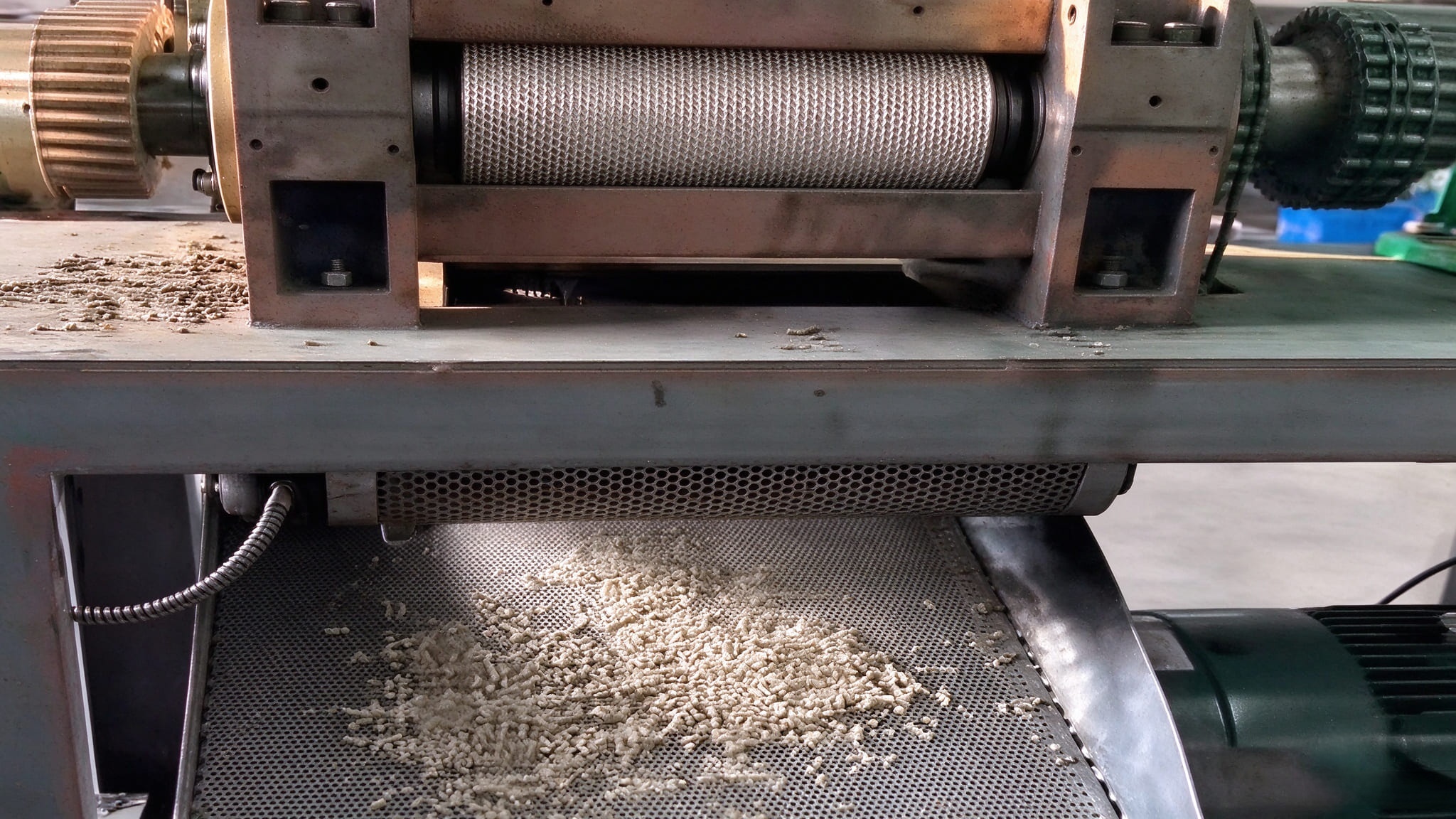
Ammonium sulfate can also be blended with urea or ammonium phosphate for rotary drum granulation, but requires binders and temperature control around 108–110°C.
Selection advice: Pure or high-proportion ammonium sulfate formulas should use double-roll extrusion with rollers balancing wear and corrosion resistance. Mixed formulas can use rotary drum granulation with drying and cooling systems.
5. Humic Acid & Organic Waste: Granulation Temperature Is the Bottom Line
Granulation of humic acid and organic waste differs from inorganic fertilizers. For the full organic fertilizer process, see our Complete Guide to Organic Fertilizer Production Line Equipment.
Humic acid powder has poor flowability and strong adhesion, suiting wet granulation. Rotary drum granulators are well-suited for organic fertilizer production, handling materials such as humic acid, compost, and manure-based mixtures. Through water or steam conditioning and the rotating drum’s tumbling action, particles agglomerate into spherical granules. Granulation rate can reach approximately 70%, with granule size controllable at 3–6 mm. The drum’s inner lining — available in rubber or acid-resistant stainless steel — enables automatic scar removal and resists corrosion from organic acids. If the formula includes NPK minerals, double-roll extrusion can perform dry granulation at room temperature without subsequent drying.
For high-moisture, high-viscosity materials like livestock manure and biogas residue (18%–25% moisture), rotary drum granulators offer reliable performance. A compost turner machine is essential upstream for fermentation, while downstream granulation requires temperature control.
Core principle: Organic materials must stay below 60°C — below 40°C for live-microbe formulas — or beneficial microorganisms are damaged.
6. Preventing Cross-Contamination During Formula Changeover
When one line produces multiple formulas, cross-contamination is common but overlooked. Residual material can alter nutrient content, especially when micronutrient carriers are below 5% of total weight.
Practical steps: clean granulator, mixer, conveyors, silos, and screener before switching; use the “empty silo transition method” by passing a small amount of next batch through the silo; keep production logs for traceability; and dedicate equipment to specific product groups where feasible.
7. Test Your Raw Material Before You Choose
The most reliable approach is a granulation trial with your actual raw material. Before selection, provide your fertilizer granulation equipment manufacturer with raw material type and ratio, moisture content, target capacity, and target granule size and strength. Experienced suppliers can arrange bench or pilot trials, replacing guesswork with data.
Conclusion
Raw material determines process; process determines equipment. Urea hinges on the high-tower melt granulation route. Ammonium chloride hinges on corrosion protection. Ammonium sulfate hinges on extrusion energy and roller wear. Humic acid and organic waste hinge on temperature control in rotary drum granulation. Test your raw material before you choose, and prioritize material-property matching over equipment price.
Looking for a complete fertilizer granulator selection guide? Contact us with your material sample and capacity requirements. Our process engineering team will arrange a trial and deliver a customized fertilizer granulation equipment configuration proposal, including a full cost breakdown and ROI projection.