
BB Fertilizer, Controlled-Release Fertilizer & Bio-Organic Fertilizer: Production Line Configuration Differences
Fertilizer product forms are diversifying. Field crops demand cost-effective blends; cash crops need precision release; green agriculture drives organic waste recycling. BB blended fertilizer, controlled-release fertilizer (CRF), and bio-organic fertilizer serve these three markets. But they cannot share one universal production line. Process principles, core equipment, and operating conditions differ sharply. Understanding these differences is critical before you invest in a fertilizer production line.
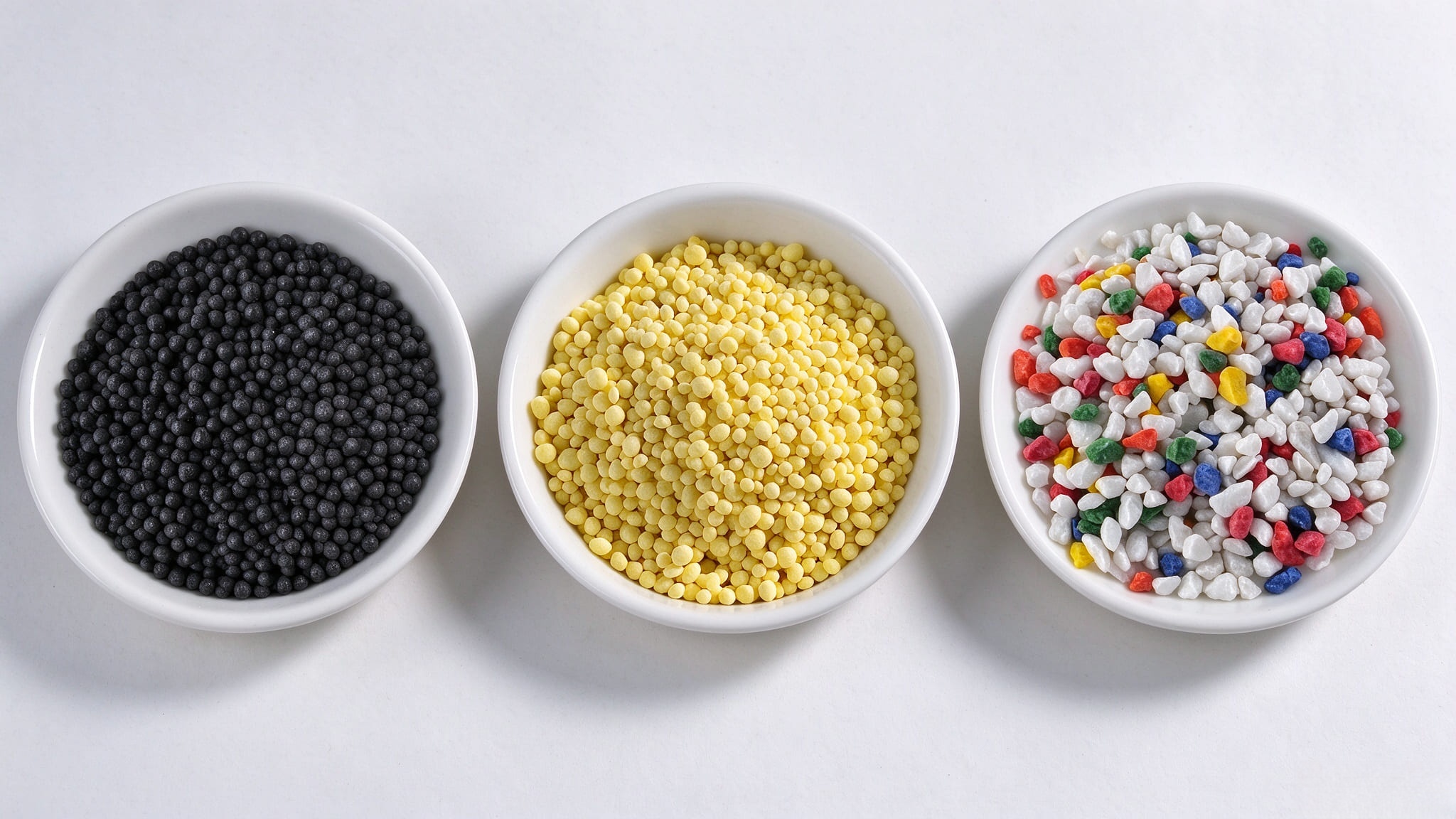
BB Blended Fertilizer Production Line: Physical Mixing, Zero Chemical Reaction
BB (bulk blending) fertilizer is made by physical dry blending. Granular N, P, K straight fertilizers or compound fertilizers are weighed by formula, mixed uniformly, and packed. No chemical reaction, fermentation, or granulation is required.
Core equipment includes:
Automatic batching system: multi-bin static batching with ±0.5% accuracy, capable of weighing 6–10 raw materials per formula recipe.
Dedicated mixer: horizontal twin-shaft paddle or cross-flow blending mixer, 3–5 minutes per batch, designed to prevent segregation through internal flighting.
Conveying system: low drop height to prevent segregation.
Automatic packaging: electronic weighing and sewing, ±0.1% accuracy, 5–50 kg bags.
The main challenge is preventing segregation. Urea, DAP, and potash differ in particle size and bulk density. Use matched particle sizes and anti-segregation baffles.
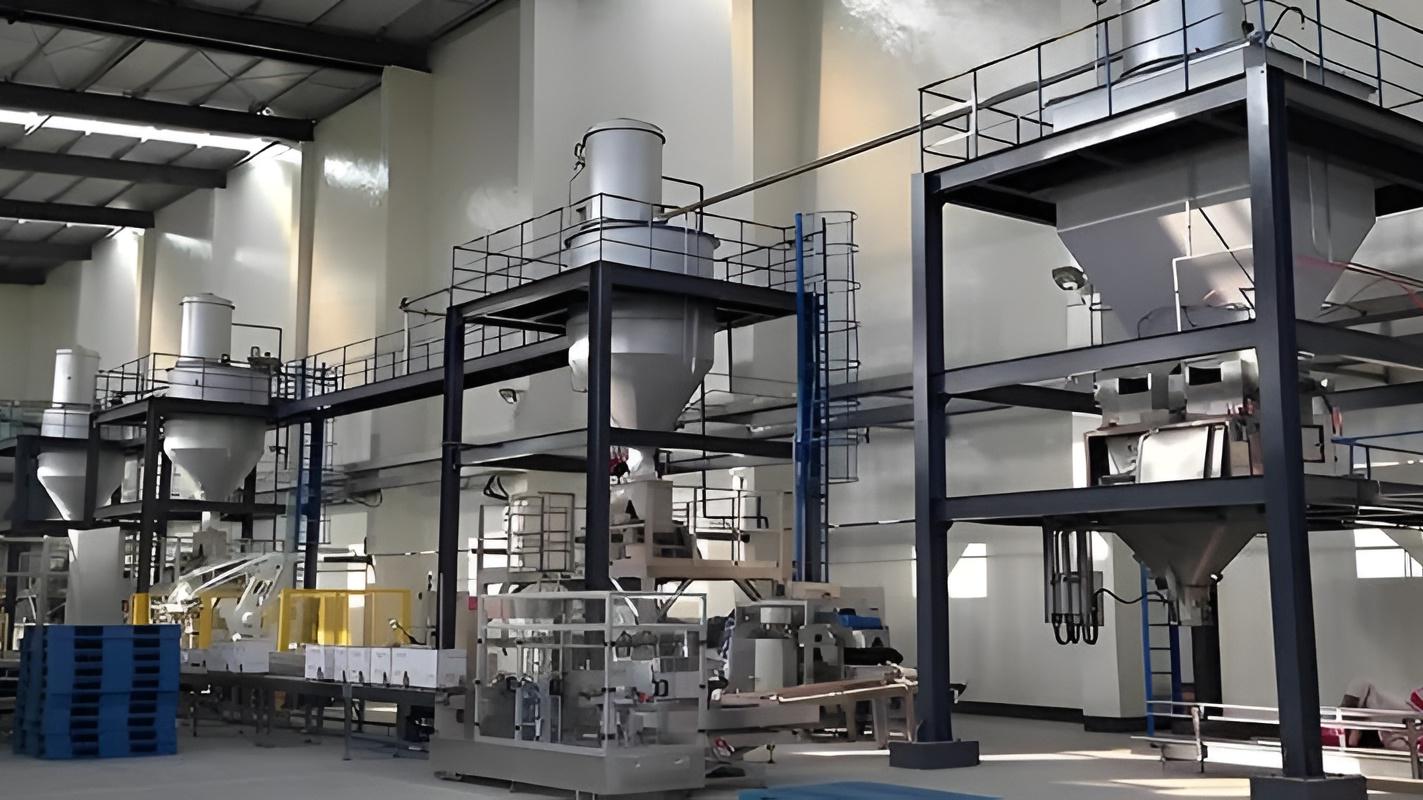
Investment insight: A fully automated BB fertilizer production line with annual output of 100,000 tons (≈50 TPH) requires total equipment investment of approximately US$180,000–200,000, making it one of the most cost-effective fertilizer equipment solutions available. For a 20 TPH plant, a real project in the UAE closed at just US$121,090. Small-scale BB blending costs approximately $4–6 per ton of product, while a 1–5 TPH line requires equipment investment starting from around US$7,000. These figures make the BB fertilizer production line cost significantly lower than any granulated fertilizer line.BB lines suit regional blending stations and small-to-medium processors. A 20,000 TPY station often starts in 1–2 weeks.
Controlled-Release Fertilizer Production Line: Coating Is the Core
CRF technology forms a controlled-release film on granules. Nutrient release is regulated by micropores in the coating. Main routes include sulfur-coated urea (SCU), polymer-coated urea (PCU), and composite coating. Coating quality decides whether release lasts 30 or 90 days—and whether the product earns a premium.
A CRF line is a granule post-treatment system installed after granulation and drying. Core equipment includes:
Rotary drum coater with anti-corrosion lining and adjustable speed/inclination. For polymer-coated slow-release fertilizers, batch coaters like the Continental Rollo-Mixer Mk IX are industry-standard, facilitating heating and cooling of the drum and product to achieve optimal controlled-release results.
Coating material melt-mixing system with precise temperature control.
High-precision spray system for even, metered application.
Anti-stick conveying system to prevent agglomeration.
PLC control for temperature, spray rate, and drum speed.
Sulfur coating costs less but needs strict temperature control. Polymer coating is more complex but delivers better release and higher value. A 5 TPH coating line can improve urea nutrient utilization by 30–50%.
Investment insight: A techno-economic analysis of a 5-tonne batch spray coating system showed a 10-year project returning a positive NPV of A$6.96 million, with a payback period of just 2.5 years and an IRR of 46.7%—making controlled release fertilizer production an economically attractive investment. The manufacturing breakeven price corresponds to a 31.3% premium over conventional urea, while growers can accept up to 52.8% premium given the 34% nitrogen rate reduction achievable with CRF.
Bio-Organic Fertilizer Production Line: Three Key Differences
For the complete organic fertilizer process, see our Complete Guide to Organic Fertilizer Production Line Equipment. From a configuration standpoint, bio-organic lines differ from standard compound fertilizer lines in three ways:
Fermentation is the bottleneck. Aerobic fermentation takes 15–20 days. The compost turner is the core equipment—common types include trough-type compost turners (suitable for large-scale production, achieving thorough turning through track movement) and self-propelled turners (for smaller operations). The fermentation system has the highest investment share and longest commissioning time.
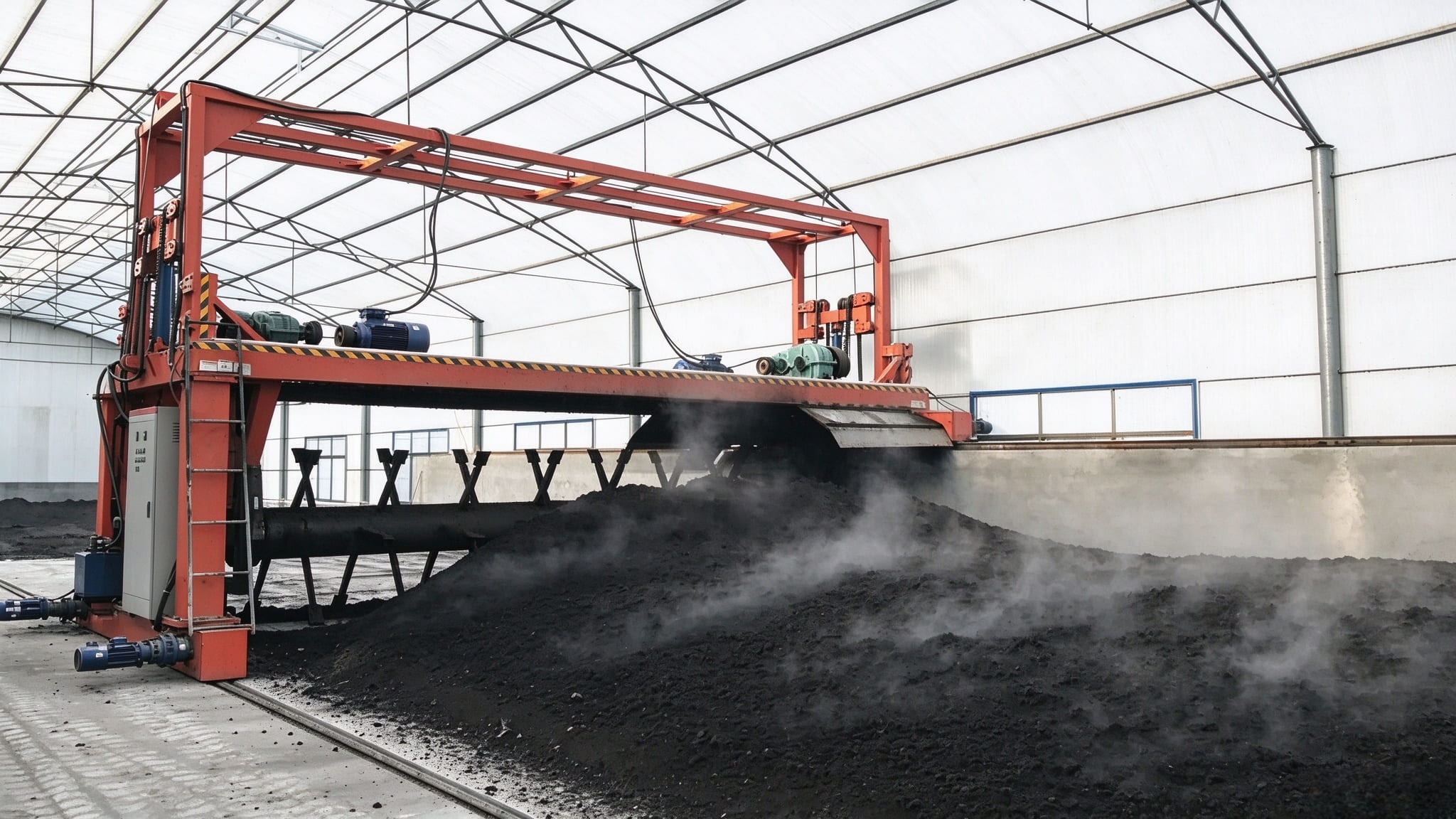
Granulation must be low-temperature. Extrusion or low-temperature disc granulation keeps material below 60°C—sometimes below 40°C—to protect beneficial microbes. When raw materials have moisture content over 60%, dewatering equipment such as a screw press is needed before granulation.
Drying temperature decides product success. Drying must stay below 60°C. Otherwise, live bacteria counts may fail even when granules look perfect. A low-temperature dryer and cooler are essential downstream equipment for organic fertilizer lines.
Bio-organic lines suit farms, sludge treatment projects, and waste recycling enterprises. Capacity ranges from 10,000 to 200,000 TPY.
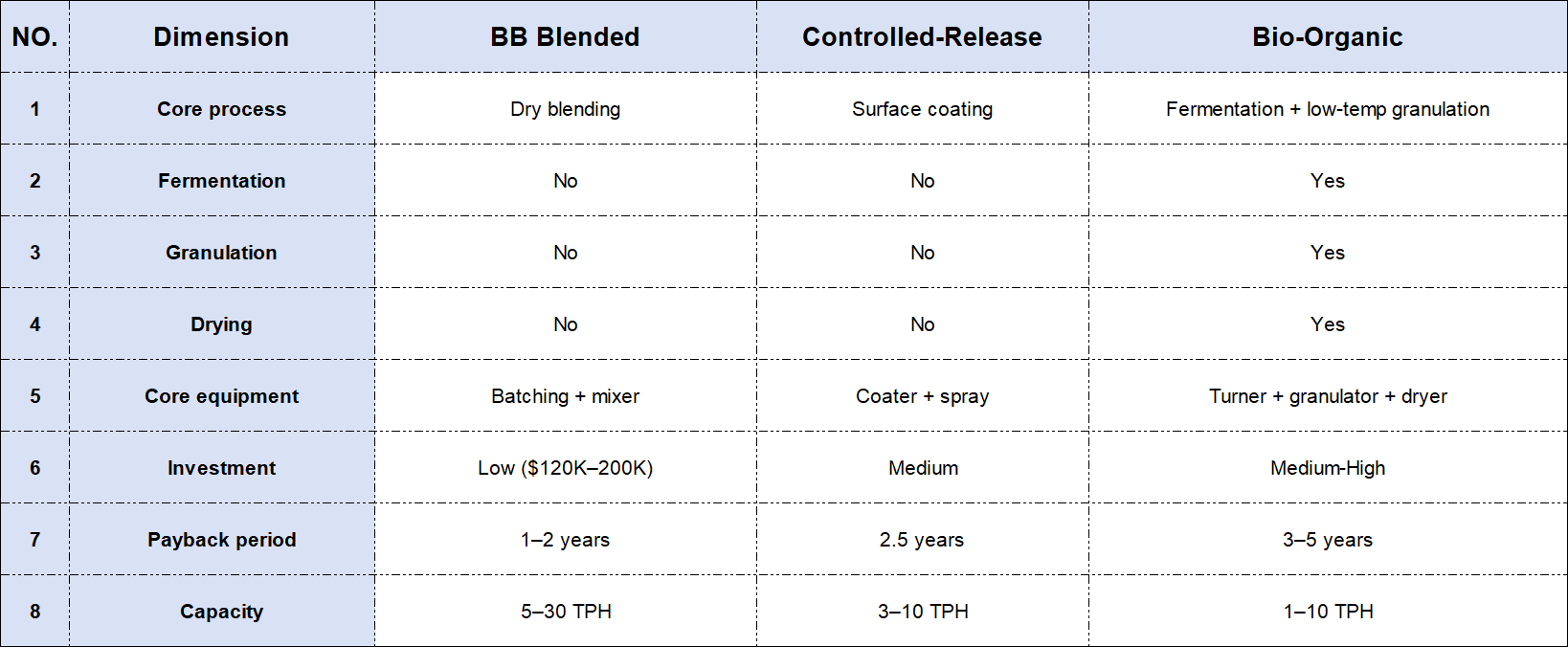
Quick Comparison: Fertilizer Line Configurations
Conclusion
Choosing a fertilizer production line depends on three questions: What is your raw material? What is your target product? Who is your end customer? BB lines compete on formula flexibility and batching accuracy. Controlled-release lines compete on coating stability and release performance. Bio-organic lines compete on fermentation maturity and microbial survival. None is superior—only suitable or not.
Looking for a fertilizer equipment selection guide? Contact us with your raw material and capacity needs. Our process engineering team will deliver a customized configuration proposal, including a full fertilizer production line cost breakdown and ROI projection.