
Screw Conveyor (Auger Conveyor)
The Versatile, Enclosed Solution for Metered Transfer of Powders and Granules
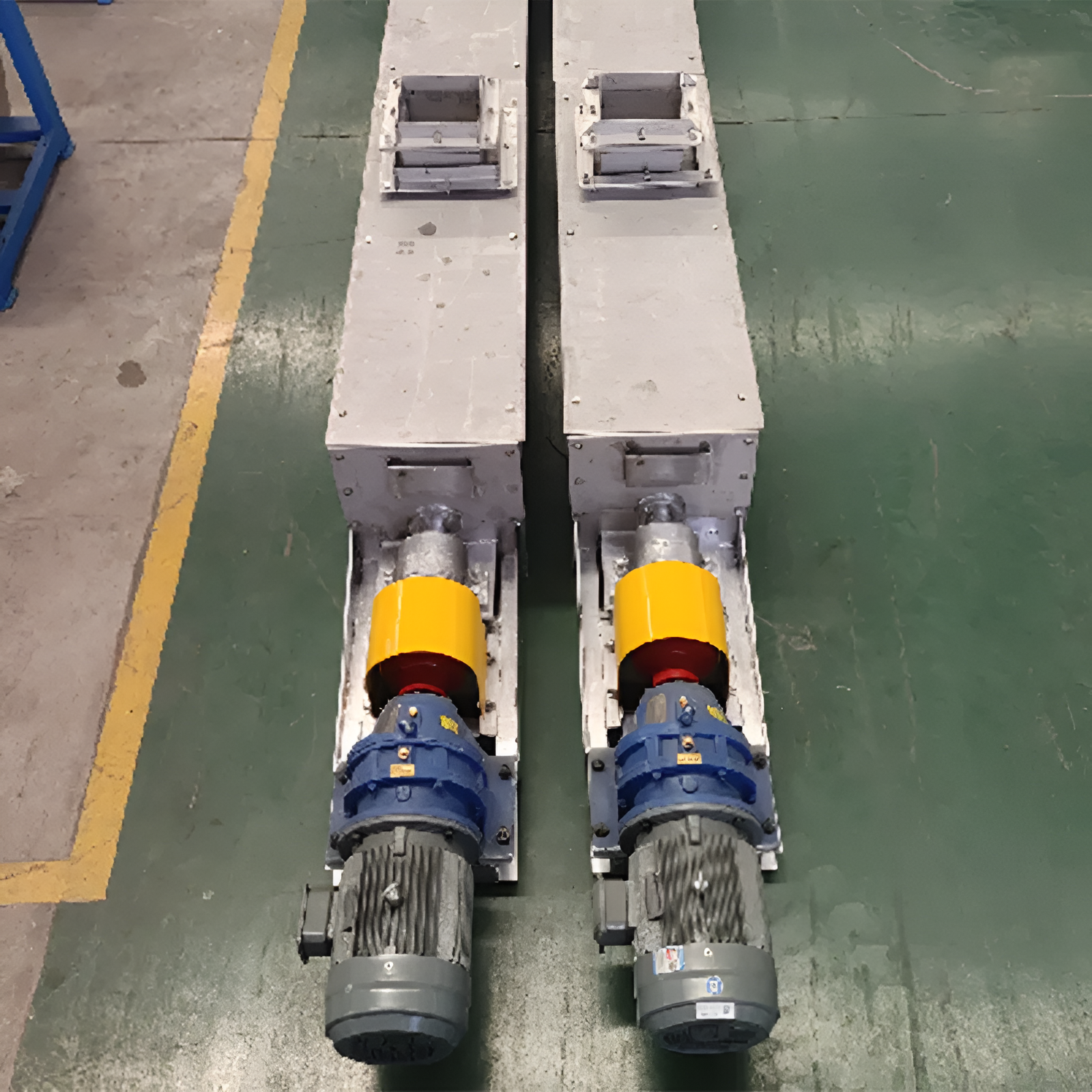
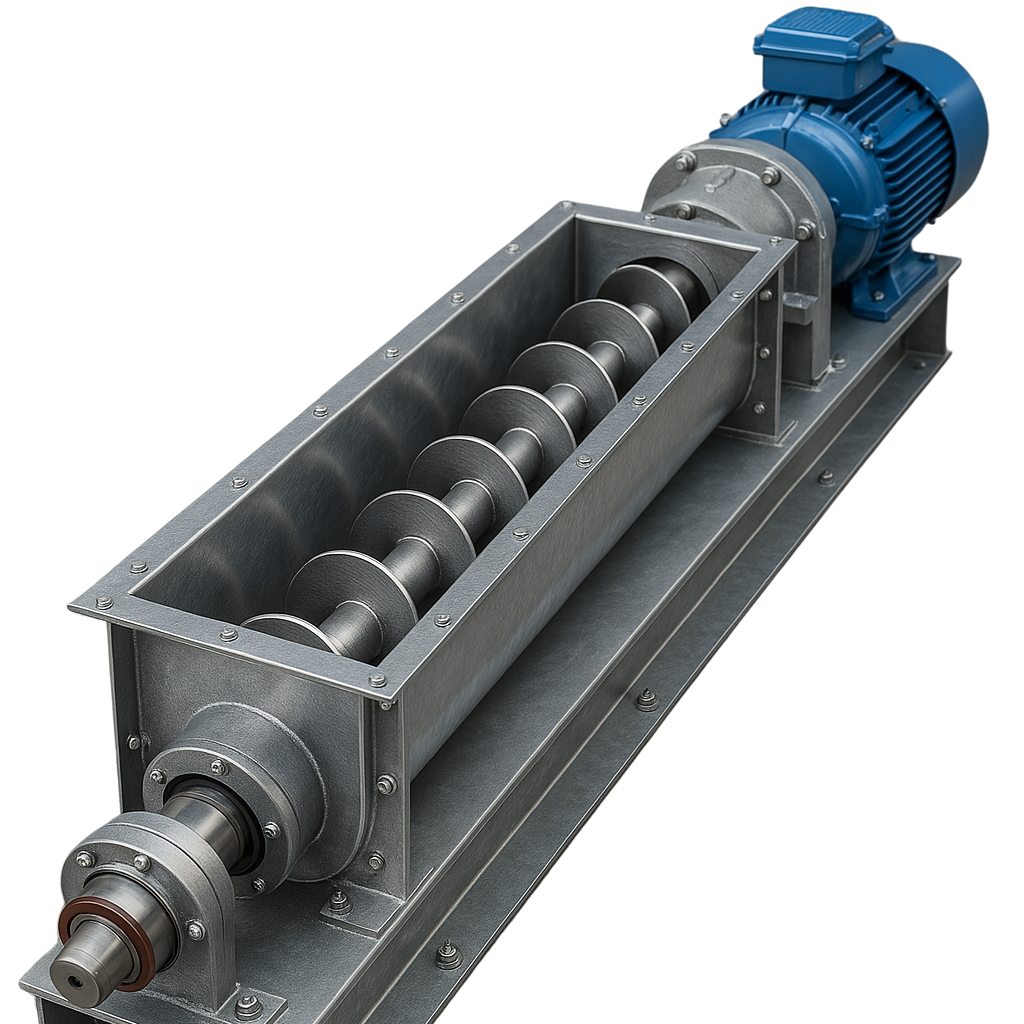
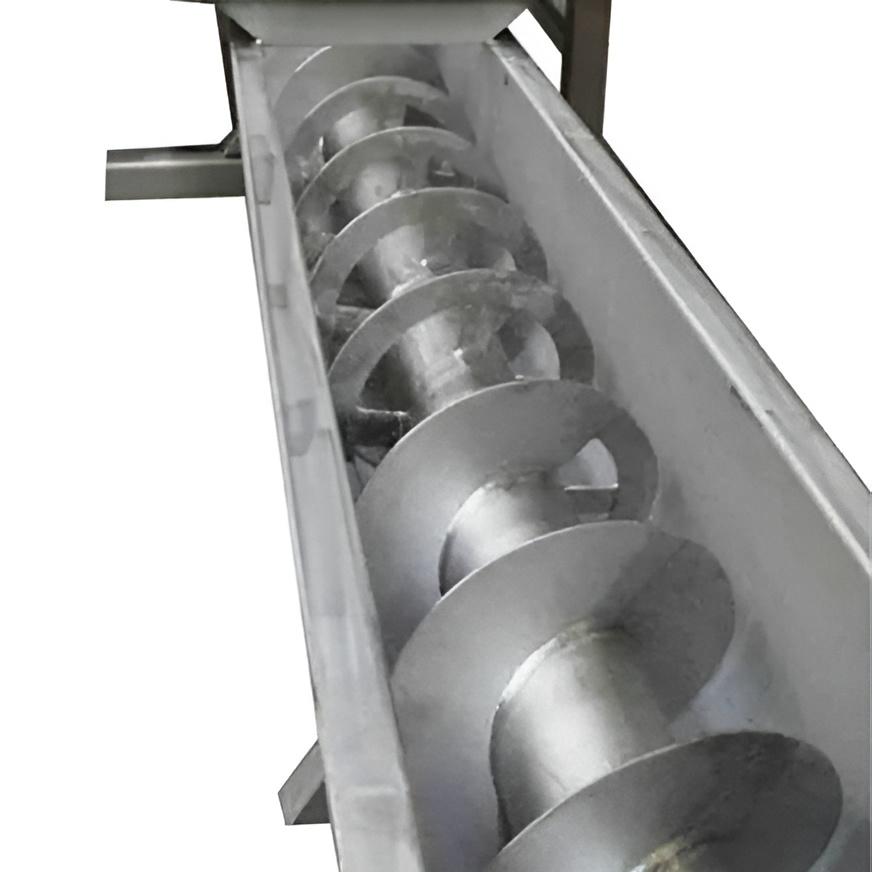
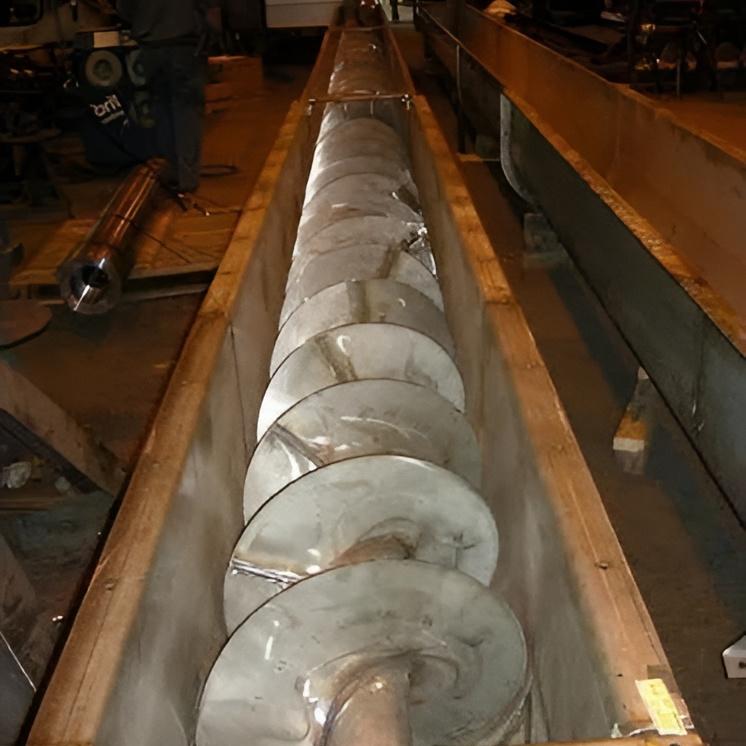
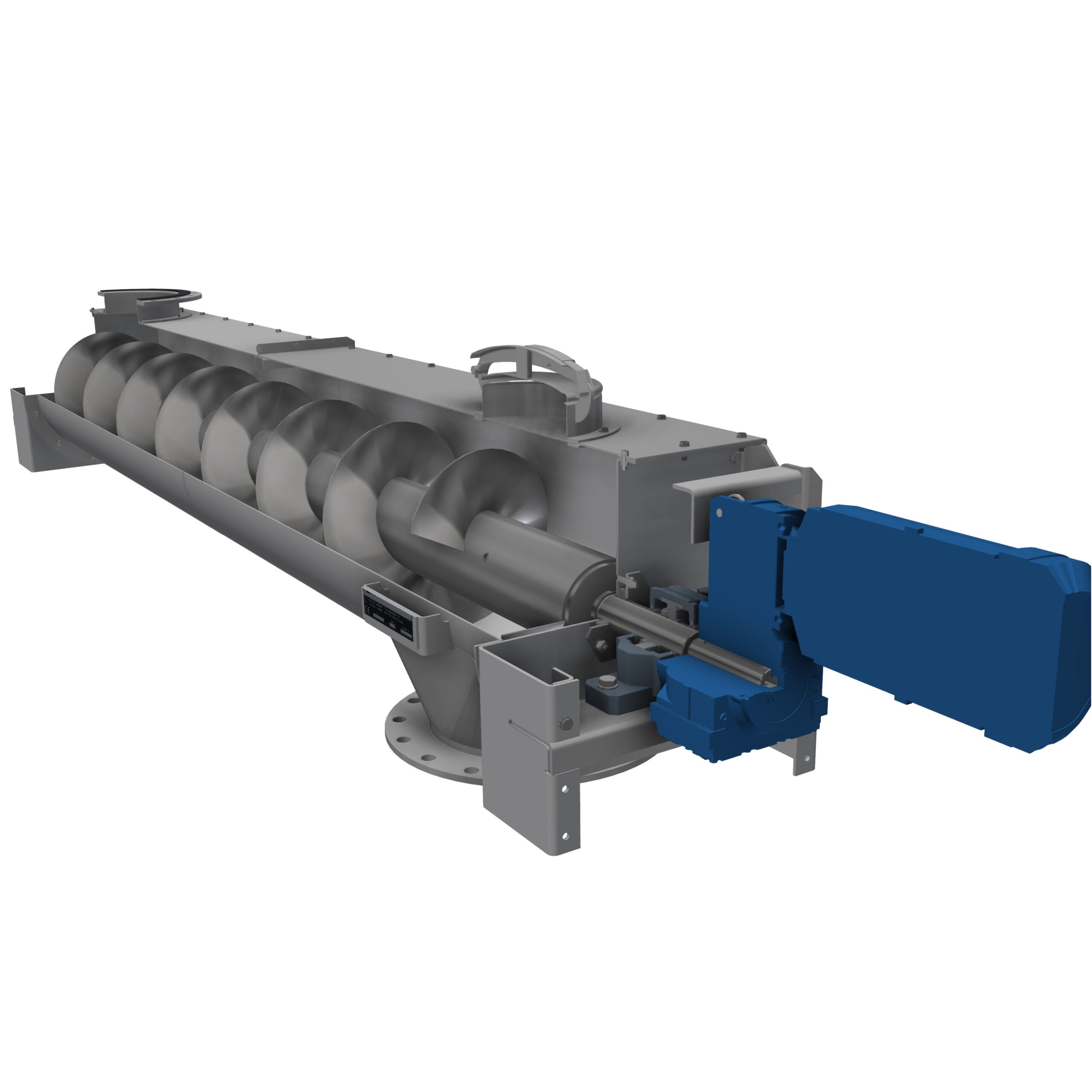
The Screw Conveyor, or Auger Conveyor, is a simple, reliable, and highly adaptable mechanical conveyor used to move bulk materials horizontally, on an incline, or vertically. It consists of a helical screw (flight) rotating within a stationary trough or tube. As the screw turns, it pushes material along the trough. Its enclosed design makes it ideal for dusty, fine, or semi-fluid materials, and it excels in applications requiring metered feeding, blending during transport, or operation in tight spaces where other conveyors cannot fit.

Key Features
-
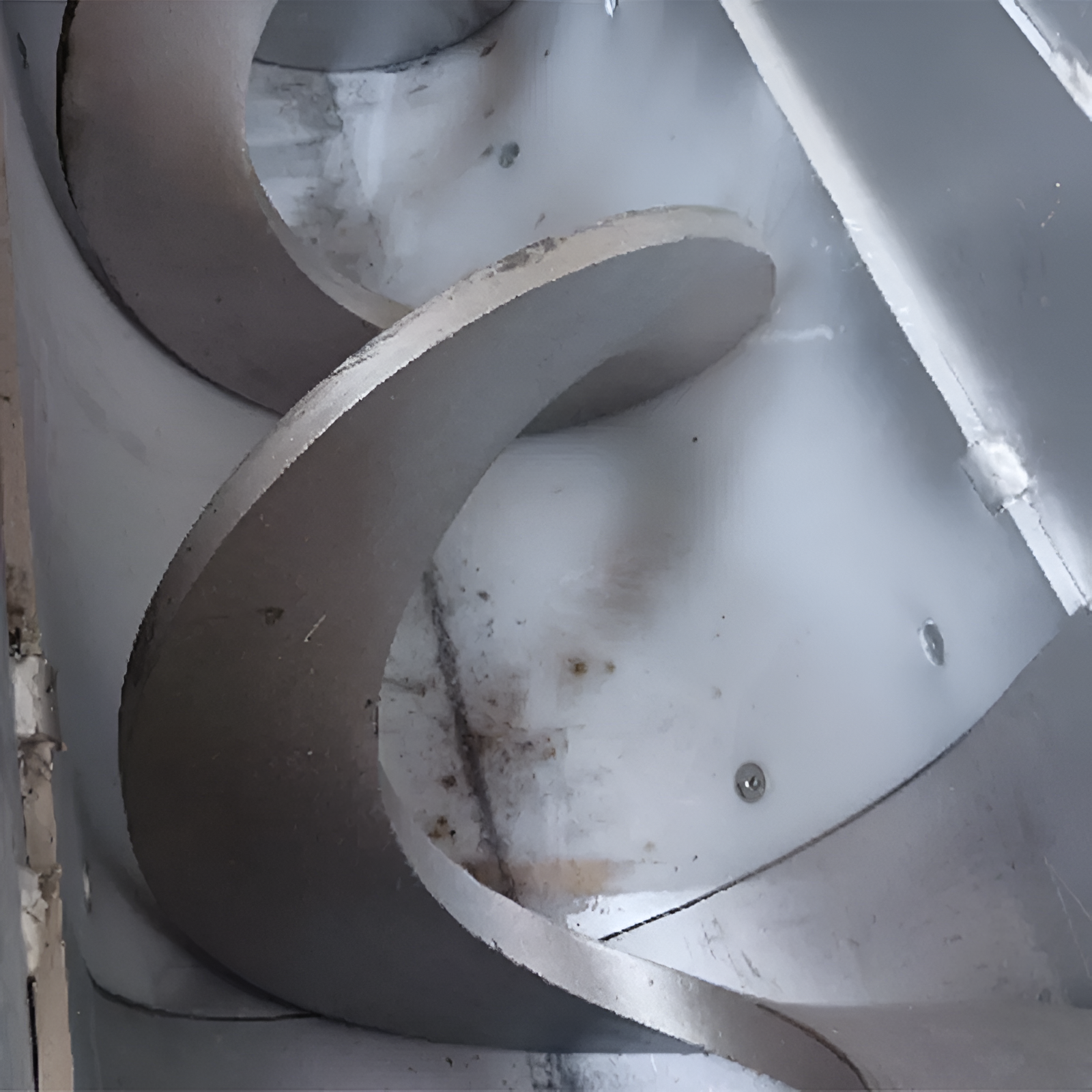
Helical Screw (Flighting)
The core moving part, available in various designs (standard, cut-flight, ribbon) to handle different material characteristics from free-flowing to sticky.
-
Enclosed Trough or Tube
Contains the material and screw, preventing spillage, protecting the product from contamination, and minimizing dust emission.
-
Modular & Flexible Layout
Can be configured in straight sections, curved sections (with special hanger bearings), and varying inclinations to navigate around equipment and obstacles.
-
Multiple Inlet & Outlet Options
Can be equipped with numerous feed inlets and discharge gates along its length for complex distribution or collection systems.
-
Simple Drive & Support
Typically driven by an electric motor and gear reducer at the discharge end, with intermediate hanger bearings for long conveyors.
Advantages
-
Excellent Dust Containment
Fully enclosed design is perfect for handling fine powders (like phosphate dust, lime) and preventing product loss or environmental contamination.
-
Metering & Feeding Capability
Provides a consistent, controllable flow rate, making it ideal as a feeder to weigh scales, mixers, or packaging machines.
-
Compact Design & Low Headroom
Requires less space than belt or drag chain conveyors, allowing installation in cramped areas, under hoppers, or as part of machine integration.
-
Can Handle a Range of Materials
With appropriate flighting design, it can convey materials from fine powders to small granules and even semi-solid pastes.
-
Low Initial Cost & Maintenance
Simple mechanical design with few components leads to affordable installation and easy maintenance.
Applicable Raw Materials
-
Fine Powders
Cement, fly ash, lime, powdered fertilizers, filter dust.
-
Granular Materials
Fertilizer granules, seeds, grains, plastic pellets.
-
Semi-Solid Materials
Dewatered sludge, moist by-products (with suitable flight design).
Basic Structure & Components
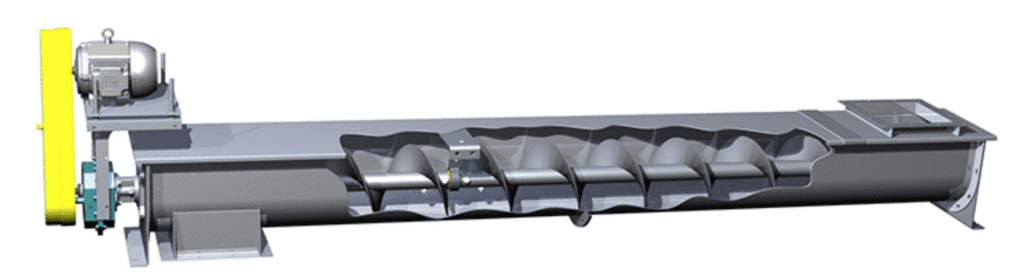
U-shaped (for easy access) or cylindrical (for full containment), usually made of carbon or stainless steel.
A helical blade welded to a central pipe (shaft). The pitch and diameter determine capacity.
Electric motor, gear reducer, and drive shaft connection.
Support the screw shaft at the drive and opposite ends.
For long conveyors, these support the screw shaft at intervals but can create a potential wear point for the material.
Flanged connections or openings for material entry and exit.
A removable cover for the trough to allow access for inspection and cleaning.
Technical Data
Screw diameter (mm) | 100 | 160 | 200 | 250 | 315 | 400 | 500 | 630 | 800 | 1000 | 1250 |
Screw pitch (mm) | 100 | 160 | 200 | 250 | 315 | 355 | 400 | 450 | 500 | 560 | 630 |
Rotation speed (r/min) | 140 | 112 | 100 | 90 | 80 | 71 | 63 | 50 | 40 | 32 | 25 |
Conveying capacity (m³/h) | 2.2 | 8 | 14 | 24 | 34 | 64 | 100 | 145 | 208 | 300 | 388 |
Rotation speed (r/min) | 112 | 90 | 80 | 71 | 63 | 56 | 50 | 40 | 32 | 25 | 20 |
Conveying capacity (m³/h) | 1.7 | 7 | 12 | 20 | 26 | 52 | 80 | 116 | 165 | 230 | 320 |
Rotation speed (r/min) | 90 | 71 | 63 | 56 | 50 | 45 | 40 | 32 | 25 | 20 | 16 |
Conveying capacity (m³/h) | 1.4 | 6 | 10 | 16 | 21 | 41 | 64 | 94 | 130 | 180 | 260 |
Rotation speed (r/min) | 71 | 50 | 50 | 45 | 40 | 36 | 32 | 25 | 20 | 16 | 13 |
Conveying capacity (m³/h) | 1.1 | 4 | 7 | 13 | 16 | 34 | 52 | 80 | 110 | 150 | 200 |
Note: Due to different material filling factors, the capacity may vary. The capacity may also change depending on the material’s viscosity and the conveying angle. | |||||||||||
Key Differentiators vs. Other Conveyors
- vs. Belt Conveyor
- vs. Drag Chain (Scraper) Conveyor
- vs. Pneumatic Conveying
- vs. Bucket Elevator
- Overall Position
Better for dusty materials, metering, and tight spaces, but has higher power consumption per meter and more wear for abrasive materials. Not suitable for very long distances or heavy, lumpy materials.
Both are enclosed. Screw conveyors are simpler, less expensive, and better for powders and gentle inclines. Drag chains are better for longer distances, higher capacities, and handling more abrasive materials without the intermediate bearings that can cause issues in screw conveyors.
Screw conveyors are a low-energy, mechanical solution ideal for shorter distances and defined paths. Pneumatic systems offer greater layout flexibility but have much higher energy costs and are for lower capacities of lighter materials.
A screw conveyor can be configured vertically as a “screw elevator,” but it is only suitable for short lifts with non-abrasive, free-flowing materials. Bucket elevators are far more efficient and standard for dedicated vertical lifting.
It is the go-to, cost-effective workhorse for controlled, enclosed transfer of powders and granules over short to medium distances within a processing plant, especially where space is limited or dust control is paramount.