
Rotary Dryer
The Robust and Reliable Workhorse for High-Capacity Drying of Granular Fertilizers
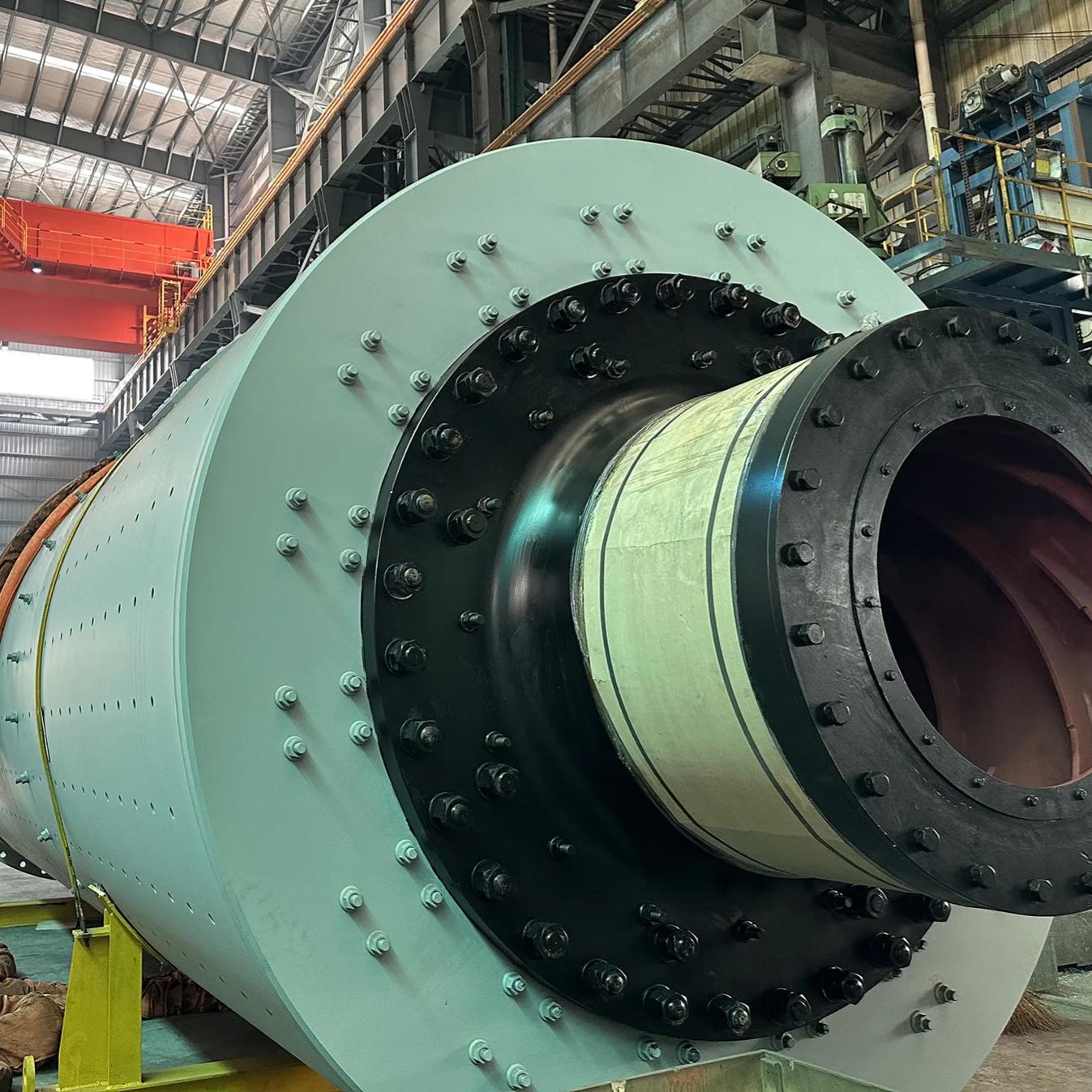
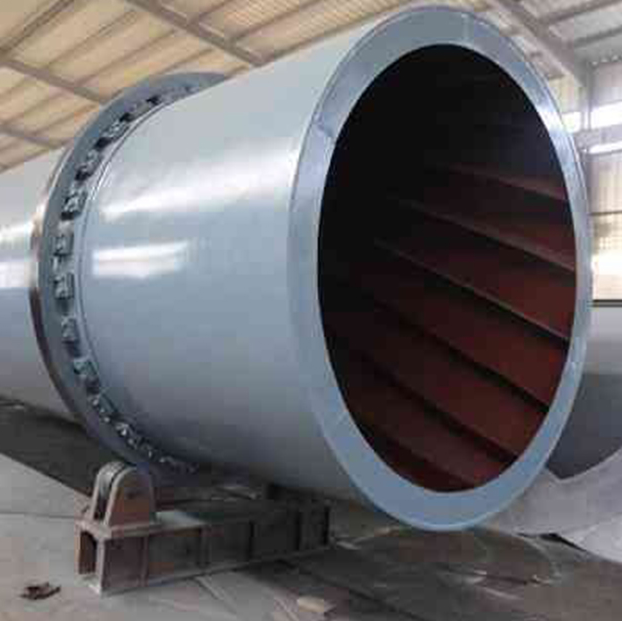
The Rotary Dryer is the cornerstone of industrial-scale drying for granular and particulate materials. This robust, horizontally rotating drum facilitates efficient heat and mass transfer as material cascades through a stream of hot air. Renowned for its durability, high throughput, and versatility, it is the most widely used solution for removing surface and inherent moisture from fertilizer granules, ensuring product stability and quality.
Key Features
-
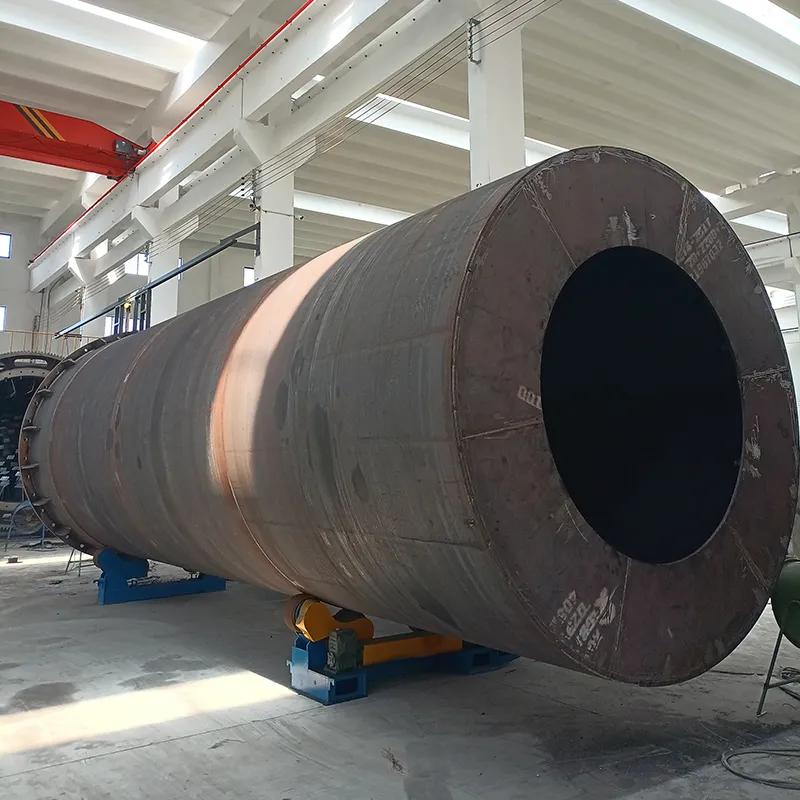
Rotating Drum Design
A large, slightly inclined cylinder that gently tumbles material, ensuring uniform exposure to the drying medium.
-
Direct or Indirect Heating
Can be configured for direct contact with hot air/gases or indirect heating via steam coils or a hot shell for sensitive materials.
-
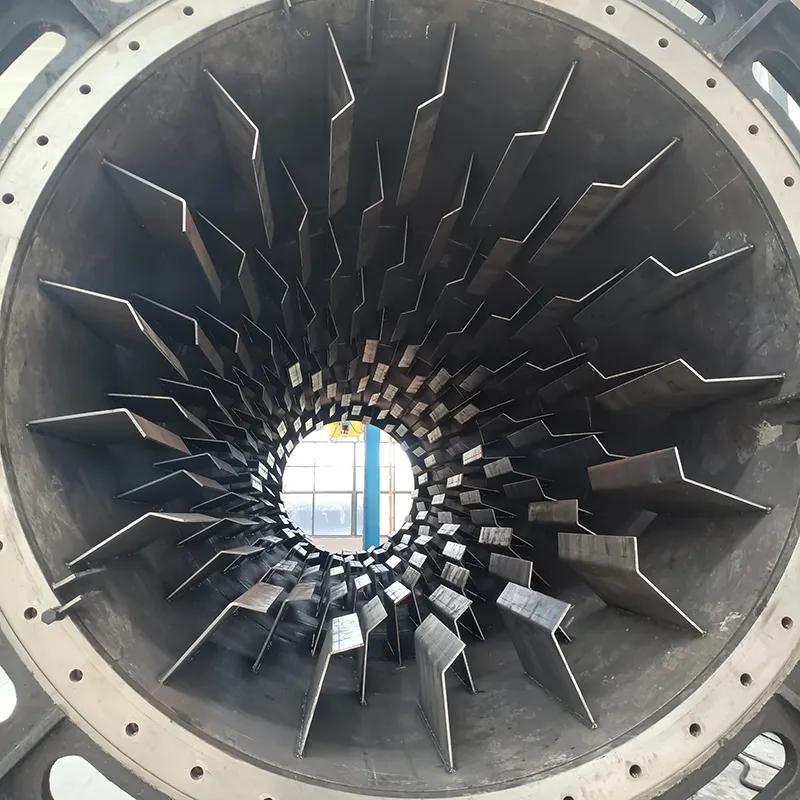
Customized Internals
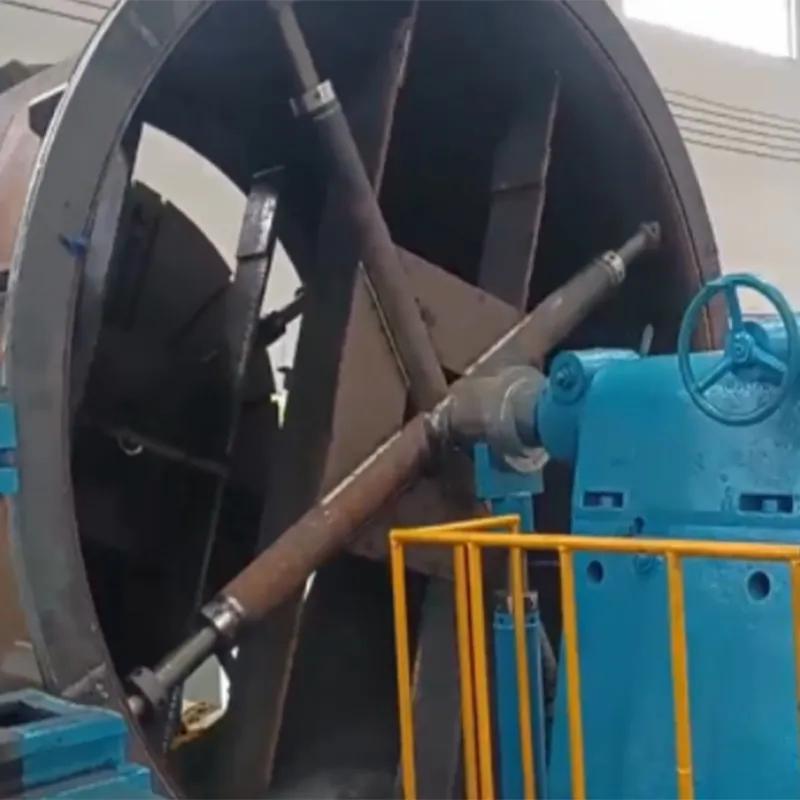
Features strategically placed lifting flights (louvers) along the inner drum wall to optimize material lifting, cascading, and drying efficiency.
-
Flexible Fuel Options
Compatible with various heat sources, including natural gas, diesel, coal, or steam, to suit local availability and cost.
-
Adaptable Airflow Configuration
Can be designed for co-current (parallel) or counter-current flow of material and air, balancing thermal efficiency and product temperature requirements.
Advantages
-
Proven Reliability & Low Maintenance
Simple, robust mechanical design ensures continuous 24/7 operation with minimal downtime.
-
Exceptionally High Capacity
Capable of processing from a few tons to over 100 tons per hour, making it ideal for large-scale fertilizer plants.
-
Wide Material Compatibility
Effectively dries a vast range of granule sizes, densities, and initial moisture contents.
-
Excellent Drying Uniformity
The tumbling action prevents clumping and ensures each granule is evenly dried.
-
Long Equipment Life
Constructed from high-grade, wear-resistant steels to withstand abrasive materials and high-temperature environments.
Applicable Raw Materials
-
Compound Fertilizer Granules (NPK)
The primary application for drying after granulation in a rotary drum or disc granulator.
-
Single Nutrient Fertilizers
Such as urea, ammonium nitrate, DAP/MAP, and potassium chloride granules.
-
Organic & Bio-organic Fertilizer Pellets
For reducing moisture after granulation or composting.
-
Minerals & Soil Amendments
Including limestone pellets, gypsum, and other mineral powders or aggregates.
-
Various Industrial Granules
Such as ores, salts, and synthetic particles.
Basic Structure & Components
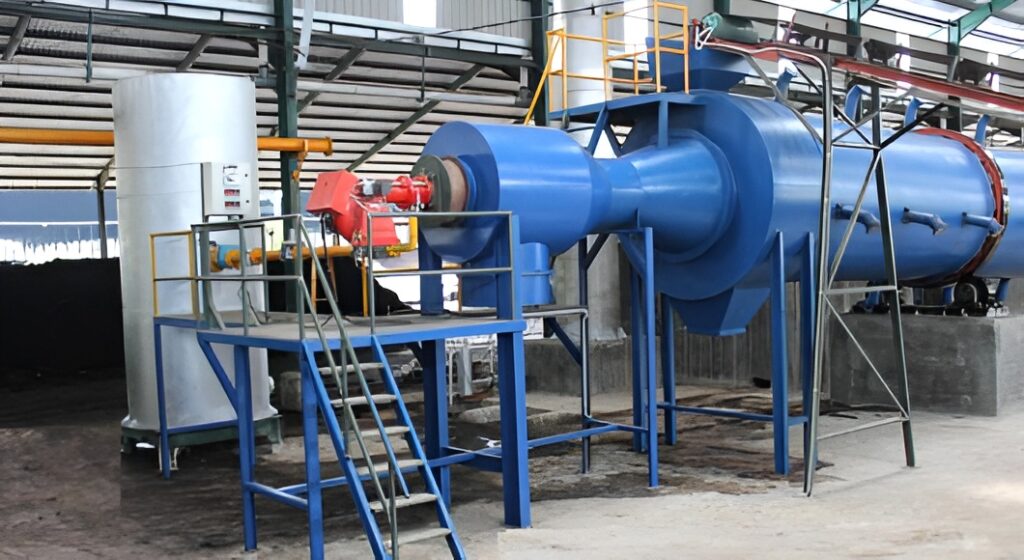
The core cylinder, typically fabricated from rolled steel plate, with an internal lining of lifting flights.
Heavy-duty rings attached to the drum that rotate on matched support rollers, bearing the drum’s weight.
Consisting of a motor, gear reducer, and pinion gear to provide controlled rotation.
Prevent axial movement of the drum during operation.
Generates the hot air or gases for the drying process.
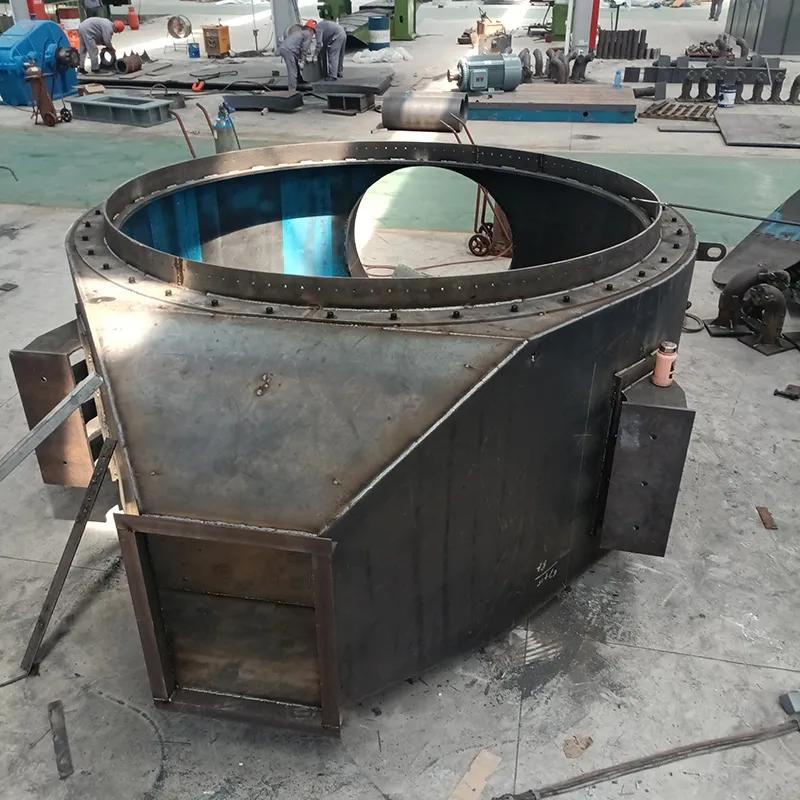
Introduces wet material into the drum’s inlet end.
Collects dried product at the outlet.
Captures fine particles entrained in the exhaust gas.
Induces air flow through the entire system.
Casing that retains heat and ensures operator safety.
Technical Data
Specification | Shell | Production Capacity | Flow Direction | Reducer | Motor | Size (LxWxH) | Weight | |||||
I.D. mm | L mm | Slope (°) | Rev r/min | Model | Ratio | Model | Power | |||||
φ1.2×10 | 1200 | 10000 | 2.5 | 6.1 | 1-1.5 | Downstream | JZQ500 | 31.50 | Y160M-6 | 7.5 | 10000×2280×2245 | 13.0 |
φ1.5×14 | 1500 | 14000 | 2.5 | 4.28 | 3-4 | ZQ650 | 31.50 | Y200L-6 | 18.5 | 15750×3085×3180 | 21.0 | |
φ1.6×16 | 1600 | 16000 | 2.5 | 5 | 4-5 | ZQ650 | 23.34 | Y200L1-6 | 18.5 | 17500x3232x3500 | 26.0 | |
φ1.8×18 | 1800 | 18000 | 2.5 | 5 | 5-7 | ZQ650 | 23.34 | Y200L1-6 | 18.5 | 19614×3438×3673 | 30.0 | |
φ2.0×20 | 2000 | 20000 | 2.5 | 6 | 7-10 | ZL65 | 22.50 | Y225M-6 | 30 | 22091x3232x4445 | 43.0 | |
φ2.2×22 | 2200 | 22000 | 2.5 | 3.29 | 8-14 | ZL65 | 40.00 | Y250M-6 | 37 | 23400×4593×3810 | 50.0 | |
φ2.4×24 | 2400 | 24000 | 2.5 | 2.82 | 12-16 | ZL75 | 45.00 | Y280S-6 | 45 | 25630x4097x5932 | 70.0 | |
φ2.6×26 | 2600 | 26000 | 2.5 | 3.8 | 20-25 | ZL100 | 35.50 | Y280M-6 | 55 | 27750×3100×5810 | 84.0 | |
φ2.8×28 | 2800 | 28000 | 2.5 | 2.66 | 18-20 | ZL115 | 45.00 | Y280S-6 | 75 | 29630x4220x5110 | 100.0 | |
φ2.8×34 | 2800 | 34000 | 2.5 | 2.65 | 18-20 | ZL115 | 45.00 | Y315M-6 | 110 | 37500x4050x5350 | 111.0 | |
φ3.0×28 | 3000 | 28000 | 2.5 | 3.96 | 20-22 | ZSY450 | 45.00 | Y315M1-4 | 132 | 30615x5960x6450 | 130.0 | |
φ3.2×25 | 3200 | 25000 | 2.5 | 4.0 | 20-30 | ZSY450 | 45.00 | Y315M-4 | 185 | 29500x6500x6300 | 138.0 | |
φ3.4×34 | 3400 | 34000 | 1.8 | 2.56 | 20-30 | ZL130 | 45.00 | Y2-355M2-6 | 200 | 34600x6678x6540 | 175.0 | |
φ3.6×34 | 3600 | 34000 | 1.8 | 2.51 | 30-40 | ZL130 | 40.00 | YKK3554-4 | 250 | 34600x6890x6540 | 209.0 | |
φ4.0×34 | 4000 | 34000 | 1.8 | 2.09 | 40-45 | ZSY630 | 90.00 | YKK4003-4 | 315 | 36466x7800x6800 | 232.0 | |
φ4.2×34 | 4200 | 34000 | 2.5 | 2.15 | 42 | ZSY630 | 80.00 | YKK4005-4 | 400 | 37466x8000x6800 | 250.0 | |
φ4.5×34 | 4500 | 34000 | 1.8 | 1.85 | 160 | ZSY630 | 80.00 | YKK4502-4 | 500 | 38000x8300x7200 | 290.0 | |
Key Differentiators vs. Other Dryers
- vs. Centrifugal Spray Dryer
- vs. Counter-flow Dryer (Specialized Rotary)
- vs. Belt Dryer or Fluidized Bed Dryer
- Overall Position
Designed for granules and solids, not liquids. A granular drying solution post-agglomeration, whereas a spray dryer is a slurry-to-powder conversion unit used earlier in the process chain.
A standard, versatile workhorse for general-purpose drying. While both are rotary drums, the Counter-flow Dryer is a specialized subset optimized for maximum thermal efficiency and gentle drying of sensitive materials (like PAN) through its specific airflow pattern, often at a higher initial cost.
Offers higher volumetric capacity and mechanical simplicity for granular fertilizers. It is generally more rugged for heavy-duty, abrasive service compared to the more complex airflow systems of fluidized beds or the larger footprint of belt dryers.
It is the default, high-capacity, and most cost-effective choice for drying standard fertilizer granules where extreme sensitivity or ultra-low final moisture is not the primary constraint.