
Rotary Cooler
The Essential Link for Efficiently Stabilizing Hot Granules in Continuous Fertilizer Production Lines
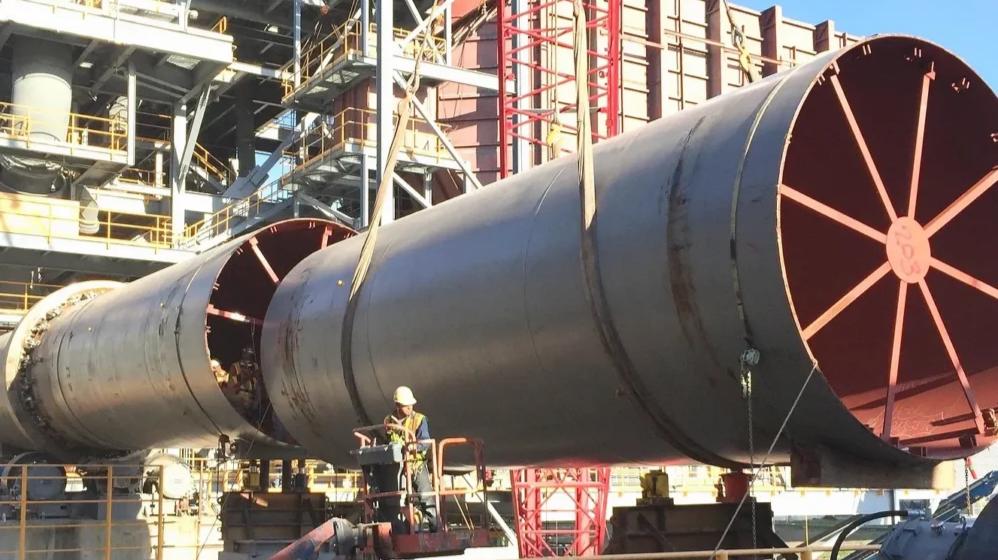
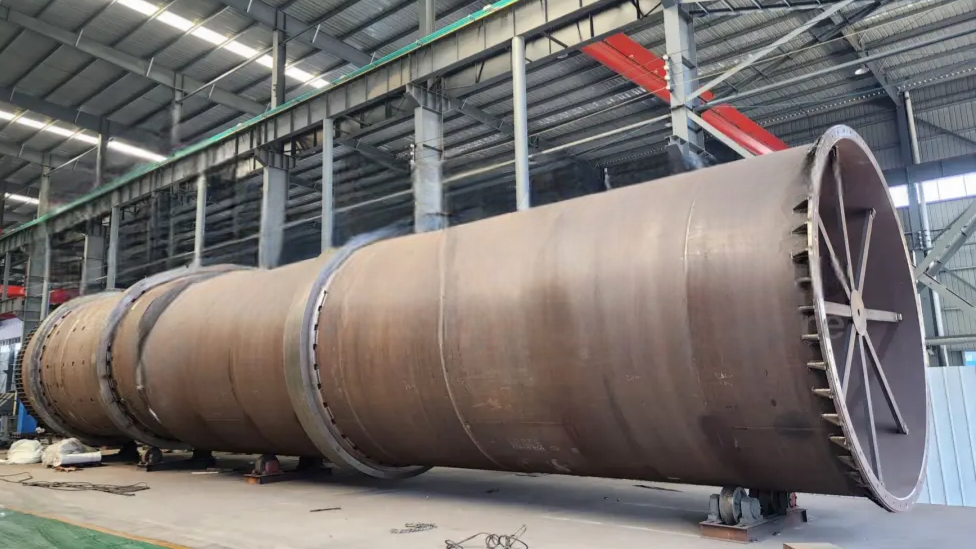
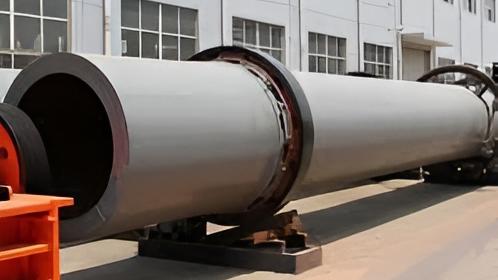
The Rotary Cooler is a critical post-drying unit operation designed to efficiently lower the temperature of hot, dried fertilizer granules. Utilizing a rotating drum and counter-current airflow, it gently cascades material while cool ambient air is drawn through the product bed. This process stabilizes the granules, prevents caking, and prepares them for safe storage and packaging, ensuring final product quality and longevity.
Key Features
-
Counter-Current Cooling Principle
Ambient air flows opposite to the direction of hot material travel, maximizing heat exchange efficiency and achieving a lower, more uniform final product temperature.
-
Gentle Cascading Action
The rotating drum and internal lifting flights ensure gentle tumbling of granules, promoting uniform cooling while minimizing particle abrasion and dust generation.
-
Robust Drum Construction
Built with heavy-duty steel plate and durable internal components to withstand abrasive materials and continuous 24/7 operation.
-
Efficient Air Handling System
Features a high-volume induced draft fan and properly sized air inlet/outlet areas to ensure optimal airflow with minimal energy consumption.
-
Dust-Controlled Environment
Integrated with a cyclone separator or dust collection system at the air exhaust to maintain a clean working environment and recover product fines.
Advantages
-
Prevents Product Degradation
Rapid cooling minimizes the time granules spend at elevated temperatures, reducing the risk of moisture re-absorption, caking, and nutrient degradation.
-
Improves Handling & Storage
Cool, stable granules are easier to convey, screen, coat, and store in bulk without the risk of thermal damage to bags or liners.
-
Enhances Process Safety
Cools granules to a safe temperature before storage, mitigating potential fire or combustion hazards associated with hot, oxidizable materials.
-
High Capacity & Reliability
Matches the high throughput of modern rotary dryers and granulators, offering a reliable and continuous cooling solution.
-
Low Operational Cost
Simple mechanical design and efficient heat exchange principle result in low power consumption and minimal maintenance requirements.
Applicable Raw Materials
-
All Dried Fertilizer Granules
NPK compounds, urea, ammonium nitrate, DAP/MAP, potassium chloride/sulfate.
-
Organic & Bio-organic Fertilizer Pellets
Cooled after the drying process to preserve quality.
-
Soil Amendment Granules
Such as limestone or gypsum pellets.
-
Various Industrial Granules
Including minerals, salts, and chemical products requiring cooling after thermal processing.
Basic Structure & Components

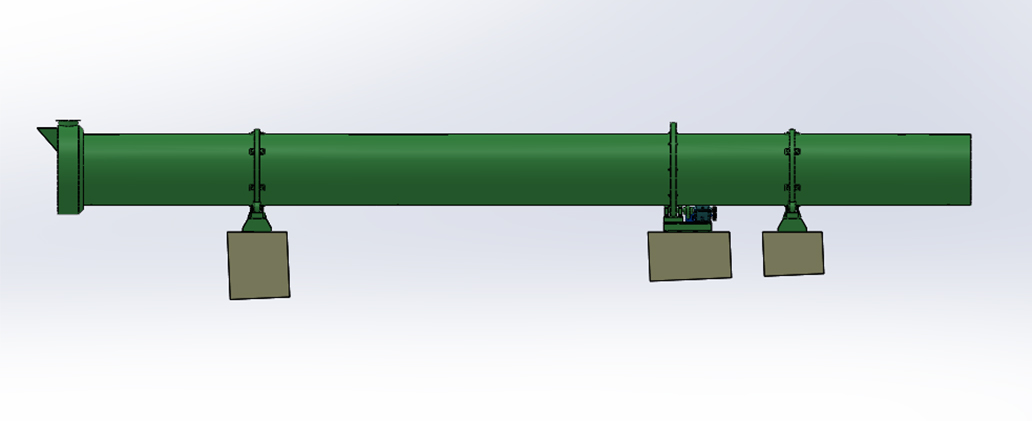
The main cylinder, slightly inclined, fitted with internal lifting flights to cascade the material.
Allows ambient air to be drawn into the drum, flowing counter to the material.
Collects the warmed, moisture-laden air and channels it to the dust collection system.
Consisting of motor, reducer, pinion gear, and girth gear for smooth drum rotation.
Includes riding rings, support rollers, and thrust rollers to bear the drum’s weight and maintain alignment.
Channels hot material from the dryer into the cooler.
Guides cooled product out to the next process stage (e.g., screening).
Creates the necessary airflow through the drum.
Cleans the exhaust air.
Provides structural integrity and safety enclosures.
Technical Data
| Specification | Shell | Production Capacity | Flow Direction | Reducer | Motor | Size (LxWxH) | Weight | |||||
| I.D. mm | L mm | Slope (°) | Rev r/min | Model | Ratio | Model | Power | |||||
| Φ1.2×7 | 1200 | 7000 | 2.5 | 6.4 | ~5 | Upstream | JZQ500 | 31.50 | Y160M-6 | 7.5 | 8275x2700x3391 | 9.0 |
| Φ1.2×10 | 1200 | 10000 | 2.5 | 6.4 | ~6 | JZQ500 | 31.50 | Y160M-6 | 7.5 | 11275x2700x3522 | 10.0 | |
| Φ1.5×12 | 1500 | 12000 | 2.5 | 4.28 | ~8 | ZQ650 | 31.50 | Y180L-6 | 15 | 13800x3450x3080 | 19.0 | |
| Φ1.6×14 | 1600 | 14000 | 2.5 | 5.5 | ~10 | ZQ650 | 23.34 | Y200L1-6 | 18.5 | 17500x3550x3180 | 21.0 | |
| Φ1.8×14 | 1800 | 14000 | 2.5 | 5 | ~12 | ZQ650 | 23.34 | Y200L1-6 | 18.5 | 14680x3460x3711 | 25.0 | |
| Φ2.0×16 | 2000 | 16000 | 2.5 | 3.38 | ~16 | ZL65 | 40.00 | Y200L2-6 | 22 | 17580x3968x4400 | 38.0 | |
| Φ2.2×15 | 2200 | 15000 | 2.5 | 3.0 | ~18 | ZL65 | 40.00 | Y200L2-6 | 37 | 17090x4460x5250 | 46.0 | |
| Φ2.4×16 | 2400 | 16000 | 2.5 | 3.17 | ~24 | ZL75 | 40.00 | Y280M-6 | 55 | 17600x4100x5300 | 52.0 | |
| Φ2.6×24 | 2600 | 24000 | 2.5 | 3.29 | ~30 | ZL100 | 35.50 | Y280M-6 | 55 | 26000x4400x7100 | 81.0 | |
| Φ2.8×18 | 2800 | 18000 | 1.8 | 4.1 | ~35 | ZL115 | 45.00 | Y280S-6 | 75 | 16868x4280x5410 | 72.0 | |
| Φ3.2×25 | 3200 | 25000 | 2.5 | 2.6 | ~45 | ZSY450 | 63.00 | Y315M-4 | 132 | 29500x6500x6300 | 138.0 | |
| Φ3.0×24 | 3000 | 24000 | 1.8 | 2.65 | ~40 | ZSY450 | 71.00 | Y315M-4 | 132 | 26615x5760x6269 | 122.0 | |
| Φ3.4×30 | 3400 | 30000 | 2.0 | 2.5 | ~50-55 | ZL130 | 45.00 | Y2-355M2-6 | 200 | 30600x6678x6540 | 170.0 | |
| Φ3.6×30 | 3600 | 30000 | 2.0 | 3.6 | ~90 | ZSY500 | 35.50 | Y2-355L-6 | 250 | 30600x6890x6540 | 185.0 | |
| Φ4 .0x20 | 4000 | 20000 | 2.0 | 4.2 | ~130 | ZSY500 | 80.00 | YKK4003-4 | 315 | 22800x7800x7060 | 192.0 | |
Key Differentiators vs. Other Cooling Methods
- vs. Fluidized Bed Cooler
- vs. Belt Cooler (Conveyor Type)
- vs. Using a Dryer as Cooler (Inadequate)
- Overall Position
Offers gentler handling for softer or more abrasive granules with less particle attrition. It is typically more robust and lower maintenance for heavy-duty fertilizer service compared to the more complex air distribution systems of fluidized beds.
Provides significantly better heat exchange efficiency due to the continuous tumbling action that exposes all granule surfaces to the cooling air. A rotary cooler generally has a smaller footprint for the same capacity and is fully enclosed for better dust control.
A dedicated cooler is far more energy-efficient than misusing a dryer with ambient air. It is purpose-built for heat removal with optimal airflow design, whereas a dryer used for cooling is thermally inefficient and can lead to moisture condensation issues.
The rotary cooler is the industry-standard, high-efficiency, and most reliable choice for continuous, high-volume cooling of fertilizer granules, seamlessly integrating with rotary dryers and granulators to form a complete processing line.