
Disc Granulator (Pan Granulator)
The Versatile Choice for Flexible, Batch or Continuous Production of Premium Spherical Granules
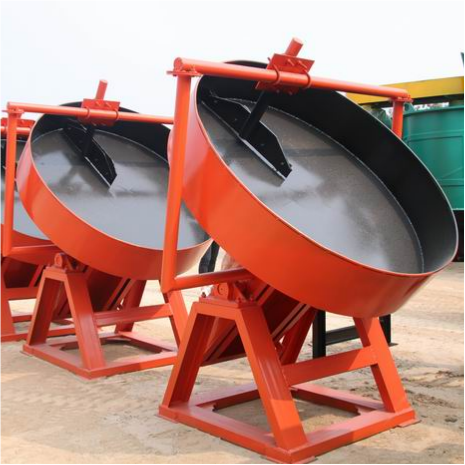
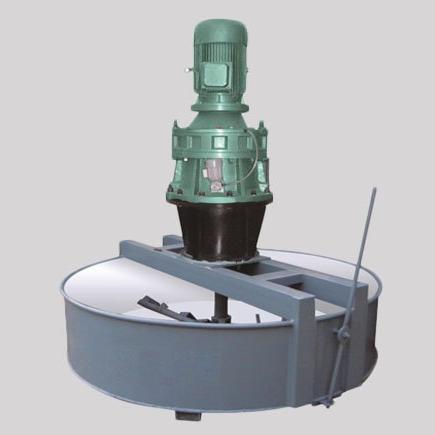
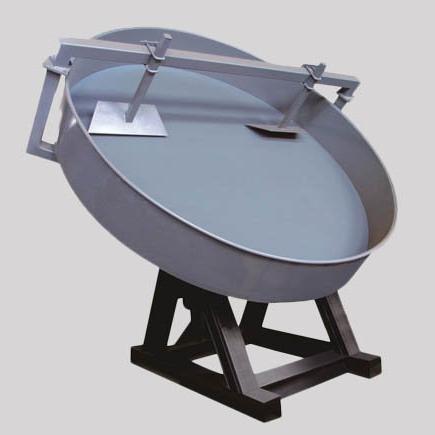
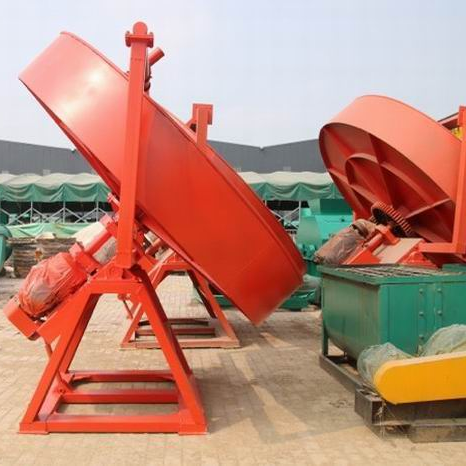
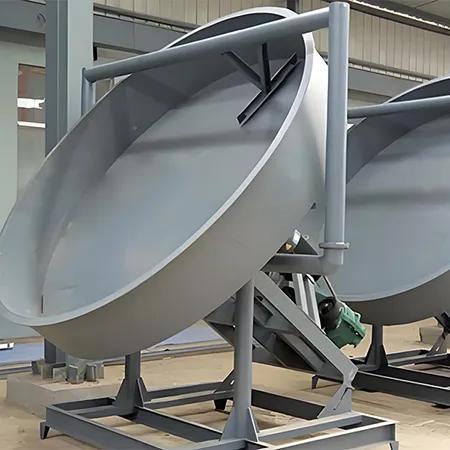
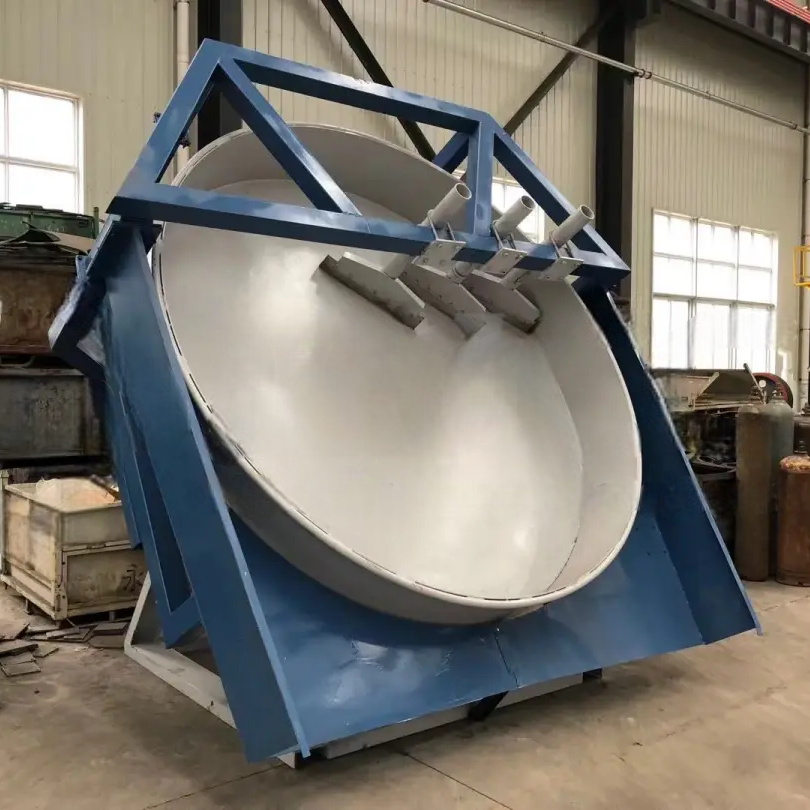
The Disc Granulator, also known as a Pan Granulator, is a highly efficient and visually controllable granulation system. Utilizing an inclined rotating disc, it creates perfectly spherical granules through a cascading and rolling motion. Renowned for its operational flexibility, ease of adjustment, and compact design, it is ideal for medium-scale production, pilot plants, and applications requiring frequent formula changes or superior granule sphericity.
Key Features
-
Inclined Rotating Disc
The core component, with an adjustable angle (typically 35-60°), dictates the material's tumbling path and retention time.
-
Visual Process Control
The open design allows operators to directly observe the granulation process, enabling real-time adjustments for optimal results.
-
Adjustable Parameters
Granule size is easily controlled by varying disc angle, rotation speed, binder spray rate, and feed location.
-
Scraper Assembly
An internal scraper ensures material does not adhere to the disc bottom, maintaining efficient operation.
-
Robust Support Structure
Includes a heavy-duty base, central drive shaft, and often a gear and motor system for smooth rotation.
Advantages
-
Superior Granule Shape
Produces the most uniform and spherical granules of any method, enhancing product appearance and fluidity.
-
Operational Flexibility
Excellent for batch production, multi-product lines, or R&D due to quick cleanup and parameter changes.
-
High Granulation Rate
Achieves a high yield of on-size granules with a low recycle rate of fines, improving overall efficiency.
-
Low Power Consumption
Simple rotational movement requires less energy compared to high-pressure or large rotary drum systems.
-
Ease of Maintenance
Straightforward mechanical design and easy access to the disc and scrapers simplify upkeep.
Applicable Raw Materials
-
NPK Powder Blends
Excellent for compound fertilizers where precise nutrient distribution is needed.
-
Ammonium Salts & Urea
With appropriate binding agents.
-
Organic & Bio-Fertilizer Mixes
Compost, peat, and blended organic materials where gentle agglomeration is key.
-
Limestone, Gypsum & Soil Amendments
For producing uniform prills.
-
Industrial Powders
Such as ores, chemicals, and pigments where granulation is required.
Basic Structure & Components
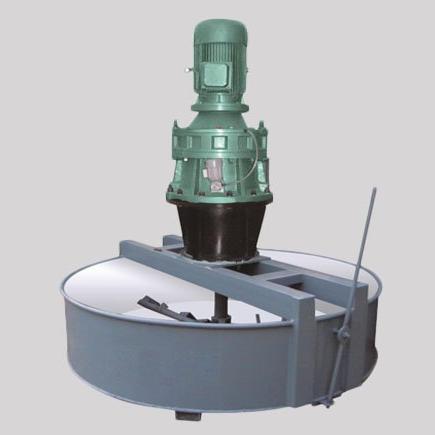
The main, shallow, inclined rotating pan, often with a reinforced steel frame and wear-resistant lining.
Includes the central shaft, thrust bearing, gear reducer, and motor.
Allows precise setting of the disc’s inclination (manually or hydraulically).
One or multiple scrapers mounted to prevent material buildup on the disc.
Consistently delivers pre-mixed material to the disc.
Pipes and nozzles for uniformly applying binder (water, slurry, or steam) onto the bed of material.
Guides finished granules off the disc as they overflow the rim.
Provides stability and operational safety.
Technical Data
Specification mm | Production Capacity t/h | Rev r/min | Motor | |
Model | Power | |||
φ2.2 | 2.5-3 | 13.3 | Y132M-4 | 7.5 |
φ2.5 | 3-5 | 13.3 | Y132M-4 | 7.5 |
φ3.0 | 4.5 | 11 | Y160M-4 | 11 |
φ3.2 | 10 | 11.2 | Y160M-4 | 11 |
φ3.6 | 12 | 11.2 | Y180M-4 | 11 |
φ4.2 | 16 | 14.75 | Y200L-4 | 30 |
φ5.0 | 15-25 | 8.3 | Y225M-4 | 45 |
φ5.5 | 35-46 | 7.1 | Y280M-4 | 90 |
φ6.0 | 45-60 | 7.1 | Y280M-4 | 90 |
Key Differentiators vs. Other Granulators
- vs. Rotary Drum Granulator
- vs. Extrusion Granulator
- vs. Spray Rotary Dryer-Granulator
- vs. Gear Shaping Granulator
Offers visual process control and easier size adjustment but generally has a lower continuous capacity. The disc is more open, while the drum is enclosed, making the disc better for flexible or batch production.
Produces smooth, spherical granules via agglomeration rather than dense, cylindrical pellets via compaction. It requires moisture/binders for growth, unlike the dry extrusion process.
Is a pure granulator for moist powders and requires a separate dryer. It cannot handle liquid slurries directly but offers superior granule shape control for its applicable materials.
Specializes in producing uniform spheres from a rolling action, whereas the gear shaping unit molds material into specific, often non-spherical shapes using pressure from intermeshing gears.