
Chain Crusher
The Efficient Impact Crusher for Lightweight, Brittle, and Fibrous Organic Materials
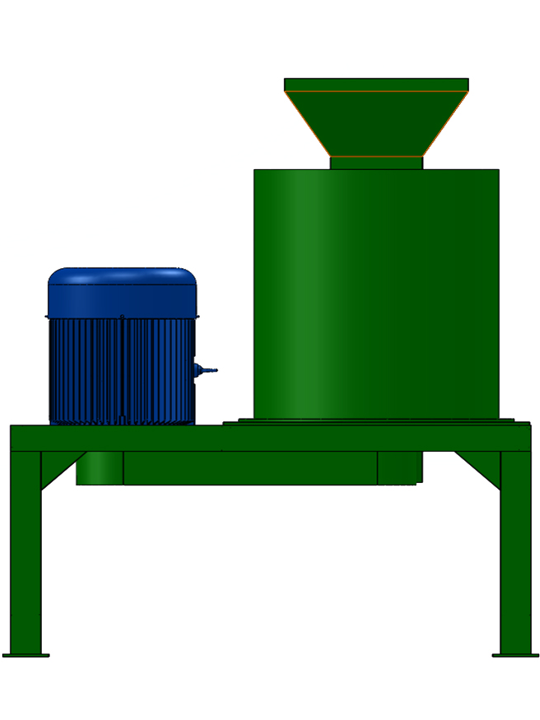
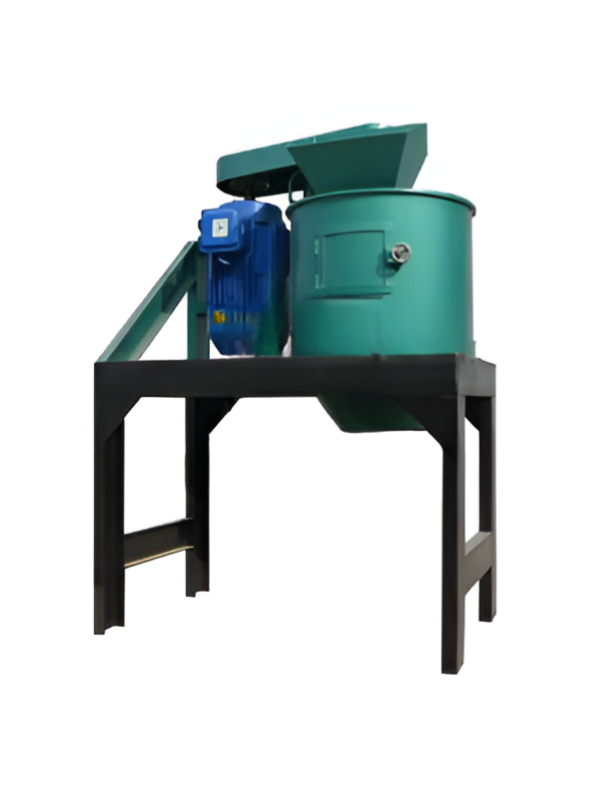
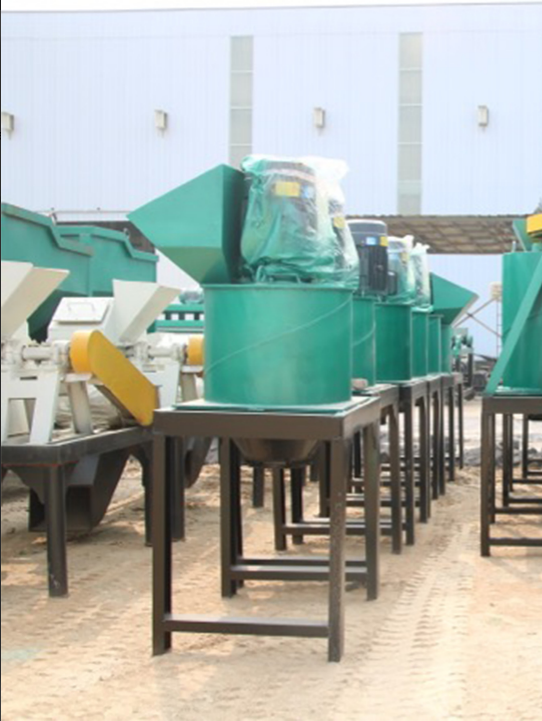
The Chain Crusher is a specialized impact crusher optimized for the size reduction of lightweight, brittle, low-density, and fibrous materials common in organic fertilizer production. It operates on a simple yet effective principle: high-speed rotating steel chains within a closed chamber pulverize material through multiple impact collisions. This design is exceptionally effective for crushing dried manure, compost, peat, and other organic aggregates with low energy consumption and minimal risk of clogging.
Key Features

-
High-Speed Rotor with Chains
The core component is a rotor fitted with multiple free-swinging, high-strength steel chains that act as flexible, high-impact hammers.
-
Screenless or Grated Design
Available in both screenless (for general crushing) and grated versions (for more controlled sizing), providing flexibility for different process requirements.
-
Simple & Robust Construction
Features a heavy-walled crushing chamber, a heavy-duty rotor shaft with bearing assemblies, and minimal internal components, ensuring durability and ease of maintenance.
-
Low Power Consumption
The efficient impact crushing action of the chains, combined with the low density of typical feed materials, results in a favorable power-to-throughput ratio.
-
Effective on Brittle Materials
The chains deliver numerous high-velocity, shattering impacts that are ideal for breaking down dried, crusty, and friable organic substances.
Advantages
-
Ideal for Organic Materials
Specifically designed for the physical properties of dried manure, compost, straw, peat, and other bio-based feedstocks, preventing the over-grinding or "paste-making" that can occur in other crushers.
-
Low Wear & Operating Costs
The chains are inexpensive, easily replaceable wear parts. The simple design minimizes other points of failure.
-
Resistant to Clogging
The swinging chains and often open discharge design prevent jamming from fibrous or slightly agglomerated materials.
-
Uniform Crushing Action
The multitude of chains ensures material is struck repeatedly from different angles, producing a consistent particle size.
-
Easy Maintenance
Quick chain replacement and easy access to the interior through large doors simplify upkeep.
Applicable Raw Materials
-
Dried Animal Manure
Poultry, cow, and sheep manure cakes
-
Compost & Vermicompost
Lumpy or aggregated finished compost
-
Peat & Coir
Dried peat moss and coconut coir blocks
-
Plant-Based Aggregates
Straw, dried leaves, and other lightweight agricultural residues
-
Crusted Material Surfaces
Breaking up crusted layers from stockpiles
Basic Structure & Components
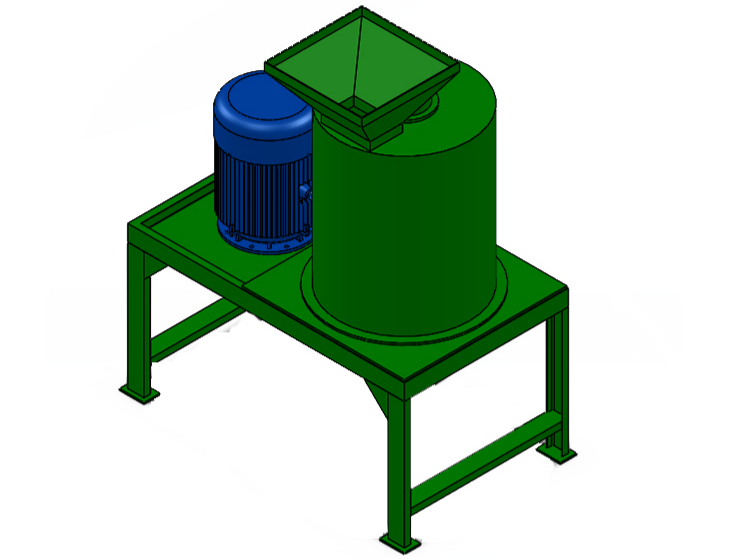
A cylindrical or rectangular housing with a replaceable, wear-resistant liner.
A solid steel shaft mounted with chain hangers (stators) to which the multiple steel chains are attached.
An electric motor connected via V-belts and sheaves to the rotor shaft, providing high rotational speed.
A chute that guides material tangentially into the path of the rotating chains.
Located at the bottom or side of the chamber; may be open or fitted with a sizing grate/screen.
Large, bolted doors on the housing for inspection, maintenance, and chain replacement.
Supports the entire assembly.
Technical Data
| Model | Maximum feed size (mm) | Particle size of crushed materials (mm) | Motor power (kw) | Throughput (t/h) |
| LP500 | ≤60 | Φ < 0.7 | 11 | ~3 |
| LP600 | ≤60 | Φ < 0.7 | 15 | ~5 |
| LP800 | ≤60 | Φ < 0.7 | 18.5 | ~8 |
| LP1000 | ≤60 | Φ < 0.7 | 22 | ~12 |
Key Differentiators vs. Other Crushers
- vs. Hammer Crusher
- vs. Cage Crusher
- vs. Two-Stage Crusher
- vs. Semi-wet Material Crusher
- Overall Position
Uses flexible chains instead of solid hammers. This makes it more suitable for lightweight, brittle, low-density organics and less prone to damage from minor contaminants. Hammer crushers are better suited for denser, harder materials like mineral fertilizers.
While both use impact, the Chain Crusher’s flexible elements are better for fibrous and irregularly shaped organic matter that might bridge in a cage. The Cage Crusher provides more controlled, cubical fracturing for friable minerals.
The Two-Stage Crusher is a more heavy-duty, multi-mechanism solution for larger, tougher lumps (including sticky ones). The Chain Crusher is a simpler, more economical single-stage solution optimized for dry, brittle organics.
Designed for completely different material states. The Chain Crusher is for dry, brittle materials; the Semi-wet Crusher is for wet, sticky, paste-like materials (high moisture). They are not interchangeable.
It is the most cost-effective and efficient primary crusher dedicated to dry organic fertilizer feedstocks and lightweight aggregates, forming a crucial first step in organic fertilizer powder or granule production lines.