
Cement Mill
The High-Performance Grinding System for Producing Portland and Blended Cements
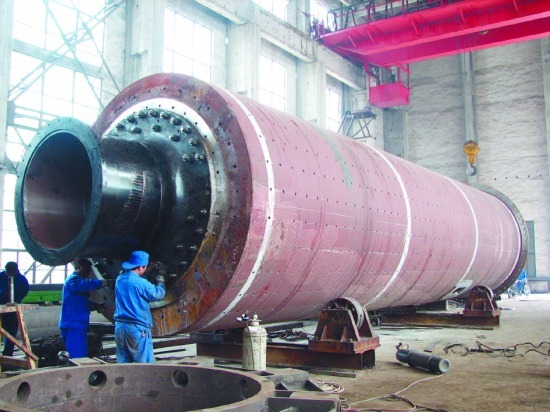
The Cement Mill is a specialized grinding system engineered for the efficient and precise reduction of cement clinker and gypsum into the fine powder known as Portland cement. Optimized for high throughput, energy efficiency, and product quality control, it manages the critical process of transforming granular, hard clinker into a reactive powder with specific surface area (Blaine) requirements. Modern cement mills are central to producing consistent, high-strength cement for global construction.
Key Features
-
Clinker-Specific Grinding Technology
Designed to handle the high grindability index and abrasive nature of cement clinker, utilizing optimized grinding media (balls, cylpebs) and liner profiles.
-
Closed-Circuit Grinding with High-Efficiency Separator
Operates in conjunction with an external dynamic or static separator (cyclone) to form a closed circuit, continuously recycling coarse material for maximum grinding efficiency and precise particle size control.
-
Cement Cooling System
Integrates internal water spraying (mill internals) or external cement coolers to control grinding temperature, preventing gypsum dehydration and ensuring optimal cement quality.
-
Multi-Compartment Design (for ball mills)
Often features two or more chambers with different grinding media sizes and liner types to progressively grind material from coarse clinker to fine cement.
-
Advanced Process Control
Equipped with instrumentation to monitor mill sound, elevator power, and separator speed for automated control of feed rate and product fineness.
Advantages
-
Optimized for Cement Production
Every aspect, from mechanical design to system integration, is tailored for the specific physical and chemical requirements of cement grinding, ensuring maximum performance.
-
High Production Capacity & Consistency
Capable of continuous, large-volume output with stable product properties (fineness, strength) batch after batch.
-
Energy Efficiency
The closed-circuit operation with high-efficiency separators significantly reduces specific energy consumption (kWh/ton) compared to open-circuit systems.
-
Product Flexibility
Can be used to produce a wide range of cement types (OPC, PPC, PSC) by adjusting clinker, gypsum, and additive ratios, as well as grinding parameters.
-
Proven Global Standard
Represents the dominant and most reliable technology for cement finish grinding worldwide.
Applicable Raw Materials
-
Cement Clinker
The primary feed material, produced from a cement kiln.
-
Gypsum (or Anhydrite)
Added to control setting time (typically 3-5%).
-
Supplementary Cementitious Materials (SCMs)
Such as granulated blast furnace slag, fly ash, pozzolana, or limestone for producing blended cements.
-
Other Mineral Additives
For specialty cement formulations.
Basic Structure & Components
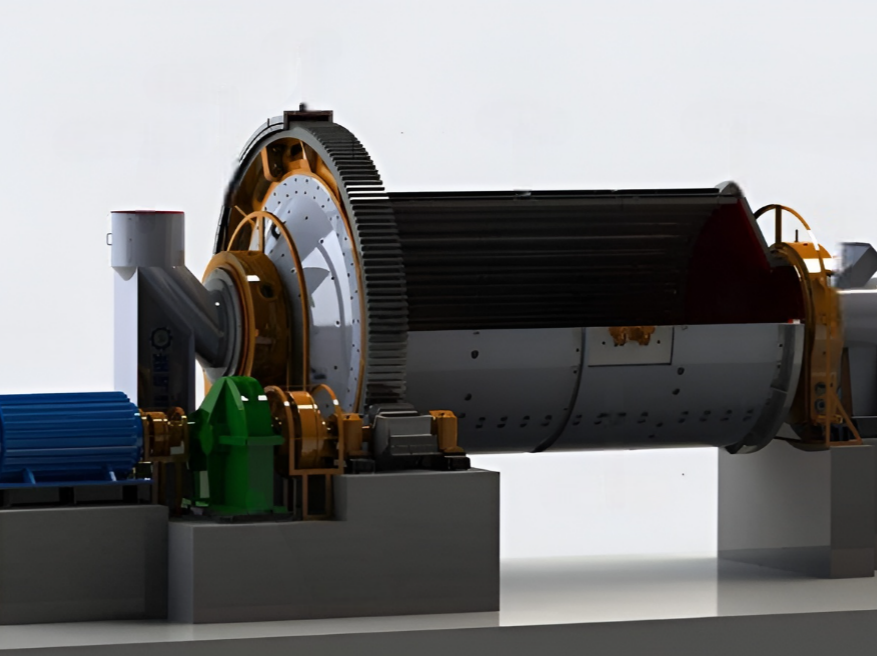
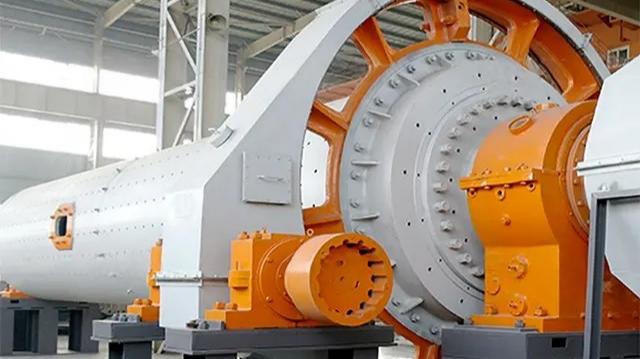
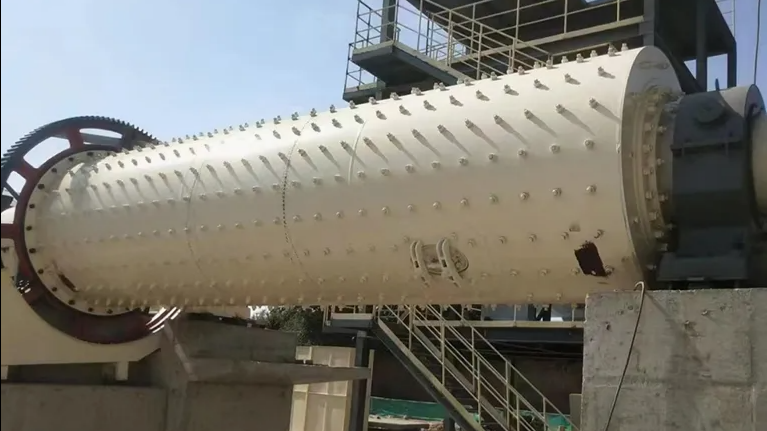
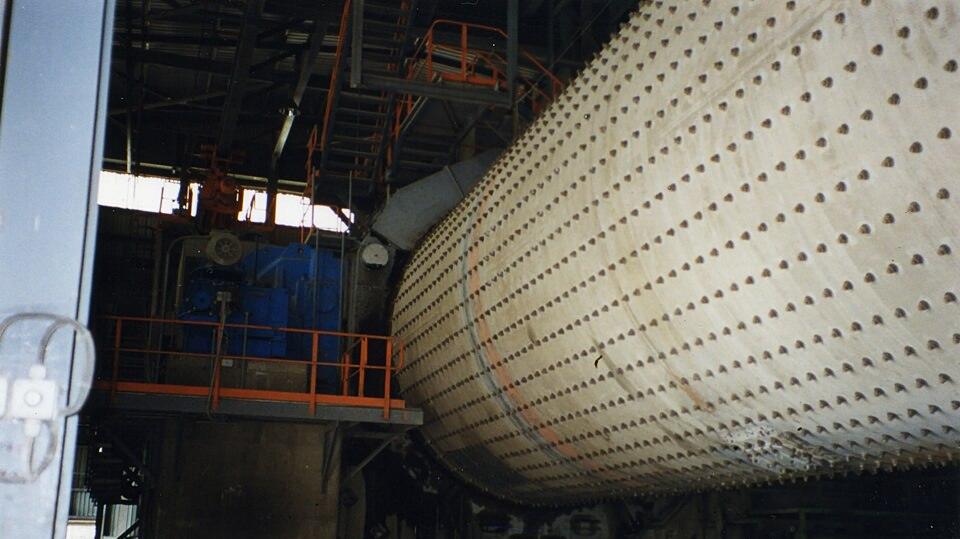
Typically a large-diameter ball mill or vertical roller mill (VRM) specifically designed for cement. For ball mills, this includes a multi-compartment cylindrical shell.
A carefully graded charge of high-chromium steel balls or cylpebs of varying sizes.
Specially profiled wear plates (e.g., classifying liners) that optimize media motion and grinding efficiency in each compartment.
Perforated partitions separating mill compartments, controlling material flow and media segregation.
An external dynamic or cyclone air classifier that separates fine product from coarse material for recycling.
A high-power motor coupled with a gearbox (central or girth gear drive) for ball mills, or a planetary gearbox for VRMs.
Continuous feeding of clinker, gypsum, and additives; discharge of ground cement to the separator.
May include internal mill spray system or a downstream cement cooler (e.g., tube cooler, fluidized bed cooler).
Baghouse filter for collecting finished cement from the separator air stream.
Technical Data
| Specifications | Effective volume (m3) | Feed size (mm) | Rotating speed (r/min) | Load of grinding media (t) | Driving Mode | Main motor | Main reducer | weight (t) | ||
| Type | Power | Type | Speed ratio | |||||||
| MB1864 | 14.76 | ≤25 | 23.9 | 18.5 | Edge | JR137-8 | 210 | ZD60-8 | 4.5 | 35 |
| MB1870 | 16.44 | ≤25 | 23.9 | 21 | Edge | JR138-8 | 245 | ZD60-8 | 4.5 | 39.2 |
| MB1875 | 17.68 | ≤25 | 23.9 | 22.5 | Edge | JR138-8 | 245 | ZD60-8 | 4.5 | 40 |
| MB2265 | 21.3 | ≤25 | 21.4 | 31 | Edge | JR148-8 | 380 | ZD70-9 | 5 | 49 |
| MB2270 | 23.1 | ≤25 | 21.4 | 33.4 | Edge | JR148-8 | 380 | ZD70-9 | 5 | 52 |
| MB2275 | 24.7 | ≤20 | 21.4 | 34 | Edge | JR158-8 | 380 | ZD70-9 | 5 | 60 |
| MB2295 | 30.3 | ≤20 | 21.4 | 41 | Edge | JR1510-8 | 475 | ZDH70-9 | 5 | 70 |
| MB22110 | 35.8 | ≤20 | 21.4 | 50 | Edge | JR1512-8 | 570 | ZD80 | 5 | 92 |
| MB22130 | 42.4 | ≤20 | 21.4 | 53 | Edge | YR630-8 | 630 | ZD80 | 5 | 106.1 |
| MB2470 | 28.17 | ≤20 | 20.4 | 39 | Edge | JR1512-8 | 570 | ZD80 | 5 | 72 |
| MB2480 | 32.2 | ≤20 | 20.4 | 45 | Edge | JR1512-8 | 570 | ZD80 | 5 | 77 |
| MB2490 | 36.2 | ≤20 | 20.4 | 48 | Edge | JR1512-8 | 570 | ZD80 | 5 | 81 |
| MB24100 | 40.3 | ≤20 | 20.91 | 50 | Edge | JR1512-8 | 570 | ZD80 | 5 | 111 |
| MB24110 | 43.4 | ≤20 | 20.91 | 58 | Edge | JR1512-8 | 630 | MBY630 | 5 | 125 |
| MB24120 | 46.5 | ≤25 | 21.5 | 64 | Edge | YR800-8 | 800 | MBY710 | 6.3 | 126 |
| MB24130 | 49.6 | ≤25 | 21.5 | 70 | Edge | YR800-8 | 800 | MBY710 | 6.3 | 130.6 |
| MB26100 | 45.47 | ≤20 | 19.6 | 66 | Edge | YR800-8 | 800 | MBY710 | 5.6 | 140 |
| MB26130 | 60.5 | ≤25 | 19.11 | 80 | Edge | YR1000-8 | 1000 | MBY710 | 4.5 | 158 |
| MB3090 | 58.5 | ≤25 | 18.98 | 85 | Edge | YR1000-8 | 1000 | MBY710 | 5.6 | 147 |
| MB30110 | 71 | ≤20 | 18.98 | 95 | Edge | YR1250-8 | 1250 | MBY(X)800 | 5.6 | 165 |
| MB30120 | 73.9 | ≤20 | 18.98 | 103 | Edge | YR1400-8 | 1400 | MBY(X)900 | 6.3 | 175 |
| MB30130 | 76.8 | ≤20 | 18.98 | 112 | Edge | YR1400-8 | 1400 | MBY(X)900 | 6.3 | 190 |
| MB32110 | 75.4 | ≤20 | 18.2 | 112 | Edge | YR1400-8 | 1400 | MBY(X)900 | 6.3 | 213 |
| MB32130 | 88.95 | ≤20 | 18.4 | 123 | Edge hollow shaft | YR1600-8 | 1600 | MBYX1000 | 7.1 | 216 |
| 18.4 | 123 | Edge double slide shoe | YR1600-8 | 1600 | MBYX1000 | 7.1 | 220 | |||
| MB32140 | 96.5 | ≤20 | 18.2 | 132 | Edge | YR1800-8 | 1800 | MBYX1000 | 6.3 | 237 |
| MB34110 | 91.2 | ≤20 | 18.2 | 120 | Edge | YR1600-8 | 1600 | MBYX1000 | 6.3 | 230 |
| MB35115 | 99.8 110.8 | ≤20 | 17.38 | 130 | Edge | YR1800-8 | 1800 | MBYX1000 | 6.3 | 242 |
| MB35130 | ≤20 | 17.38 | 156Max | Edge hollow shaft | YR2000-8 | 2000 | MBYX1000 | 6.3 | 258 | |
| MB35130 | ≤20 | 17.38 | 156Max | Edge double slide shoe | YR2000-8 | 2000 | JDX-100 | 6.3 | 250 | |
| M35130 | ≤20 | 16.6 | 156Max | Center hollow shaft | YR2000-8 | 2000 | MFY200A | 273 | ||
| M38120 | 108.5 | ≤20 | 16.3 | 143 | Center hollow shaft | YR2500-8 | 2500 | MFY250A | 310 | |
| M38120 | 108.5 133.9 | ≤25 | 16.3 | 143 | Center double slide shoe | YR2500-8 | 2500 | MFY250A | 320 | |
| M38130 | ≤25 | 17 | 190 Max | Center hollow shaft | YR2500-8 | 2500 | MFY250A | 320 | ||
| M38130 | ≤25 | 190 Max | Center double slide shoe | YR2500-8 | 2500 | JS130-C | 330 | |||
| MB38130 | ≤25 | 16.6 | 190 Max | Single edge and double driving | YRKK800-8 | 2500 | DBS250 | 325 | ||
| M40130 | 149 | ≤25 | 16.3 | 192 | Center double slide shoe | YRKK900-8 | 2800 | JS140-A | 348 | |
| M42110 | 138 164 | ≤25 | 15.8 15.6 | 200 230 | Center double slide shoe | YR2800-8 | 2800 | JS140-A | 350 | |
| M42130 | ≤25 | Center double slide shoe | YRKK1000-8 | 3550 | JS150-B2 | 380 | ||||
| M42130 | ≤25 | Center double slide shoe | YRKK1000-8 | 3550 | MFY355A | 390 | ||||
| M42145 | ≤25 | 16 | 255 | Center double slide shoe | YRKK1000-8 | 3800 | MFY400A | 405 | ||
| M46140 | 210 | ≤25 | 15 | 285 | Center double slide shoe | YR1000-8 | 4200 | JS160-C | 485 | |
| M50150 | 260 | ≤25 | 14 | 350 | Center double slide shoe | YRKK1000-8 | 6000 | 598 | ||
Key Differentiators vs. Other Grinders & Mills
- vs. Raw Meal Mill
- vs. General-Purpose Ball Mill
- vs. Air-Swept Coal Mill
- vs. Chain Mill
- Overall Position
Both are large grinding systems, but the Cement Mill is optimized for the final, finish-grinding stage of hard, abrasive clinker to a very high fineness. A Raw Meal Mill is for the raw mix grinding stage (softer materials like limestone/clay) to a coarser fineness for the kiln.
A Cement Mill is a highly specialized application of ball mill technology. It features specific liner designs, compartmentalization, cement cooling, and is always part of a closed-circuit system with a high-efficiency separator—configurations not standard on a general-purpose mineral ball mill.
Both are closed-circuit systems, but an Air-Swept Coal Mill integrates grinding and drying with hot air for a fuel. A Cement Mill grinds a hydraulic binder at controlled temperatures (often requiring cooling) and focuses on achieving specific physical properties (fineness, strength) rather than combustion characteristics.
A Chain Mill is for dry, brittle, organic materials. A Cement Mill is for extremely hard, mineral-based clinker. They are at opposite ends of the material hardness and application spectrum.
It is the cornerstone technology for the final, value-adding stage of cement manufacturing, engineered for precision, efficiency, and scale. Its performance directly determines the quality and economic viability of the final cement product.