
Cage Crusher
The Efficient Solution for Controlled, Low-Fines Crushing of Friable Materials
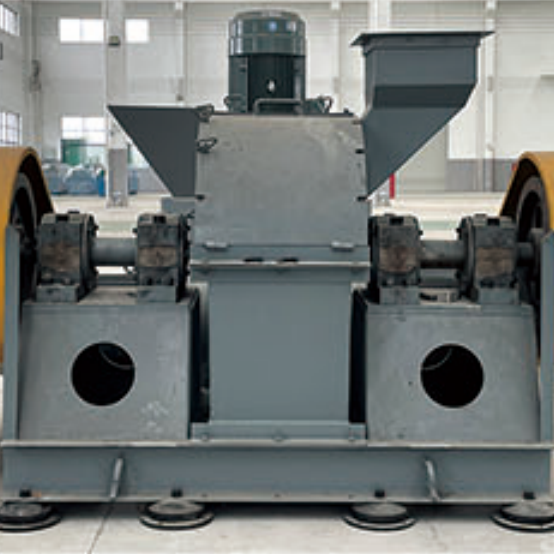
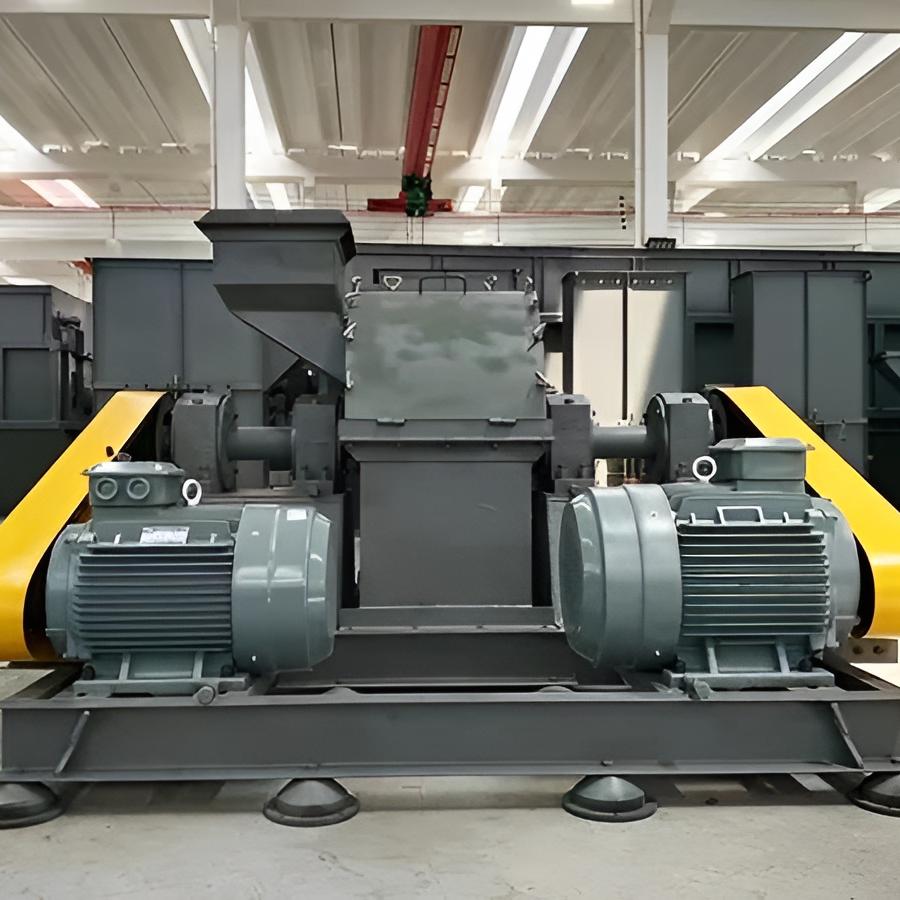
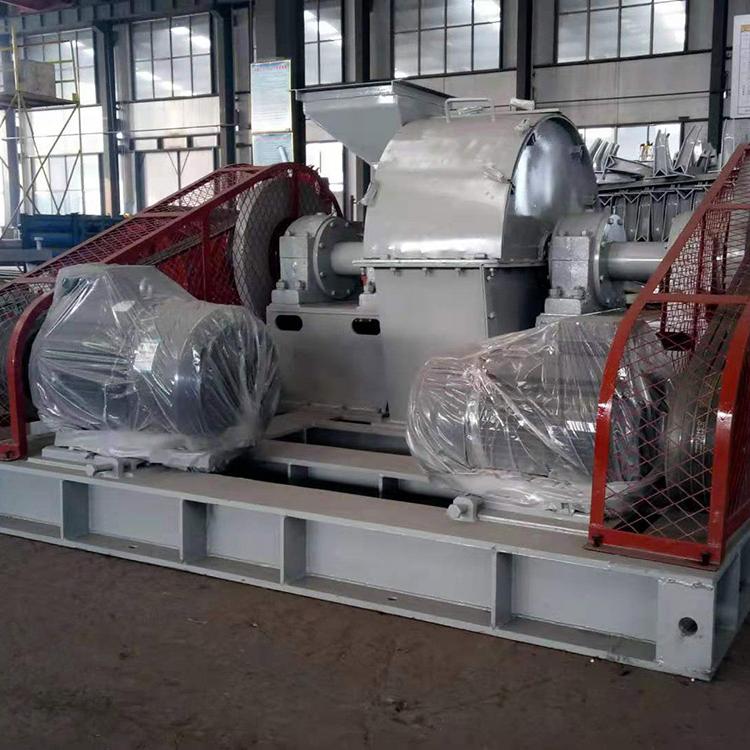
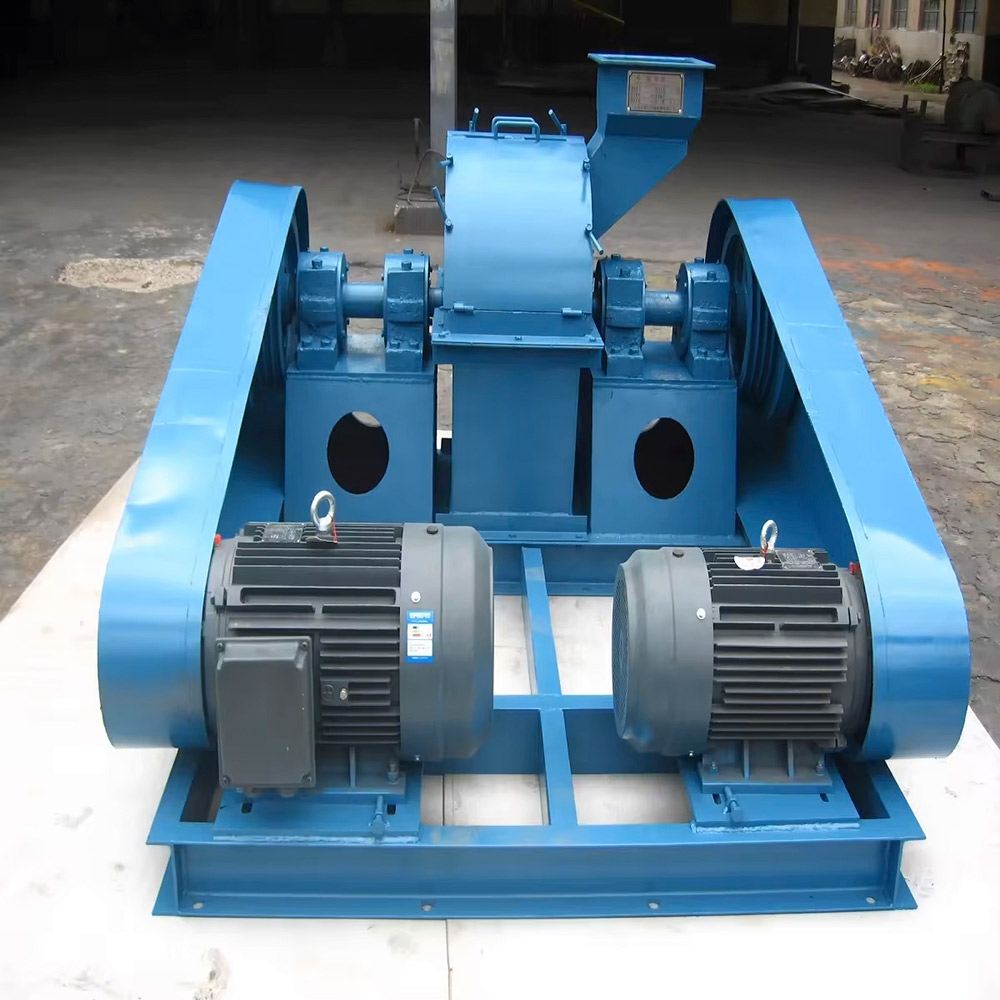
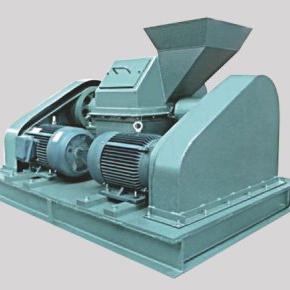
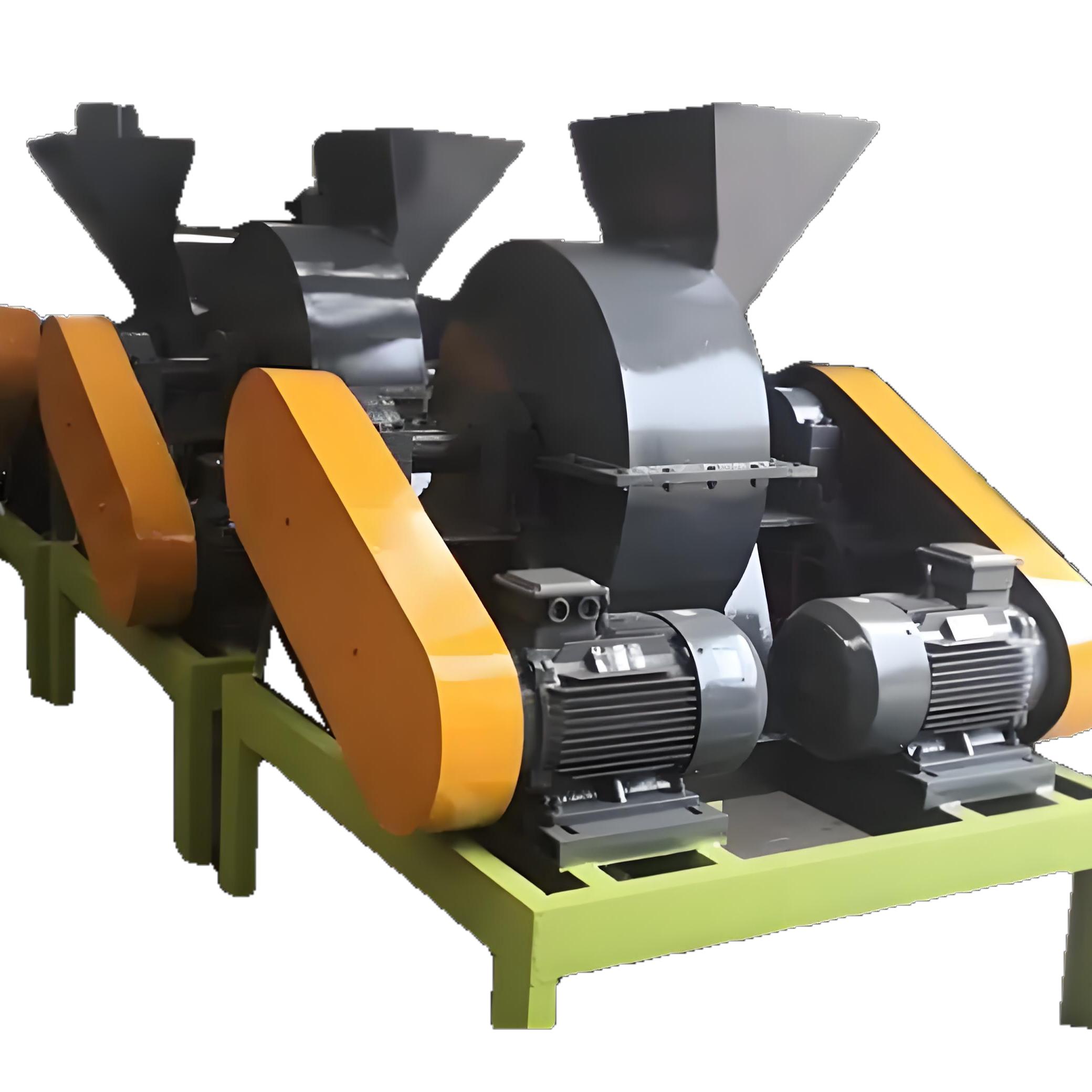
The Cage Crusher is a highly effective impact crusher designed for breaking up moderately hard, friable, and lumpy materials with minimal generation of undesirable fine particles. It operates via two counter-rotating cages or grids lined with steel bars. Material is fed into the center and is violently flung outward by the first cage, shattering against the bars of the second cage. This results in a controlled, uniform particle size ideal for pre-processing raw materials or sizing recycle streams in fertilizer production.
Key Features
-
Counter-Rotating Cage Design
Features two high-speed cages rotating in opposite directions, creating high-impact collisions for efficient size reduction with a uniform product.
-
Adjustable Bar Spacing
The distance between the steel bars on the cages can often be adjusted to control the final product size without needing screens in many applications.
-
Low Fines Generation
The impact-and-attrition action is designed to break materials along natural cleavage lines, producing fewer ultra-fine particles compared to hammer mills, which is critical for maintaining granulation efficiency.
-
Simple, Robust Construction
Consists primarily of the cages, a solid housing, and a drive system, resulting in a design that is easy to maintain and service.
-
High Capacity for its Size
The aggressive action of the cages allows for a high throughput relative to the crusher's physical footprint.
Advantages
-
Superior Product Size Control
Produces a more uniform, cubical product with a narrower particle size distribution, which is optimal for downstream processes like granulation.
-
Energy Efficient
Direct impact crushing is often more efficient for friable materials than compression or grinding, leading to lower power consumption per ton processed.
-
Low Wear & Operating Costs
When processing non-abrasive or moderately abrasive materials, wear on the cage bars is even and predictable, and replacement is straightforward.
-
Minimal Clogging
The open design of the cages allows material to flow through easily, reducing the risk of clogging from slightly damp or clumpy feed (compared to fine screens).
-
Versatile Reduction Ratio
Capable of achieving significant size reduction in a single stage, from lump feed to granule-sized product.
Applicable Raw Materials
-
Friable Minerals
Phosphate rock, nitratine, and lumpy potassium salts
-
Dried Lumps & Oversize Agglomerates
Oversized fertilizer granules, caked material from storage, and hardened recycle streams
-
Organic Materials
Dried manure cakes, lumpy compost, and other brittle organic inputs
-
Compound Fertilizer Lumps
Break-down of off-spec or oversized NPK compounds for recycling
Basic Structure & Components
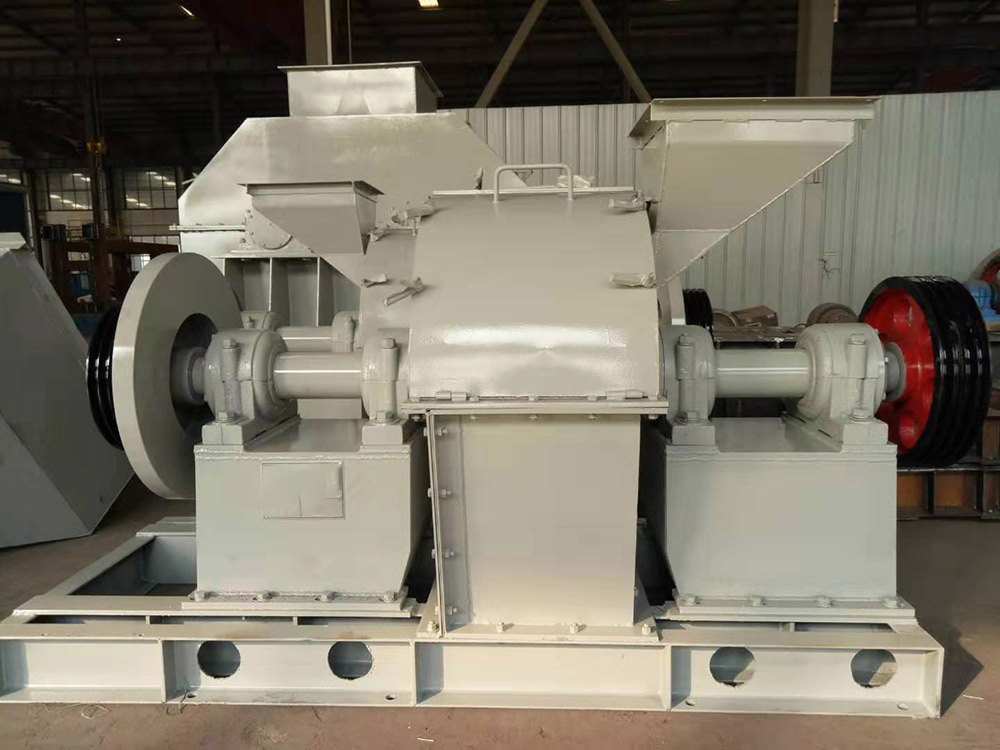
A welded steel enclosure that contains the crushing action and supports internal components.
Two solid steel rotors fitted with replaceable steel bars or rods arranged in a cylindrical cage structure.
Two independent motors and V-belt drives (or a single motor with a gearing system) to power the counter-rotating cages.
A centrally located inlet that directs material into the space between the two cages.
An outlet at the bottom of the housing for the crushed product to exit.
Provides stable support and allows for easy installation and alignment.
Heavy-duty doors for inspection, maintenance, and bar replacement.
Technical Data
| Specification | Production Capacity (t/h) | Feeding size (mm) | Discharge size (mm) | Materiel humidity (%) | Turn cage diameter (mm) | Rev (r/min) | Power (kW) |
| LFφ600 (double cage) | 4 | ≤15 | ≤1mm (90%) | ≤6 | φ600/φ400 | 1100 | 11/7.5 |
| LFφ800 (double cage) | 6-7 | φ800/φ630 | 960 | 22/15 | |||
| LFφ1000 (double cage) | 17-21 | φ1000/φ830 | 960 | 37/30 |
Key Differentiators vs. Other Crushers
- vs. Hammer Crusher
- vs. Jaw Crusher
- vs. Chain Crusher
- vs. Two-Stage Crusher
- Overall Position
Produces a more uniform product with fewer fines due to controlled impact between cage bars, whereas a hammer crusher tends to produce a wider size distribution and more fines through pulverization. Generally more suitable for friable materials rather than very hard or tough ones.
A secondary crusher for smaller, friable feed, while a jaw crusher is a primary crusher for very large, hard, and abrasive lumps. The cage crusher operates at much higher speeds and uses impact rather than compression.
While both use impact, the Cage Crusher is better for denser, mineral-based materials and offers more precise size control. The Chain Crusher is specialized for lightweight, fibrous, and brittle organic materials.
A single-stage, dedicated impact crusher. The Two-Stage Crusher combines mechanisms (e.g., hammer+chain) for a broader application range on complex materials like organics, but may not offer the same level of controlled, low-fines crushing for standard friable minerals.
It is the preferred choice for efficient, controlled size reduction of friable fertilizers and raw materials where minimizing fines and achieving a uniform product size are critical process objectives.