
Bucket Elevator
The Vertical Material Handling Specialist for Efficient, High-Capacity Lifting
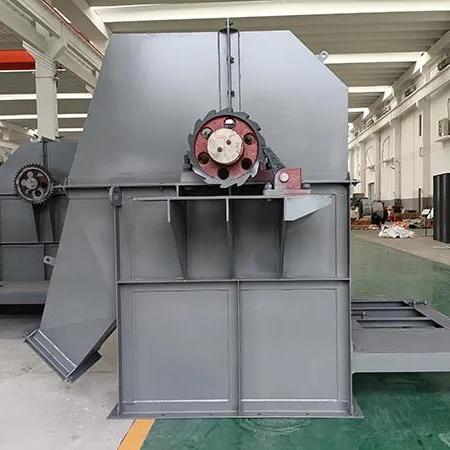
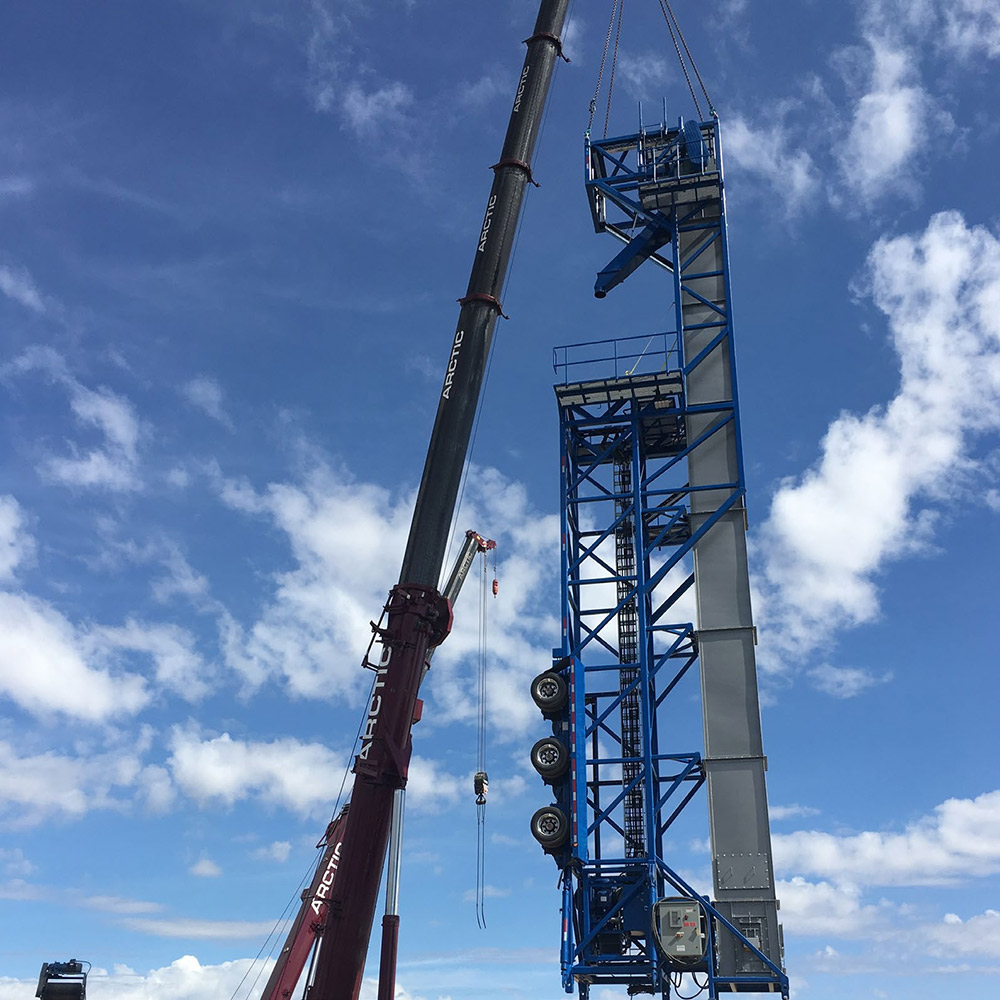
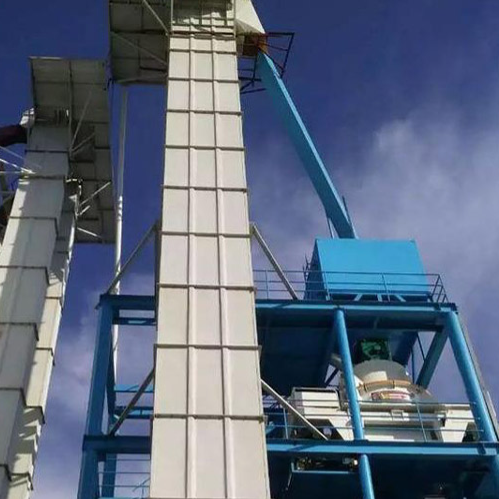
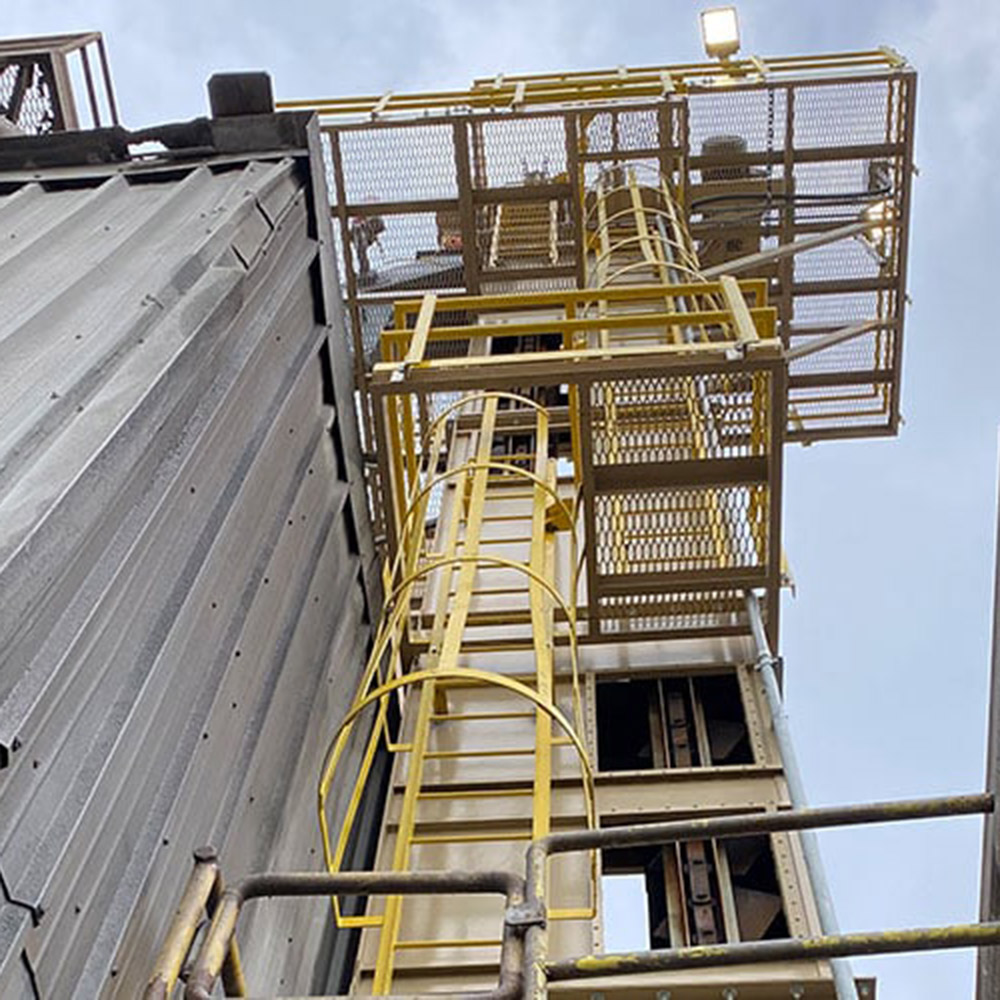
The Bucket Elevator is a proven and efficient machine designed for the continuous vertical lifting of free-flowing bulk materials. It consists of a series of buckets attached to a belt or chain that circulates between a lower loading point (boot) and an upper discharge point (head), scooping, elevating, and centrifugally discharging materials like fertilizer granules, powders, and raw feed. Its compact vertical footprint makes it indispensable for multi-story plant layouts where space is at a premium.
Key Features

-
Centrifugal or Continuous Discharge Design
Available in high-speed centrifugal discharge for fine/granular materials or continuous (gravity) discharge for fragile, abrasive, or lumpy materials.
-
Robust Traction Element
Utilizes high-strength rubber belts with steel cord reinforcement or heavy-duty roller chains to carry the buckets and withstand continuous operation.
-
Engineered Bucket Design
Features buckets made from durable polyethylene, nylon, or steel, shaped for optimal filling and discharge with minimal spillage and wear.
-
Enclosed Casing
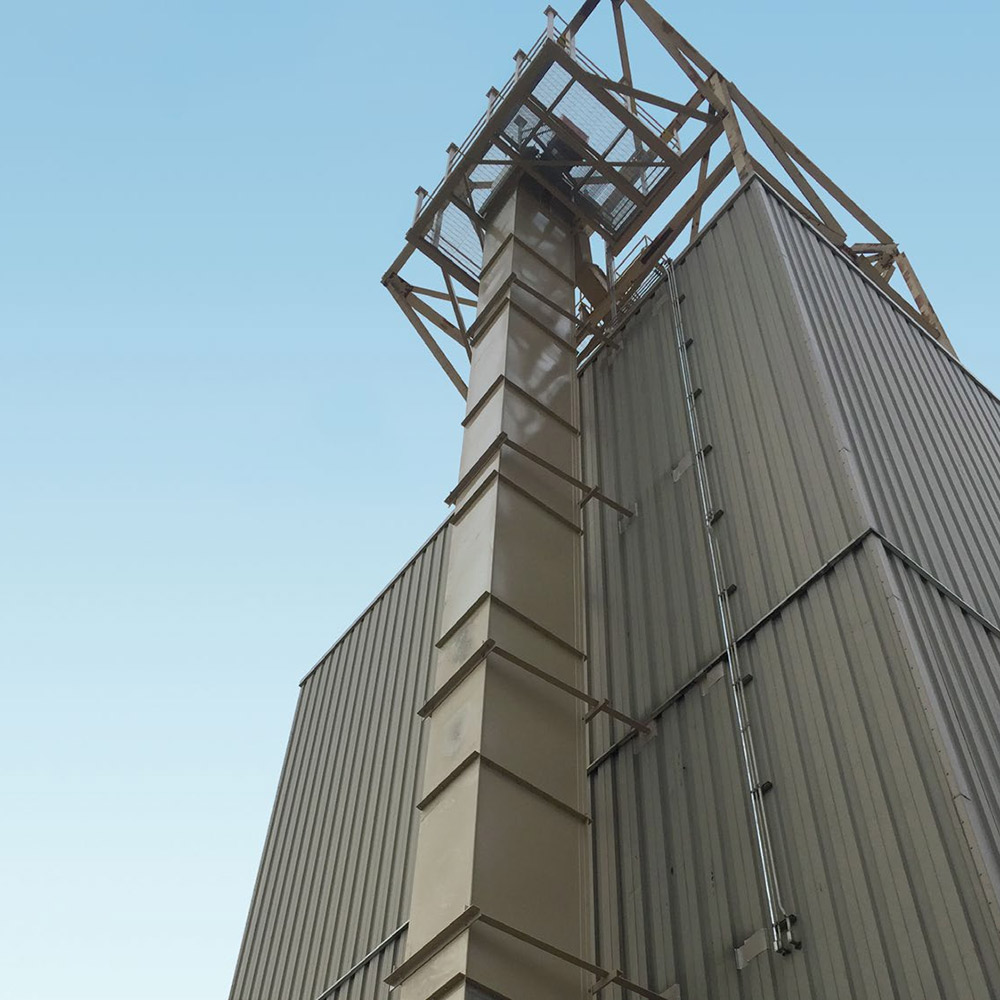
A fully enclosed, dust-tight housing constructed from steel plate ensures operator safety, contains dust, and protects the material and mechanism from the elements.
-
Self-Cleaning Boot
The bottom boot section is designed to allow material to be easily loaded into the buckets while preventing buildup and facilitating cleanup.
Advantages
-
Optimal Space Utilization
Transports materials vertically with a minimal floor space footprint, ideal for connecting processes across different plant levels.
-
High Lifting Efficiency
Capable of elevating large volumes of material to significant heights (over 50 meters) with relatively low energy consumption per ton lifted.
-
Gentle Handling Options
With the correct bucket and speed selection, it can handle a range of materials from fine powders to granules with minimal degradation.
-
Dust-Free & Weatherproof Operation
The fully enclosed design prevents product loss and contamination, allowing for outdoor installation if needed.
-
Proven Reliability & Simplicity
A mechanically straightforward design with a long history in industry, leading to high availability and ease of maintenance.
Applicable Raw Materials
-
Fertilizer Granules & Prills
NPK, urea, DAP/MAP, potash.
-
Raw Material Powders
Phosphate rock, limestone, gypsum.
-
Finished Product:
For elevating bagged or bulk product to loading silos.
-
Recycle Streams
Fines and undersize material being returned to the process.
-
Free-Flowing Industrial Materials
Grains, seeds, and similar granular products.
Basic Structure & Components
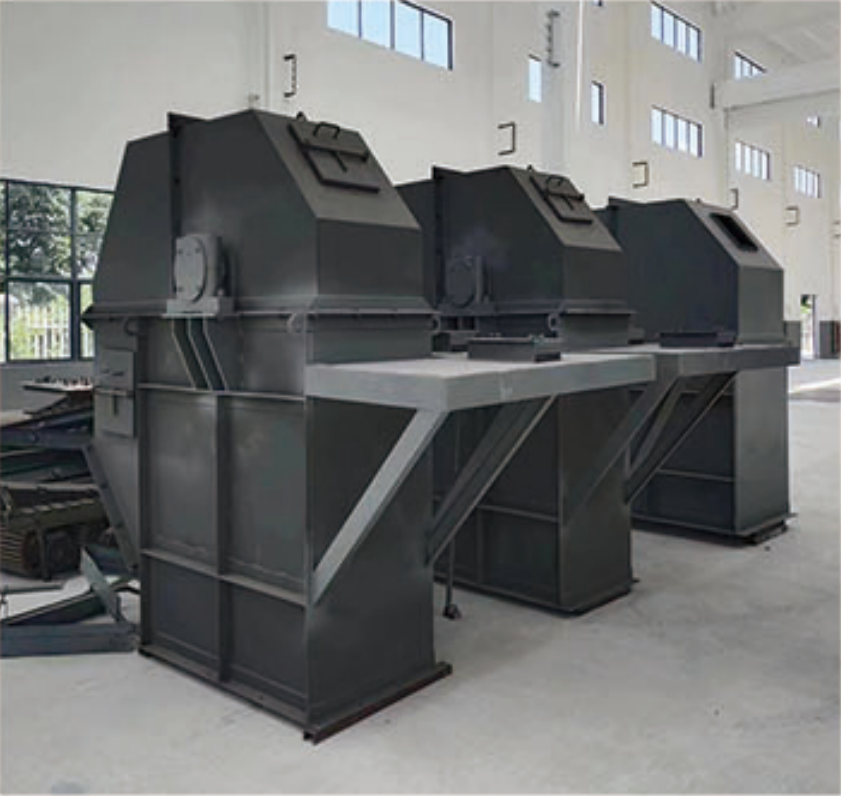
The outer steel enclosure, typically divided into head, intermediate, and boot sections.
Houses the drive pulley/sprocket, discharge chute, and often the main drive motor and gear reducer.
Contains the tail pulley/sprocket, the loading inlet (feed chute), and a tensioning device (screw or gravity take-up).
A reinforced fabric belt or a steel chain that circulates around the head and tail pulleys/sprockets.
The carrying vessels, uniformly spaced and securely attached to the belt or chain.
Electric motor, gear reducer, and possibly a backstop to prevent reverse rotation.
Located at the head, boot, and intermediate sections for maintenance and inspection.
Technical Data
Type of bucket elevator | Th315 | Th400 | Th500 | Th630 | Th800 | Th1000 | ||||||||
Type of feed hopper | zh | sh | zh | sh | zh | sh | zh | sh | zh | sh | zh | sh | ||
Transfer quantity | m³/h | 35 | 60 | 58 | 94 | 75 | 118 | 152 | 185 | 146 | 235 | 235 | 365 | |
Feedhopper | Width | mm | 315 | 400 | 500 | 630 | 800 | 1000 | ||||||
Volume | L | 3.75 | 6 | 5.9 | 9.5 | 9.3 | 15 | 14.6 | 23.6 | 23.3 | 37.5 | 37.6 | 58 | |
Distance between two hoppers | mm | 512 | 688 | 920 | ||||||||||
Ring chains | Diameter of ring chains x pitch | mm | φ18×64×7TK | φ22×86×7TK | φ26×92×7TK | |||||||||
Chain hook | φ18×64×M16 | φ22×86×M18 | φ26×92×M20 | |||||||||||
Number of chains | 2 | |||||||||||||
Breaking strength of each chain | kN | ≥320 | ≥480 | ≥570 | ||||||||||
Running speed of feed hopper | m/s | 1.4 | 1.5 | 1.6 | ||||||||||
Key Differentiators vs. Other Conveyors
- vs. Belt Conveyor
- vs. Scraper Conveyor
- vs. Screw Conveyor/En-Masse Conveyor
- vs. Pneumatic Conveying System
- Overall Position
A Belt Conveyor is designed for horizontal or inclined transport over long distances. A Bucket Elevator is purpose-built for efficient vertical lifting in a compact space. They are complementary technologies used at different stages of a plant layout.
A Scraper Conveyor is optimal for horizontal, enclosed, and often multi-point conveying of powders or difficult materials. A Bucket Elevator is singularly focused on vertical movement. A scraper conveyor cannot achieve significant vertical lift angles as efficiently.
While these can be configured for incline, their vertical lifting capability and efficiency are severely limited compared to a bucket elevator. Bucket elevators are the clear choice for dedicated high-volume vertical transport.
Both can move material vertically. Pneumatic systems are more flexible in routing but have much higher energy consumption and are better for lighter materials over shorter distances. Bucket elevators are more energy-efficient for heavy, granular materials and high-tonnage vertical lifts.
It is the most efficient and space-saving mechanical solution for high-capacity vertical transportation of granular and powdered materials in a fertilizer plant, forming a critical link between processing stages arranged on different levels.