
Belt Weigher (Continuous Weigh Feeder)
The Heart of Continuous Weighing and Precise Feed Rate Control
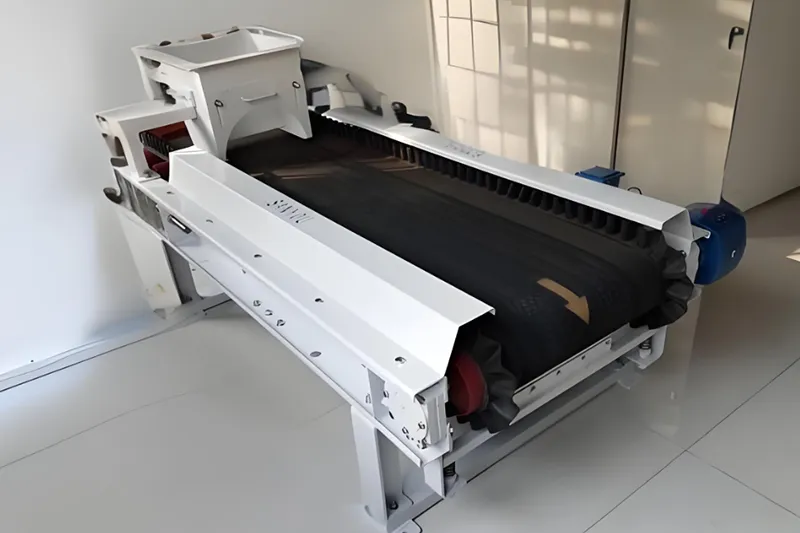
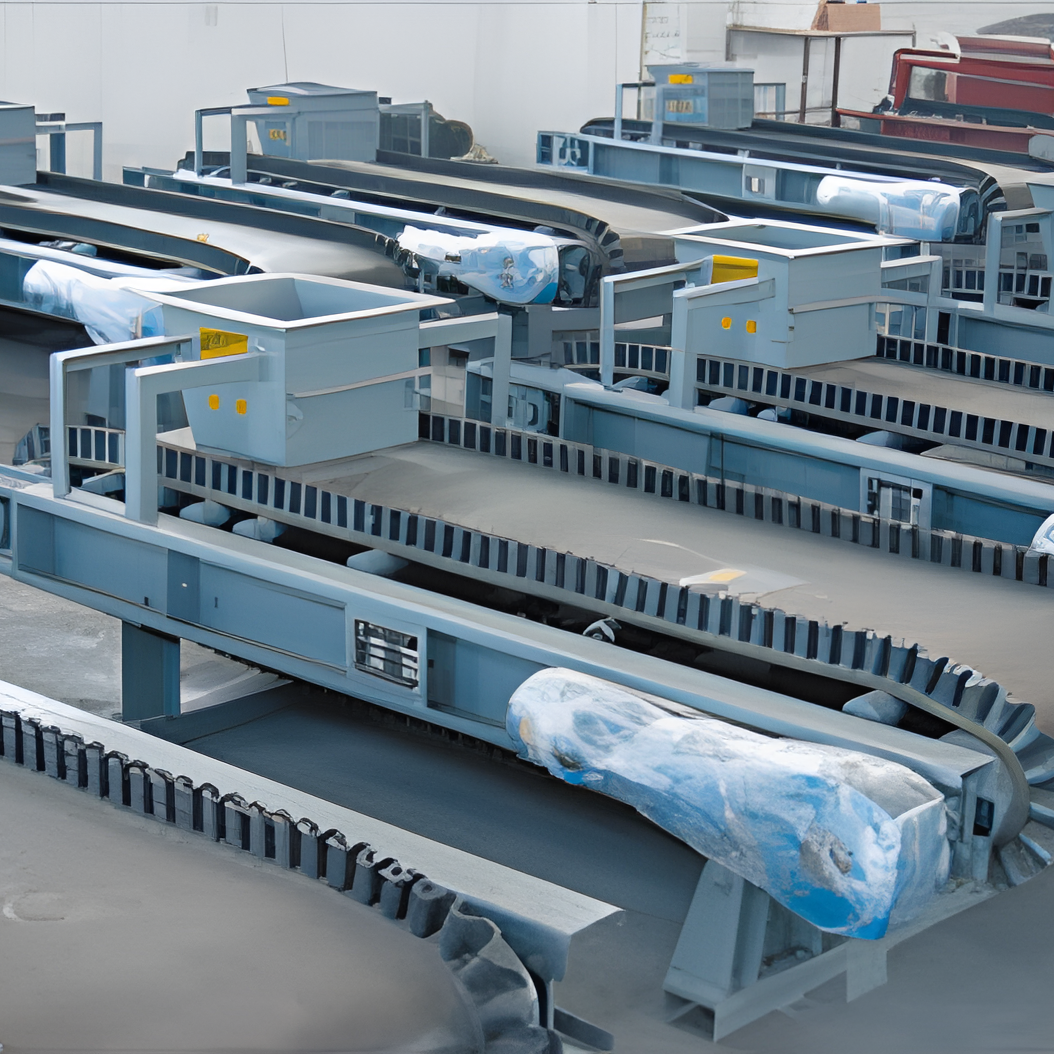
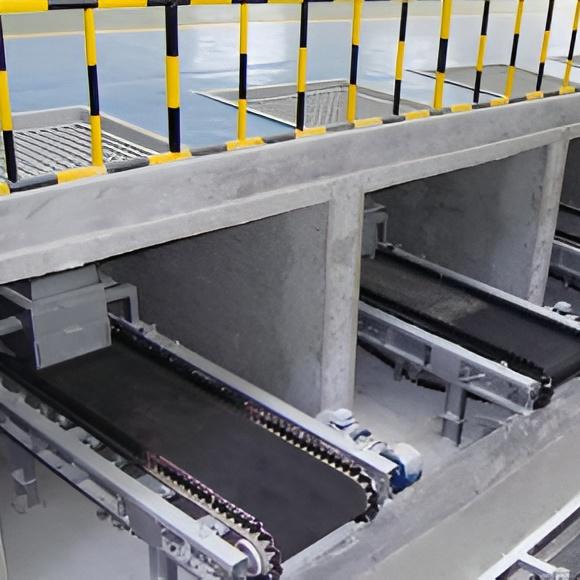
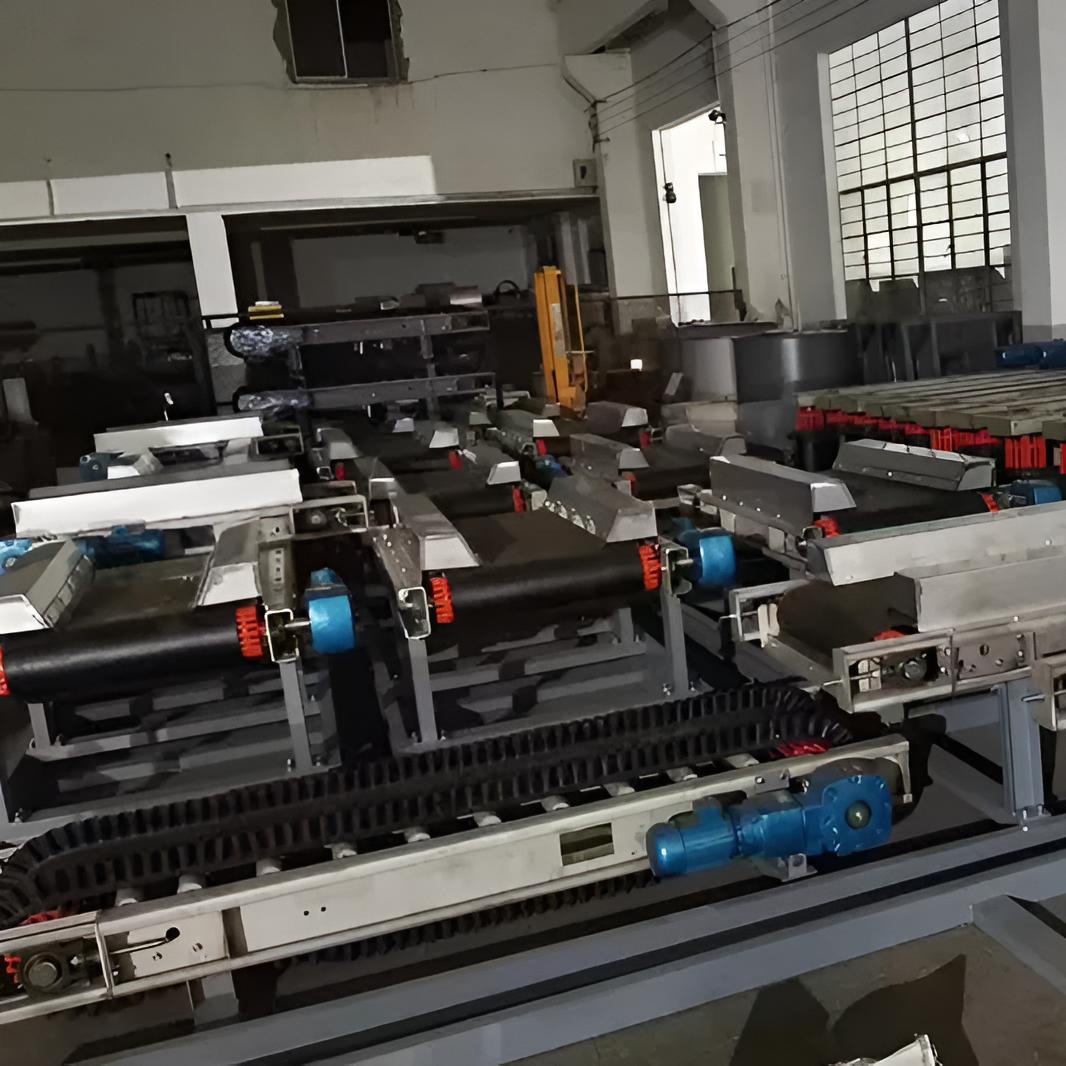
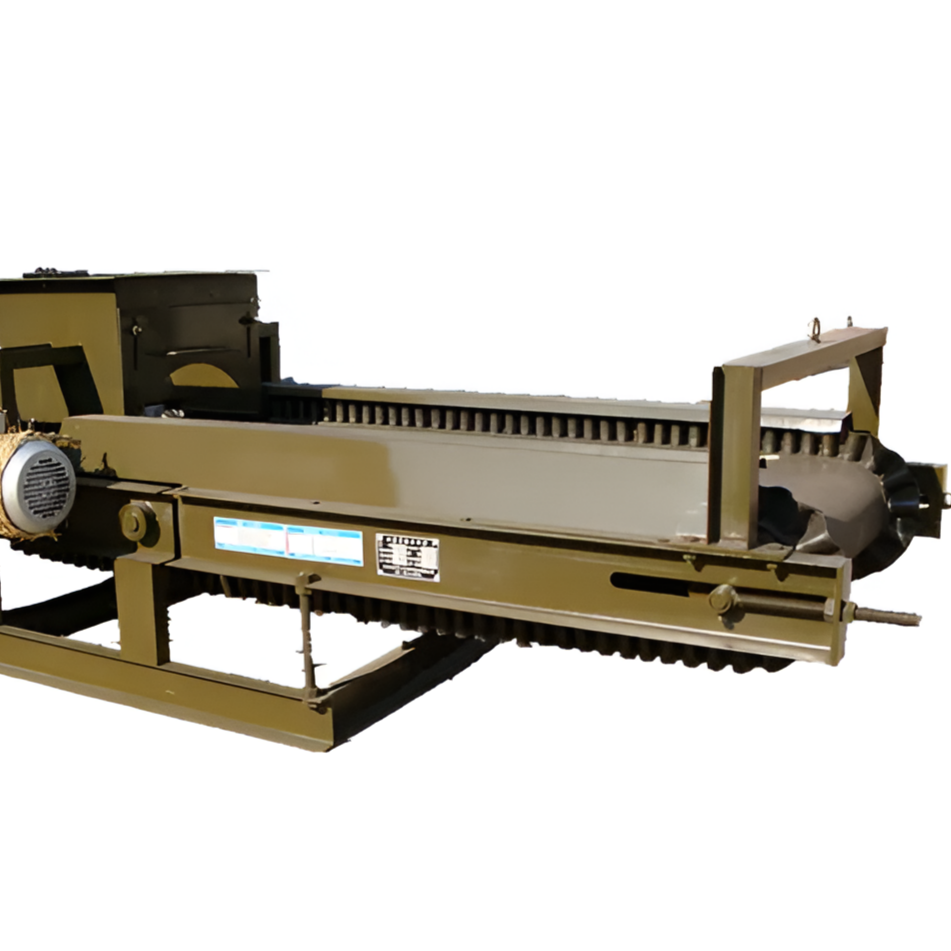
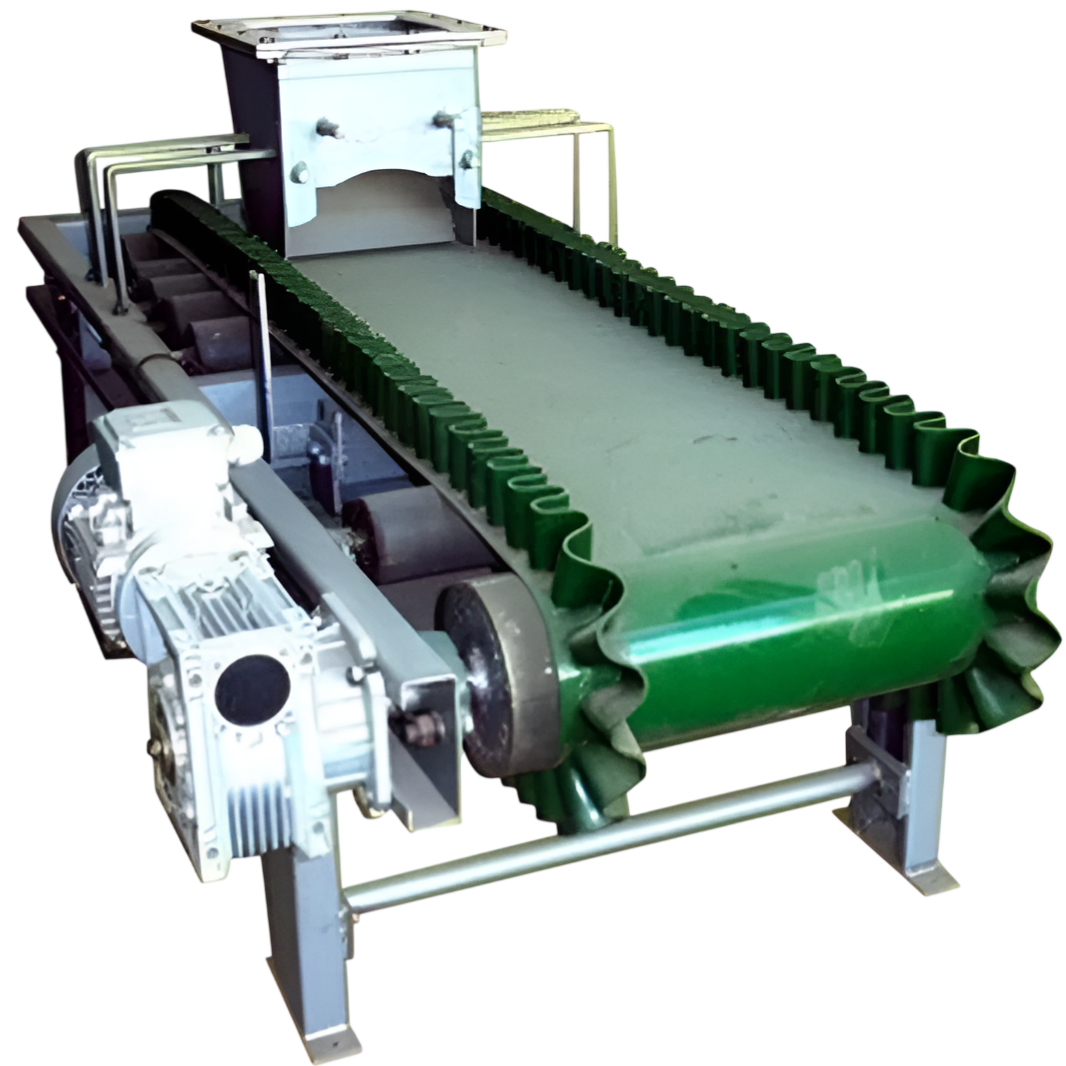
A Belt Weigher, or Continuous Weigh Feeder, is an integral in-line device that continuously measures the mass flow rate of bulk solid materials (powders, granules) as they are conveyed on a belt. It combines a precision load cell system with belt speed measurement to provide real-time, accurate data on throughput (e.g., tons per hour). This is critical for proportional feeding in blending systems, inventory control, and process monitoring, ensuring consistent feed to crushers, mills, mixers, or packaging machines.
Key Features
-
Integrated Weigh Bridge & Load Cells
A robust, strain-gauge based weighing frame positioned under a section of the conveyor belt to measure the weight of the material bed.
-
High-Accuracy Speed Sensor
Measures the exact belt speed, which, combined with weight per meter, calculates the instantaneous mass flow rate.
-
Real-Time Controller/Integrator
A dedicated electronic unit (integrator) processes signals from the load cells and speed sensor, calculating and displaying flow rate, totalized weight, and controlling feed rate via PID loops (if configured as a feeder).
-
Self-Checking & Auto-Zeroing
Advanced systems feature automatic zero calibration to compensate for belt weight changes (e.g., from dust buildup or moisture), maintaining long-term accuracy.
-
Rugged, Sealed Design
Built to withstand vibration, dust, moisture, and temperature variations in industrial environments.
Advantages
-
Provides Critical Process Data
Enables real-time monitoring of production rates, essential for yield calculation, process optimization, and billing.
-
Ensures Consistent Feed for Downstream Processes
When used as a controlled feeder, it maintains a steady, precise material flow, stabilizing operations for granulators, dryers, or reactors.
-
Improves Batching & Blending Accuracy
Serves as the master feed rate controller in continuous blending systems, ensuring correct ratios of multiple ingredients.
-
Low Maintenance & High Reliability
With no moving parts in the sensing element, it offers reliable, long-term service with minimal downtime.
-
Easy Integration
Outputs standard 4-20mA or digital signals (Modbus, Profibus) for seamless connection to plant PLC or SCADA systems.
Applicable Raw Materials
-
All Free-Flowing Bulk Solids
Fertilizer granules (NPK, urea), raw material powders (phosphate, limestone), potash, recycled fines, and feed additives.
Basic Structure & Components
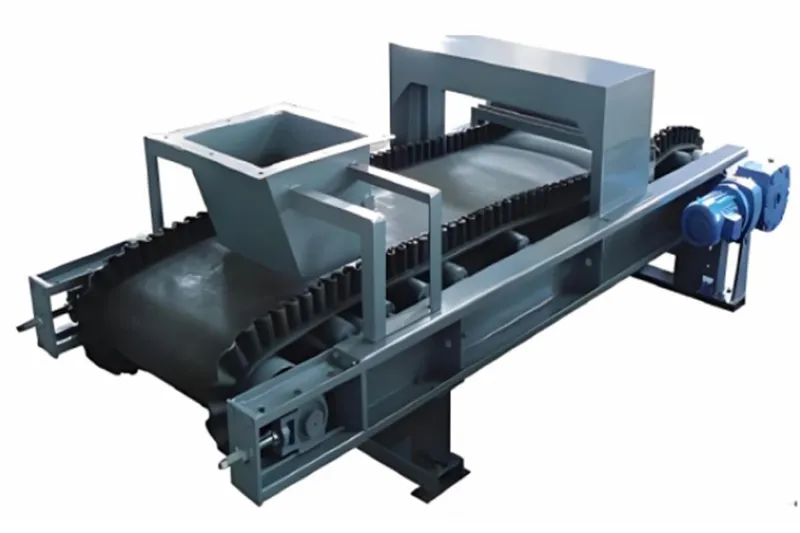
The mechanically balanced frame that holds the idler and transfers force to the load cell(s).
Transducer(s) that convert the force of the material on the belt into an electrical signal.
Typically a non-contact digital tachometer measuring tail pulley or a dedicated wheel rotation.
The brain that calculates flow and total, and provides control outputs.
A mechanical or electronic device for on-site calibration verification.
Technical Data
| B500 Double Belt Weigher | Model | B500*2000 |
| Voltage | AC380V | |
| Power | 1.1kW+1.1kW | |
| Weighing accuracy | ±0.5% | |
| Capacity | 0.5-6t/h | |
| Reducer speed ratio | 156 | |
| B650 Double Belt Weigher | Model | B650*2000 |
| Voltage | AC380V | |
| Power | 1.1kW+1.1kW | |
| Weighing accuracy | ±0.5% | |
| Capacity | 1-8t/h | |
| Reducer speed ratio | 189 | |
| B500 Single Belt Weigher | Model | B500*2000 |
| Voltage | AC380V | |
| Power | 1.1kW | |
| Weighing accuracy | ±0.5% | |
| Capacity | 0.5-5t/h | |
| Reducer speed ratio | 188 | |
| B650 Single Belt Weigher | Model | B650*2000 |
| Voltage | AC380V | |
| Power | 1.1kW | |
| Weighing accuracy | ±0.5% | |
| Capacity | 1-8t/h | |
| Reducer speed ratio | 189 | |
| B800 Single Belt Weigher | Model | B800*2000 |
| Voltage | AC380V | |
| Power | 2.2kW | |
| Weighing accuracy | ±0.5% | |
| Capacity | 2-20t/h | |
| Reducer speed ratio | 68 |
Key Differentiators vs. Other Equipment
- vs. Batch Weigh Scales
- vs. Hopper Scales
- vs. Volumetric Feeders
- Overall Position
Provides continuous measurement without stopping material flow, ideal for process control. Batch scales measure discrete lots.
Measures material in motion on a conveyor. Hopper scales are static, weighing material in a vessel before discharge.
Controls based on mass, which is unaffected by material density changes. Volumetric feeders (screws, vibratory) control volume, which can vary with density, leading to inaccuracies.
It is the essential instrument for any continuous fertilizer production line where knowing or controlling the mass flow of material is key to quality, efficiency, and profitability.