
Belt Conveyor
The High-Capacity, Long-Distance Workhorse for Reliable Bulk Material Transport
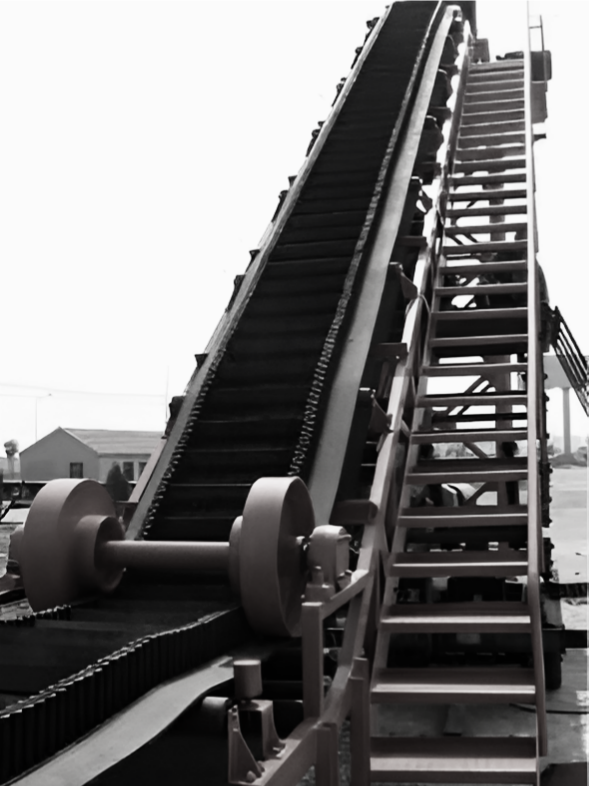
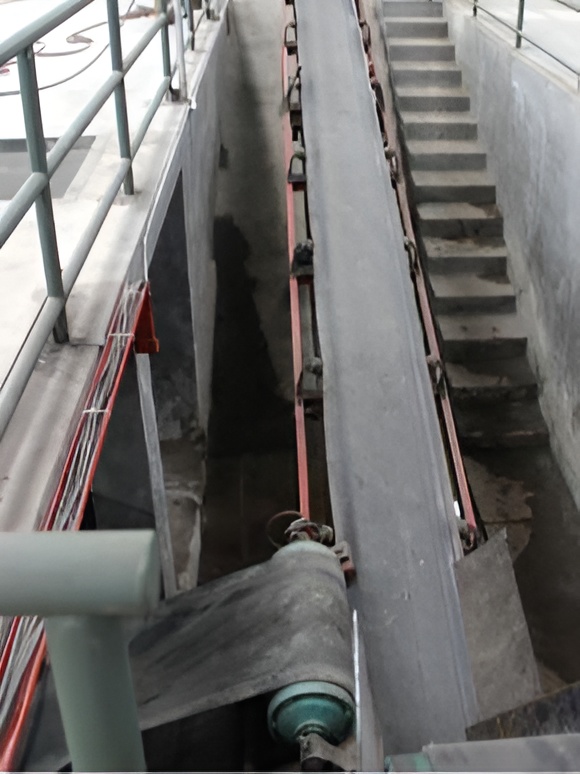
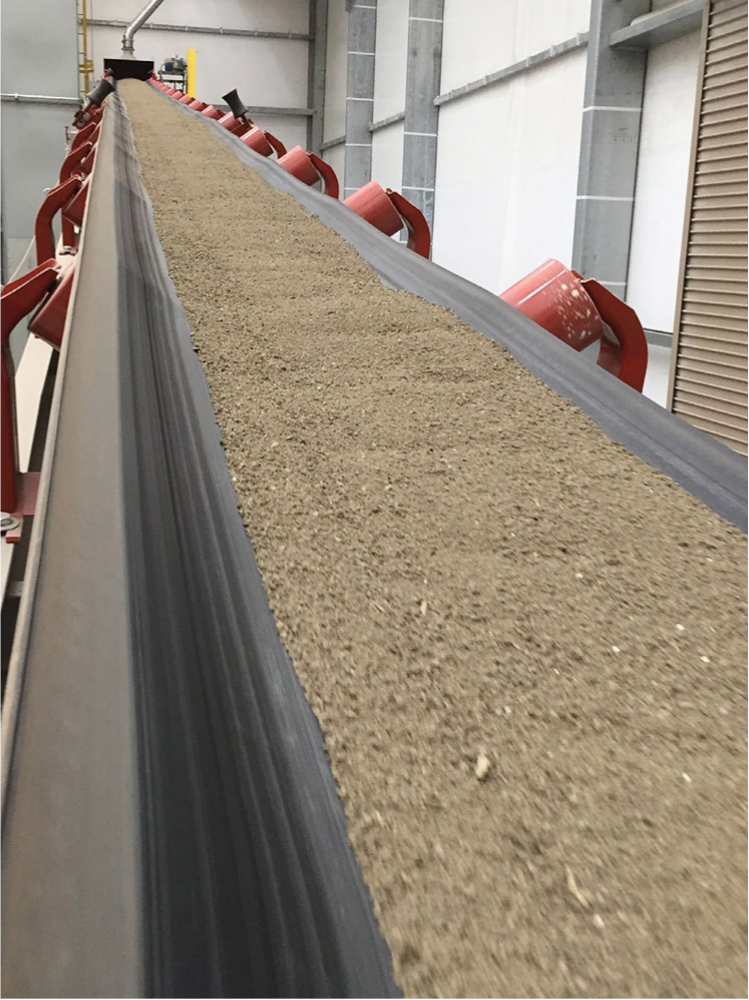
The Belt Conveyor is the cornerstone of modern bulk material handling, offering a simple, efficient, and highly reliable method for transporting granular and lumpy materials over long distances, both horizontally and on inclines. It consists of a continuous rubber belt supported by idlers, driven by a pulley at one end. Renowned for its low operational cost, gentle handling, and high throughput, it is the default choice for moving large volumes of fertilizer raw materials, intermediates, and finished products across plant yards and between processing buildings.
Key Features
-
Continuous Rubber Belt
The heart of the system, a multi-ply fabric or steel cord reinforced belt designed for specific tension, abrasion resistance, and material characteristics.
-
Idler Rolls & Support Structure
A series of troughing idlers (typically 3-roll design) support the loaded belt, and return idlers support the empty belt, all mounted on a robust, galvanized steel frame.
-
Drive & Tensioning System
A head pulley driven by an electric motor and gear reducer provides propulsion. A tail pulley with a gravity or screw take-up maintains proper belt tension to prevent slippage.
-
High Capacity & Speed
Capable of handling extremely high tonnages at belt speeds tailored to the material (e.g., 1.0 to 3.5 m/s for fertilizer).
-
Modular & Scalable Design
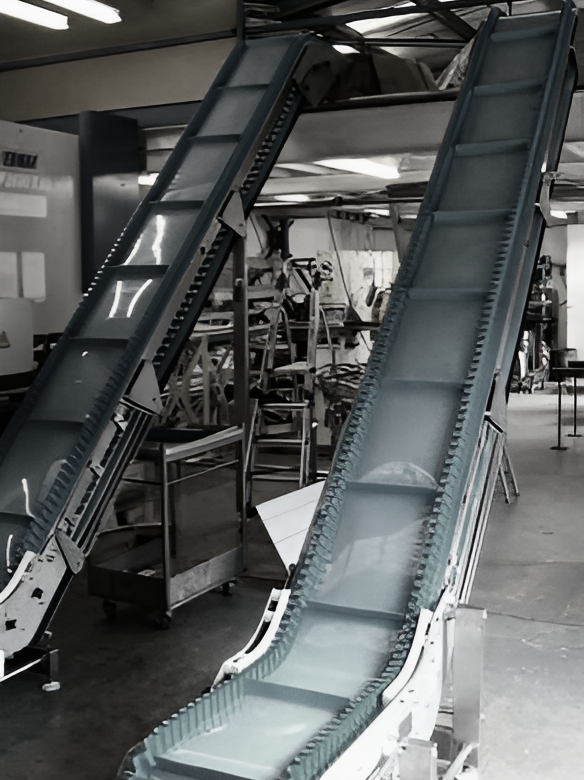
Easily extended or adapted with standard components. Can be equipped with covers, skirts, walkways, and safety devices as needed.
Advantages
-
Lowest Cost per Ton-Mile
For long-distance horizontal transport, it is the most energy-efficient and cost-effective mechanical conveying solution available.
-
Gentle Material Handling
The smooth belt surface and proper idler spacing minimize product degradation, making it ideal for finished fertilizer granules and coatings.
-
High Reliability & Availability
Simple mechanical principles lead to minimal downtime. Components are standardized and readily available worldwide.
-
Versatile Layout Configurations
Can be configured for straight runs, curves (with special idlers), and inclines up to certain angles (typically 15-20° for granular materials, depending on angle of repose).
-
Easy Maintenance & Inspection
The open design allows for visual inspection of all major components, and belt wear is predictable and manageable.
Applicable Raw Materials
-
Raw Bulk Materials
Phosphate rock, sulfur lumps, potash ores, and limestone transported from stockpiles or receiving areas.
-
Intermediate & Finished Granules
NPK, urea, DAP/MAP, and other fertilizer products moving between granulation, coating, storage, and bagging/palletizing stations.
-
Recycle Streams
Oversize material returned to crushers or undersize material returned to granulators.
-
Packaged Goods
Can be adapted with flat belts for moving bagged fertilizer.
Basic Structure & Components
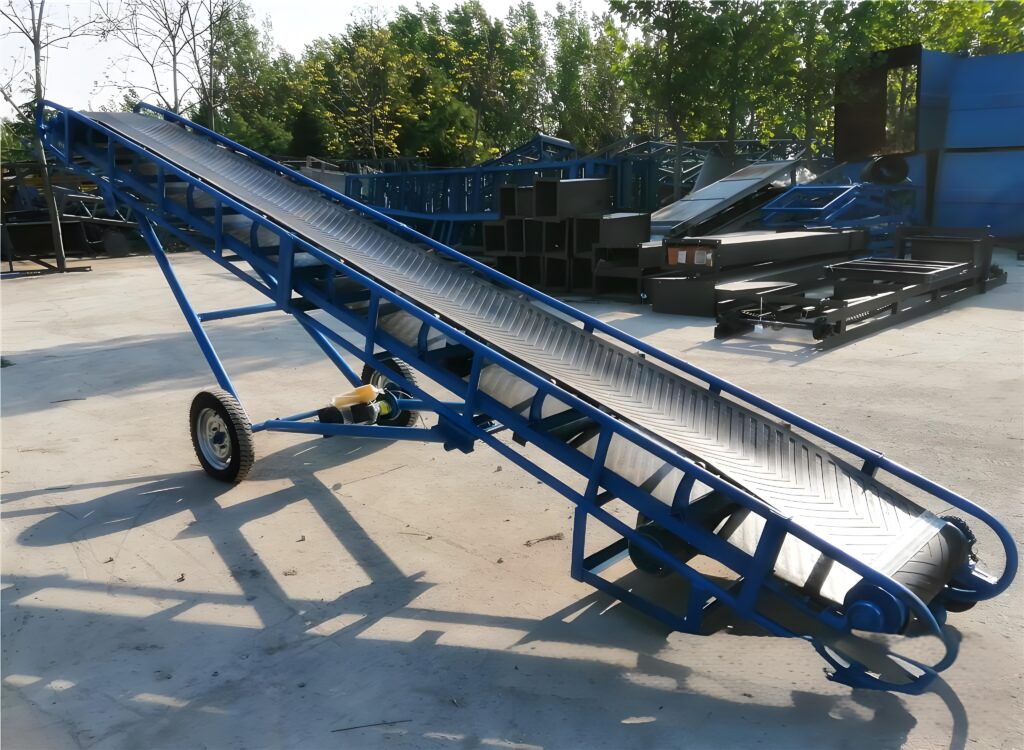
The load-carrying medium, made of rubber with fabric or steel cord carcass.
Troughing Idlers (usually 35° or 45°) shape and support the loaded belt. Return Idlers support the empty belt. Impact Idlers (with rubber discs) are used at loading points.
Drive Pulley (head), Tail Pulley, Snub Pulleys, and Bend Pulleys guide and drive the belt.
Electric motor, fluid coupling or VFD, gear reducer, and sometimes a backstop.
Galvanized or painted steel trusses or channel frames that support the idlers and pulleys.
Directs material centrally onto the belt at the desired velocity to minimize impact and spillage.
Guides material off the belt at the head pulley or at intermediate points via a movable tripper.
Primary (pre-cleaner) and secondary (wiper) blades remove carryback material from the belt.
Emergency stop pull cords, belt misalignment switches, and rip detectors.
Technical Data
Specification (mm) | Processing Capacity (m³/h) | Journey (mm) | Gauge (mm) | Dynamo electric roller (v=0.8m/s) |
B500 | ≥5 | 500 | 1000 | 2.2~11 kw |
B650 | ≥6.5 | 600 | 1000 | 3~18.5 kw |
B800 | ≥9 | 600 | 1000 | 4~22 kw |
B1000 | ≥9 | 700 | 1000 | 5.5~30 kw |
B1200 | ≥20 | 700 | 1000 | 7.5~37 kw |
B1400 | ≥50 | 1000 | 1400 | 11~37 kw |
B1600 | ≥90 | 1000 | 1600 | 15~37 kw |
Key Differentiators vs. Other Conveyors
- vs. Bucket Elevator
- vs. Scraper Conveyor (Drag Chain)
- vs. Screw Conveyor
- vs. Truck/Wheel Loader Transport
- Overall Position
A Belt Conveyor is for long-distance horizontal/inclined transport. A Bucket Elevator is for dedicated, high-efficiency vertical lifting. They are complementary, not competing, technologies in a plant layout.
A Belt Conveyor is superior for long distances, high capacities, and gentle handling of granular materials in open or covered configurations. A Scraper Conveyor is better for fully enclosed, dust-tight conveying of powders, complex multi-point feeding/discharge, and in low-headroom or tight spaces where a belt conveyor frame cannot fit.
A Belt Conveyor is far more energy-efficient for distances over 10-15 meters, provides much higher capacity, and is gentler on materials. A Screw Conveyor is suitable for short distances, metering, or steep inclines but causes particle attrition and has high power consumption for long runs.
For fixed-route, continuous material movement within a plant, a Belt Conveyor system offers dramatically lower operating costs, less manpower, better reliability, and zero emissions compared to mobile equipment.
It is the standard, most economical, and reliable solution for high-tonnage, fixed-route transport of granular materials over moderate to long distances in a fertilizer plant. It forms the main arteries of material flow, connecting major process islands.