
Counter-flow Dryer (for Porous Ammonium Nitrate)
The High-Efficiency Specialist for Gentle, Precision Drying of Sensitive Granular Products
The Counter-flow Dryer is a specialized rotary dryer engineered for optimal thermal efficiency and gentle product handling, crucial for temperature-sensitive and high-value materials. In this configuration, the hottest drying air contacts the driest product at the discharge end, maximizing heat utilization while minimizing thermal stress on the material. It is the industry-preferred solution for producing premium Porous Ammonium Nitrate (PAN) and other granules where preserving structure, porosity, or specific chemical properties is essential.
Key Features
-
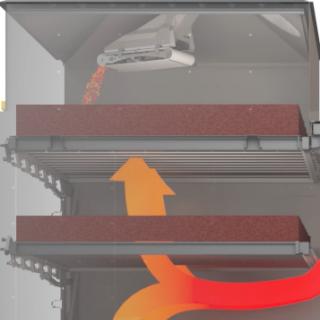
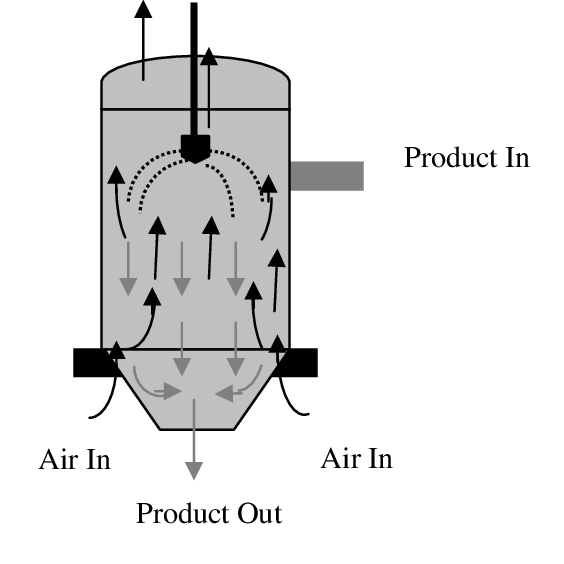
Counter-Current Airflow Design
Hot air flows opposite to the direction of material travel, ensuring the driest product encounters the highest temperature for deep moisture removal without overheating the bulk of wet feed.
-
Optimized Thermal Efficiency
This airflow pattern extracts maximum usable heat from the drying medium, leading to significantly lower specific fuel consumption compared to co-current designs.
-
Gentle, Controlled Drying
The gradual heating profile protects sensitive materials from case-hardening, cracking, or degradation of active components.
-
Specialized Internal Design
Features customized lifting flight arrangements and potentially segmented zones to control material curtain density and residence time for specific processes like PAN production.
-
Precise Temperature & Moisture Control
Integrated monitoring and control systems maintain strict parameters to ensure consistent final product quality.
Advantages
-
Superior Product Quality for Sensitive Materials
Uniquely capable of drying Porous Ammonium Nitrate (PAN) and similar granules while maintaining their crucial porosity, structure, and absorption characteristics.
-
Maximum Energy Efficiency
Delivers the lowest exhaust gas temperatures relative to moisture removal, translating to direct savings on fuel costs.
-
Lower Thermal Stress
Reduces the risk of overheating, melting, or decomposing heat-sensitive fertilizer compounds, ensuring nutrient integrity.
-
Achieves Very Low Final Moisture
The counter-current principle is exceptionally effective at driving off bound or inherent moisture to meet stringent specifications.
-
Robust & Reliable
Maintains the mechanical durability and high-capacity advantages of the rotary dryer platform.
Applicable Raw Materials
-
Porous Ammonium Nitrate (PAN)
The primary and most critical application, for use in industrial explosives and specialty fertilizers.
-
Other Temperature-Sensitive Fertilizers
Granular urea, certain coated or fortified NPK blends where excessive heat can damage coatings or additives.
-
High-Value Industrial & Chemical Granules
Products where precise moisture content and particle integrity are paramount, such as certain catalysts or specialty chemicals.
-
Organic & Bio-fertilizer Pellets
Where gentle drying is needed to preserve microbial viability or organic matter quality.
Basic Structure & Components
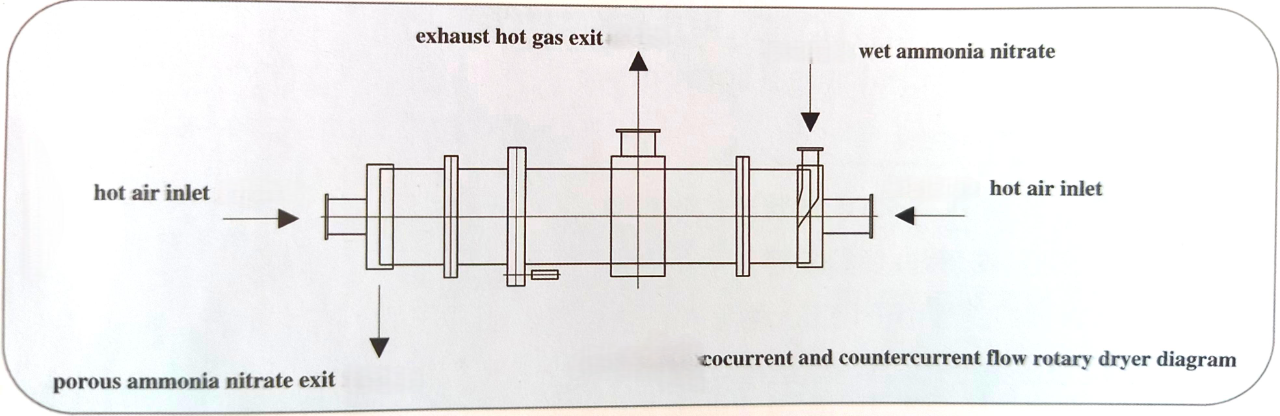
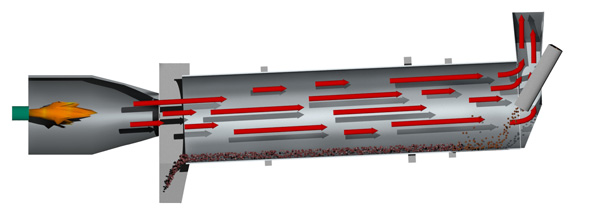
The core cylinder, similar to a standard rotary dryer but often with a customized internal flight design for controlled cascading.
Specialized inlet and outlet hoods designed to ensure hot air enters at the discharge end and exits at the feed end, opposite to material flow.
Furnace or burner system providing high-temperature air, often with precise temperature modulation.
Introduces moist material at the end where cooler, humid air exits.
Removes dried product where the hottest, driest air enters. May include a cooling section
Located at the wet (feed) end to capture fines from the now-cooled exhaust air.
Robust riding rings, support rollers, thrust rollers, and drive assembly for smooth rotation.
Enhanced insulation to maintain high thermal efficiency and safety.
For precise regulation of air temperature, drum speed, and feed rate.
Technical Data
Parameter | Model CFD-2.2×16 | Model CFD-2.8×20 | Model CFD-3.2×24 |
Drum Diameter (m) | 2.2 | 2.8 | 3.2 |
Drum Length (m) | 16 | 20 | 24 |
Capacity for PAN (t/h) | 8-12 | 15 – 22 | 25 – 35 |
Evaporation Capacity (kg H₂O/h) | ~1500 | ~2800 | ~4500 |
Inlet Air Temperature (°C) | 120 – 180 | 120 – 180 | 120 – 180 |
Outlet Product Temperature (°C) | 50 – 70 | 50 – 70 | 50 – 70 |
Final Moisture Content (PAN, %) | < 0.2% | < 0.2% | < 0.2% |
Main Motor Power (kW) | ~22 | ~37 | ~55 |
Note: Specifications are highly dependent on material and moisture targets. The above is indicative for PAN drying. Design is fully customizable. | |||
Key Differentiators vs. Other Dryers
- vs. Standard (Co-current) Rotary Dryer
- vs. Centrifugal Spray Dryer
- vs. Fluidized Bed Dryer
- Overall Position
The core difference is airflow direction and thermal efficiency. The Counter-flow design provides gentler, more efficient drying for sensitive materials, achieving lower final moisture with less thermal stress. It is a premium, application-specific solution, whereas the standard rotary dryer is a general-purpose workhorse.
Designed for granular solids, not liquids. Processes pre-formed wet granules (like PAN prills), whereas a spray dryer creates powder from a liquid feed. The applications and process stages are completely different.
Offers higher capacity for granular materials and is less prone to issues with particle attrition or size segregation. It is often a more robust and simpler mechanical solution for continuous, large-scale drying of fertilizers where gentle tumbling is preferable to vigorous fluidization.
It is the definitive technology for efficient, large-scale production of Porous Ammonium Nitrate and other high-value, temperature-sensitive granules, where optimizing product quality and minimizing energy costs are critical competitive factors.