
Animal and Poultry Excrement Treatment System
The Comprehensive Solution for Sanitizing, Separating, and Stabilizing Liquid and Solid Waste Streams
The Animal and Poultry Excrement Treatment System is a modular, integrated processing plant designed for large-scale operations that handle mixed or slurry-based waste. It goes beyond basic homogenization to perform critical functions such as solid-liquid separation, pasteurization (thermal treatment), advanced mixing, and slurry conditioning. This system transforms raw, potentially hazardous excrement into sanitized, stabilized, and value-segregated outputs—such as nutrient-rich liquid fertilizer, dewatered solid cake for composting, and hygienic feedstock for biogas digesters—ensuring environmental compliance and resource recovery.
Key Features
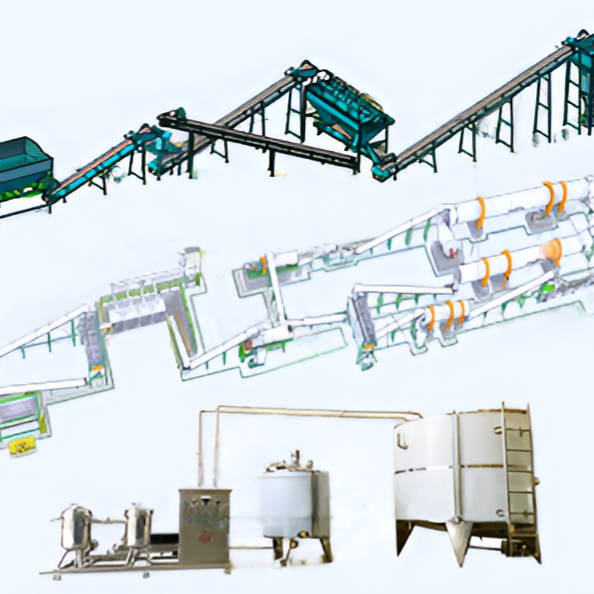
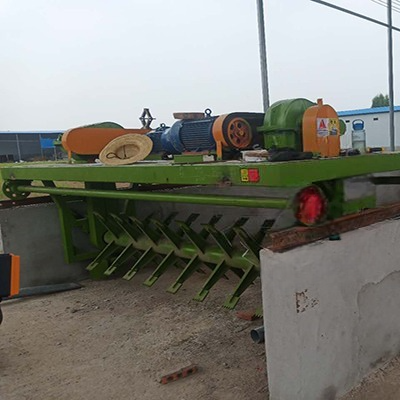
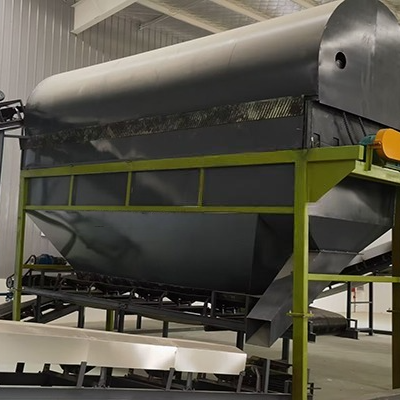
-
Modular, Integrated Design
Configured from standardized modules (reception, separation, thermal, mixing) to create a custom treatment train tailored to specific input waste and desired end-products.
-
Solid-Liquid Separation Core
Incorporates robust mechanical separators (e.g., screw presses, decanter centrifuges) to efficiently split raw slurry into a solid fraction (for composting) and a liquid fraction (for further treatment or liquid fertilizer).
-
Thermal Treatment (Pasteurization) Module
An optional heated tank or continuous flow heater that raises the material temperature to a defined set-point (e.g., 70°C for 1 hour) to eliminate pathogens, weed seeds, and comply with strict organic safety standards.
-
Advanced Process Control & Monitoring
A central PLC system monitors and controls all stages—separation efficiency, temperature, retention time, chemical dosing—ensuring consistent output quality and process reliability.
-
Hygienic & Corrosion-Resistant Construction
Entire system built using stainless steel (AISI 304/316) for critical contact parts to withstand corrosive salts, acids, and frequent high-pressure washing.
Advantages
-
Produces Multiple, Marketable Outputs
Creates distinct product streams: a dewatered solid ideal for composting/granulation, a clarified liquid for fertigation or further concentration, and sanitized digestate.
-
Ensures Product Safety & Regulatory Compliance
The integrated thermal treatment module guarantees pathogen reduction, allowing the safe use of treated products in agriculture and meeting stringent international (e.g., EU) biosolid regulations.
-
Maximizes Nutrient Recovery & Utilization
Separates and conditions nutrients into forms that are more readily available to plants or easier to handle, reducing overall nutrient loss from the waste stream.
-
Reduces Volume & Transportation Costs
Dewatering significantly reduces the weight and volume of solids for off-site composting or disposal, leading to major logistics savings.
-
Enables Flexible, Future-Proof Operations
The modular nature allows for capacity expansion or process reconfiguration (e.g., adding a biogas loop) as business needs evolve.
Applicable Raw Materials
-
Slurry & Liquid Manure
From piggeries, dairy lagoons, and poultry washdown systems.
-
Mixed Excrement with Flush Water
Common in modern housed animal operations.
-
Food Processing Wastewater
High-organic-content liquids requiring treatment and resource recovery.
-
Biogas Plant Digestate
For post-digestion treatment to stabilize and sanitize the effluent before land application.
Basic Structure & Components
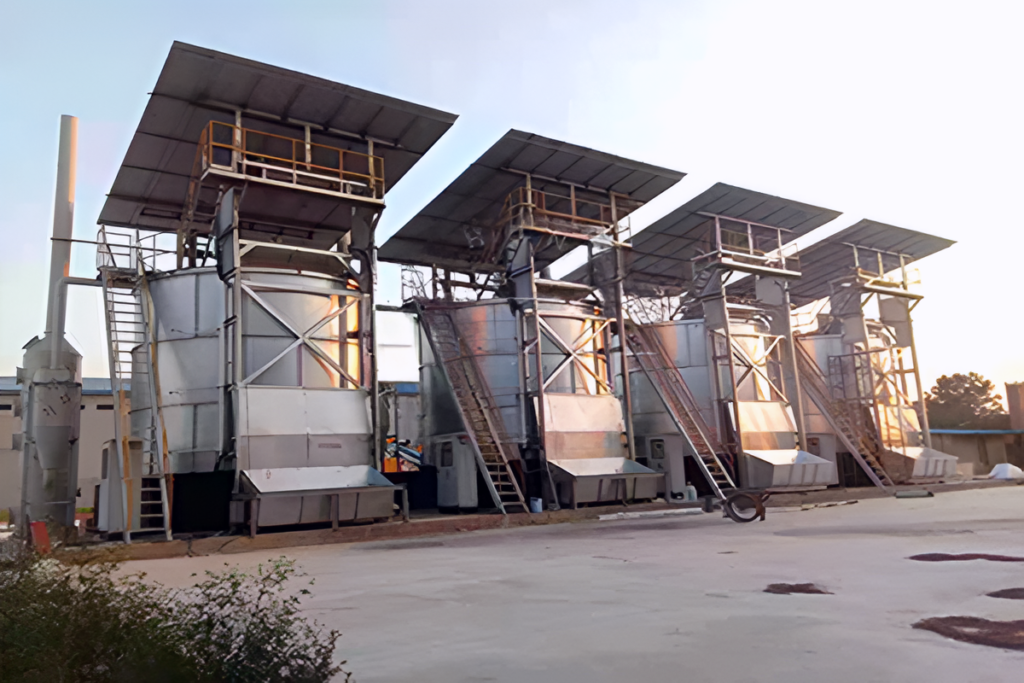
Incoming waste is dumped into a pit, passed through a fine screen to remove hairs and fibers, and pumped to the next stage.
The core mechanical separation unit (screw press, centrifuge).
A heated, agitated tank with precise temperature control for the liquid or solid stream.
Tanks for adjusting the pH or adding flocculants to the liquid fraction, followed by storage lagoons or tanks.
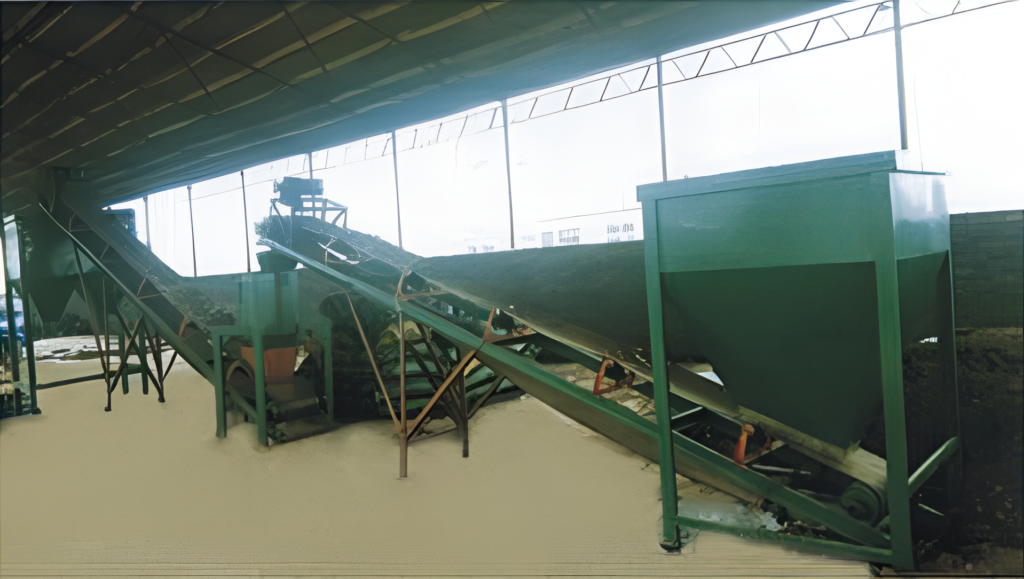
A conveyor moves dewatered solids to a mixer for amendment addition before composting.
Houses the main PLC, HMI, and electrical systems.
Connects all modules with appropriate pumps and valves.
Technical Data
Model | Stack width | Power (kW) | Heap height | Deposit spacing | Outline size |
FDJ-2500 | 2.5m | 22 | 0.6m~0.8m | 0.8~1.0m | 2.2×3.5×3.2m |
FDJ-2700 | 2.7m | 40 | 0.7m~0.9m | 0.8~1.0m | 2.2×3.7×3.2m |
FDJ-3000 | 3.0m | 83 | 0.9m~1.2m | 0.8~1.0m | 2.8×4.2×3.6m |
FDJ-3500 | 3.5m | 114 | 1.0m~1.3m | 0.8~1.0m | 3.2×4.7×3.8m |
Key Differentiators vs. Other Pre-Treatment Equipment
- vs. Manure Reception & Pre-Mixer
- vs. Simple Slurry Separators
- vs. Lagoon Storage Alone
- vs. Basic Composting (without treatment)
- Overall Position
The Pre-Mixer is for conditioning solid-rich manure. This Treatment System is for processing slurry and achieving advanced outcomes like pasteurization and precise separation. It handles a different material state and delivers a higher level of processing.
A standalone separator is a single component. This system is an integrated process train that may include pre-screening, chemical dosing, thermal treatment, and controlled discharge, managed by a unified automation system for a complete solution.
Lagoons are for passive storage and partial settlement. This system provides active, controlled, and rapid treatment that reduces odor, recovers resources actively, and produces defined outputs year-round, independent of weather.
Direct composting of raw slurry is difficult and slow. This system pre-processes the slurry into an optimal solid feedstock for composting and creates an additional liquid product, maximizing the value extracted from the waste.
It is the premium, large-scale processing solution for intensive livestock operations, regional waste processors, and value-conscious investors who need to transform liquid waste liabilities into compliant, safe, and marketable resources while future-proofing their operations.