
Four-Shaft Crusher
The High-Efficiency, Dual-Stage Shredder for Volume Reduction of Bulky, Tough, and Mixed Waste
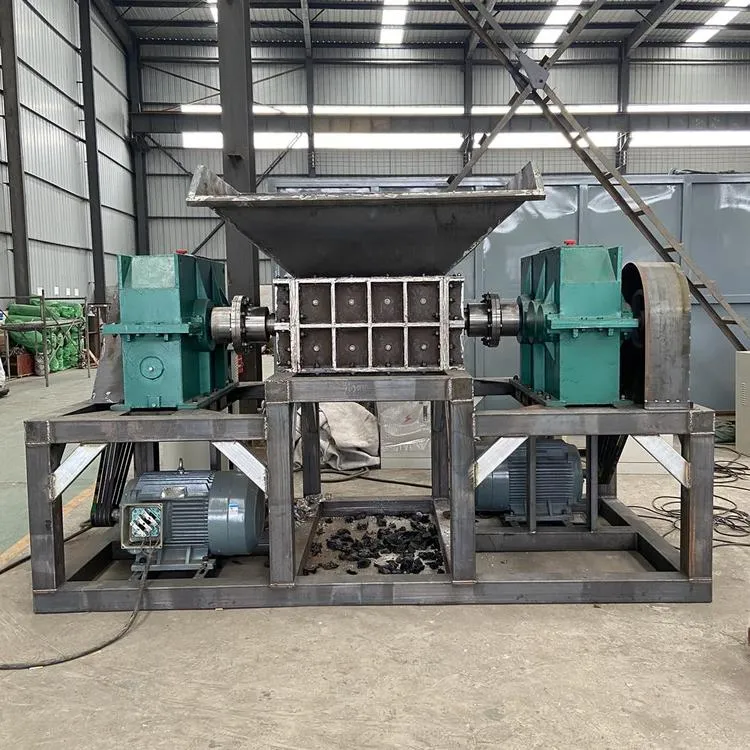
The Four-Shaft Crusher is a powerful, slow-speed, high-torque shredding system designed for the primary and secondary size reduction of challenging, bulky, or mixed material streams. It features two parallel sets of cutting shafts (four shafts total) that intermesh at different speeds. The primary coarse shafts initially tear and shred large materials, which then pass to the secondary fine shafts for final sizing. This dual-stage action in one machine makes it exceptionally effective for processing pallets, packaging waste, municipal solid waste (MSW), electronic waste, and bulky organic materials that need to be reduced in volume and homogenized for further processing like composting, recycling, or energy recovery.
Key Features
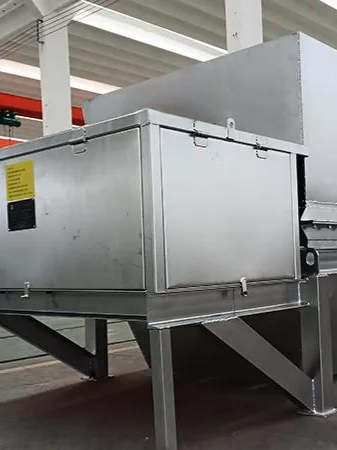
-
Dual-Stage, Four-Shaft Design
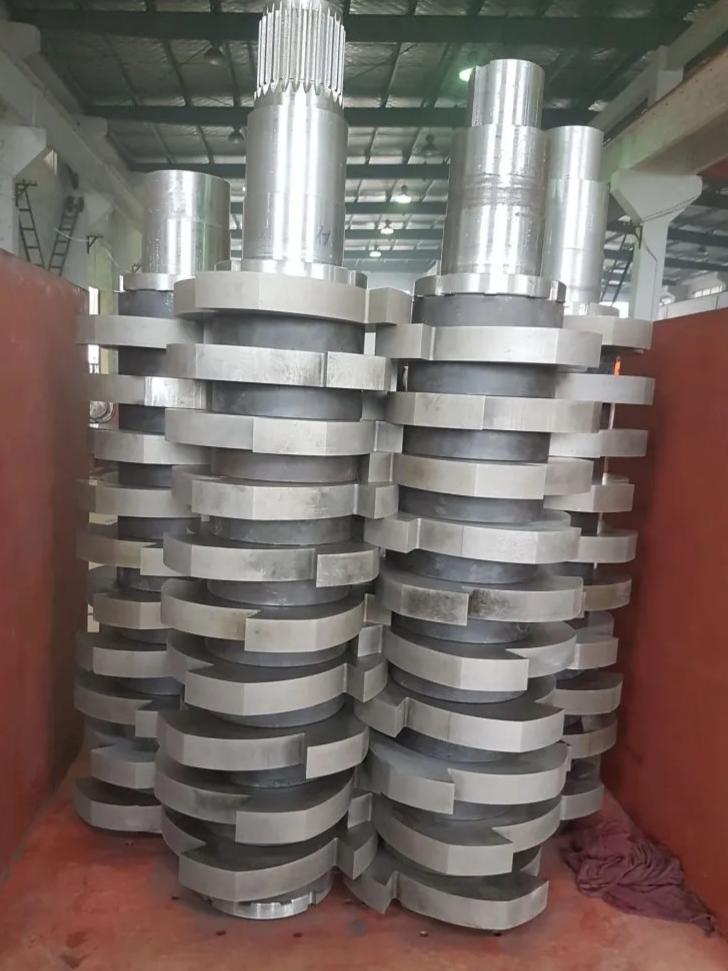
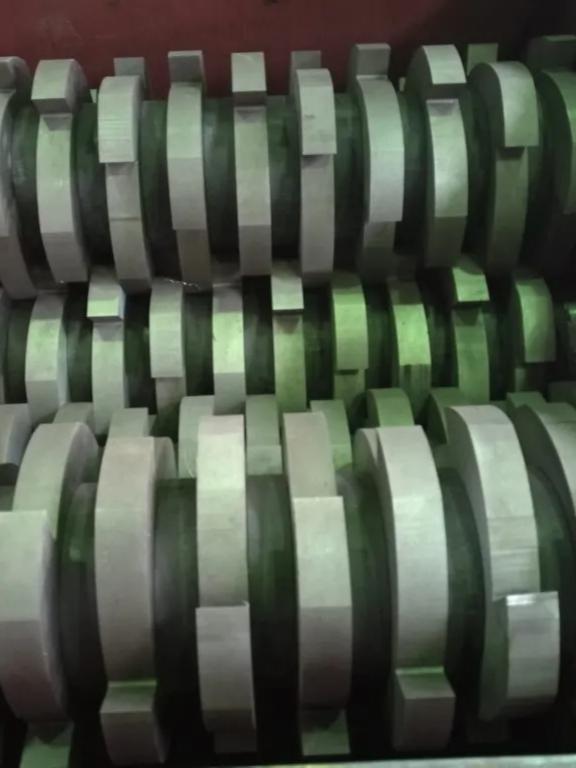
Two pairs of counter-rotating shafts with large-diameter cutting discs and ripper hooks. The first (slow) pair performs coarse shredding; the second (faster) pair provides fine grinding.
-
Slow-Speed, High-Torque Operation
Powerful hydraulic or electric drives deliver massive torque at low rotational speeds, enabling it to tackle tough, heterogeneous materials without stalling and with low energy consumption per ton processed.
-
Interchangeable Cutting Discs & Hooks
The cutting elements on the shafts are modular and reversible, allowing for customization based on feed material and desired output size, and easy replacement when worn.
-
Screen for Controlled Output Size
An interchangeable screen grate located at the discharge determines the final particle size. Changing the screen aperture allows for flexibility in product specification.
-
Automatic Reversal & Overload Protection
The drive system can automatically reverse direction to clear jams and includes overload protection to prevent damage from uncrushable objects.
Advantages
-
Unmatched Versatility for Difficult Feeds
Handles a wider range of input materials (size, shape, composition) than single-shaft or twin-shaft shredders, including materials with metals or contaminants.
-
High Volume Reduction & Homogenization
Significantly reduces the bulk of waste streams and creates a uniform, flaky output ideal for downstream sorting, composting (as bulking agent), or RDF (Refuse-Derived Fuel) production.
-
Low Operating Noise & Dust Generation
The slow-speed, shearing action operates more quietly than high-speed hammer mills and generates less dust.
-
Robust & Reliable Construction
Built with heavy-duty steel plate, massive bearings, and hardened cutting tools to withstand continuous operation in demanding waste processing environments.
-
High Throughput Capacity
Capable of processing large volumes of material in a single pass due to its powerful size reduction action.
Applicable Raw Materials
-
Bulky Industrial & Commercial Waste
Pallets, crates, plastic drums, tires (sidewalls), textiles, packaging materials
-
Municipal Solid Waste (MSW)
For pre-sorting and volume reduction
-
Biomass & Organic Waste
Large tree stumps, root balls, green waste, agricultural residues (requires specific cutting tool configuration)
-
Electronic Waste (E-Waste)
For initial breakdown of appliances and components.
-
Light Metals
Aluminum profiles, thin sheet metal (mixed with other waste)
Basic Structure & Components
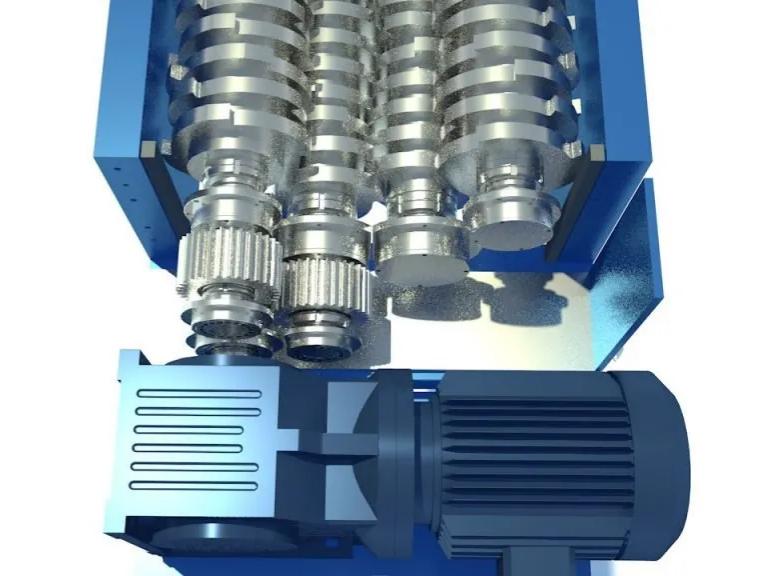
Provides the structural base for all components.
Two slow-speed primary shafts and two higher-speed secondary shafts, each mounted with cutting discs and hooks.
The enclosed area where the shafts intermesh and material is shredded.
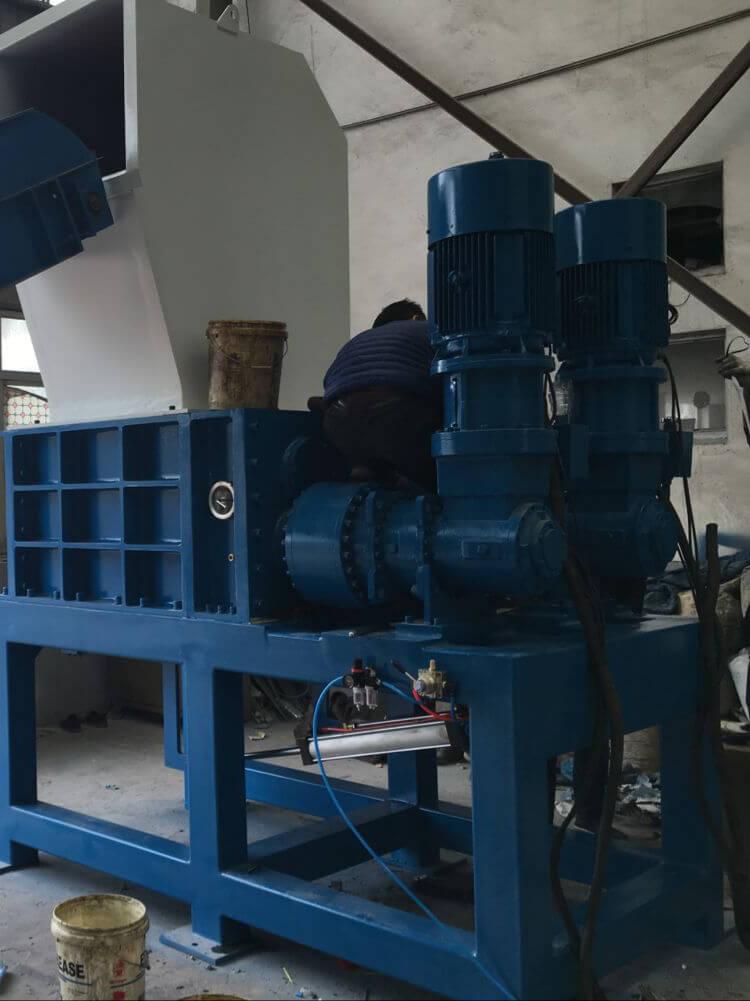
Typically consists of high-torque hydraulic motors for each shaft or a combination of electric motors and gear reducers.
If hydraulically driven, this provides pressurized fluid to the motors.
A curved or flat screen that controls the final particle size.
Houses the PLC for controlling shaft rotation (direction, speed), reversal sequences, and safety interlocks.
A large hopper, sometimes with a hydraulic pusher ram to force material into the cutting zone.
Technical Data
| Parameter | Model FSC-1000 | Model FSC-1200 |
| Shaft Diameter / Working Width | 1000 mm | 1200 mm |
| Total Drive Power (kW) | 110 – 160 | 160 – 250 |
| Shaft Rotational Speed (Primary/Secondary) | ~20 / ~40 rpm | ~18 / ~35 rpm |
| Feed Opening Dimensions (mm) | 1500 x 2000 | 1800 x 2200 |
| Output Size (dependent on screen) | 50 – 150 mm | 50 – 150 mm |
| Throughput Capacity (t/h, for MSW) | 15 – 25 | 25 – 40 |
| Control System | PLC with Automatic Reversal | PLC with Automatic Reversal |
Key Differentiators vs. Other Crushers
- vs. Single-Shaft or Twin-Shaft Shredders
- vs. Hammer Crusher
- vs. Jaw or Cone Crushers
- Overall Position
The four-shaft design offers true two-stage crushing in one unit, providing better size reduction control, higher throughput for bulky materials, and superior handling of mixed and contaminated feeds.
Operates at much lower speeds using shear and tear forces rather than impact, making it more suitable for ductile, stringy, or composite materials that would wrap or clog a hammer crusher. Also quieter and less dusty.
Designed for waste recycling and volume reduction, not for mineral processing. Handles large, irregular, and mixed-composition inputs that mineral crushers cannot accept.
It is the premier choice for primary size reduction in modern waste processing, recycling, and biomass preparation plants, where feed variability is high and reliable, high-volume reduction is the primary goal.