
Hammer Crusher
The Versatile Workhorse for High-Capacity, Multi-Purpose Size Reduction
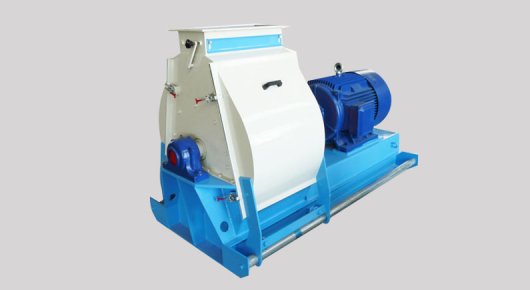
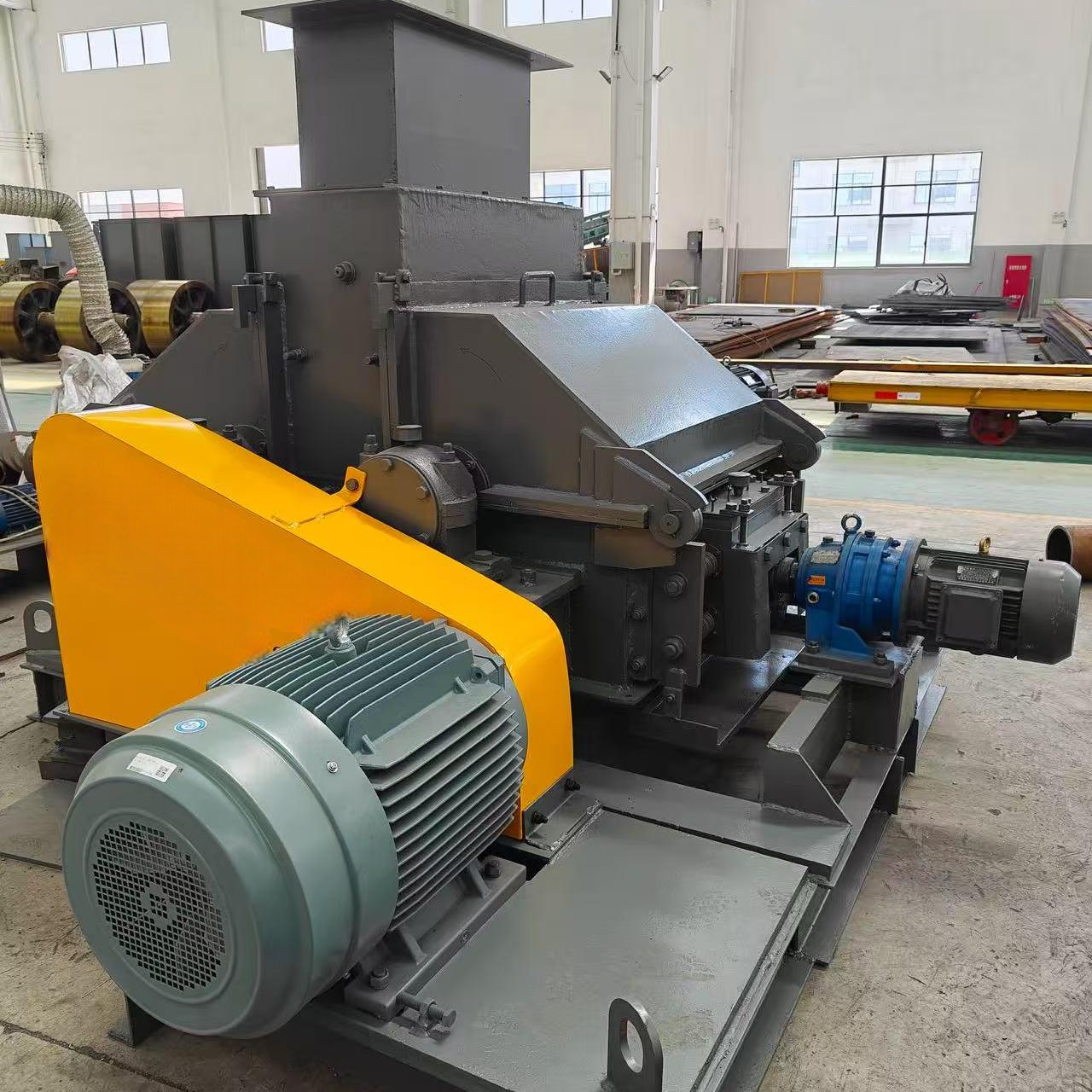
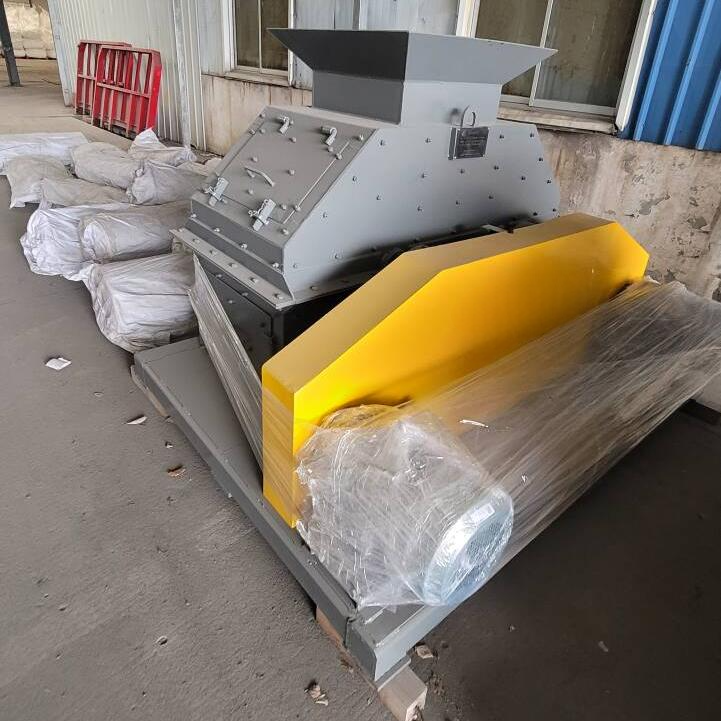
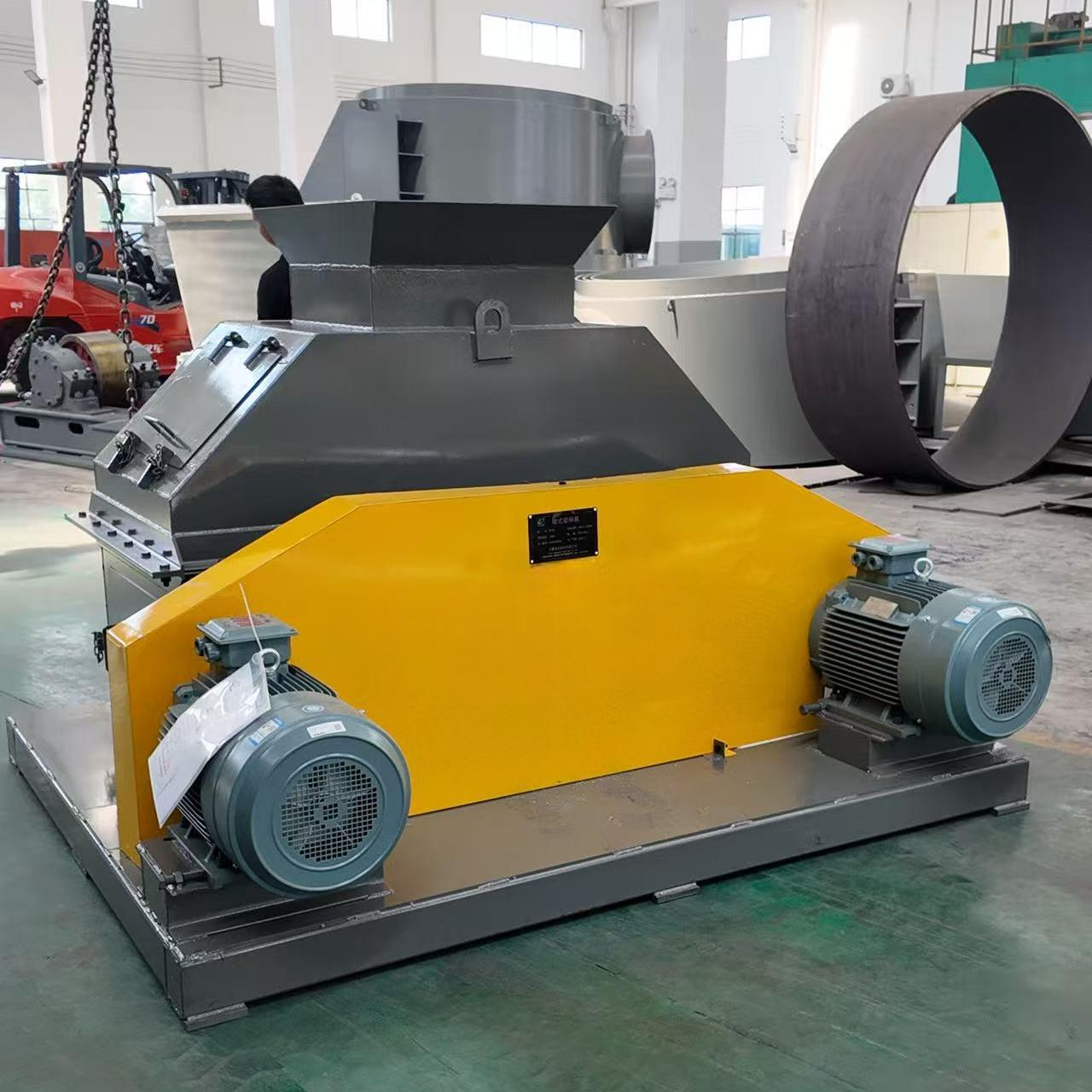
The Hammer Crusher is a cornerstone of fertilizer processing, renowned for its robust design and high-impact crushing efficiency. It operates on the principle of high-speed rotor-mounted hammers that shatter material against stationary breaker plates. Capable of handling a wide range of feed sizes and material hardness, it delivers high reduction ratios and is the go-to solution for secondary crushing of medium-hard to hard materials, oversized granules, and production recycle streams.
Key Features

-
High-Speed Rotor with Swing Hammers
A heavy-duty rotor fitted with multiple free-swinging or fixed hammers that deliver powerful impact forces to the incoming material.
-
Replaceable & Reversible Wear Parts
Hammers are designed to be reversible (using both ends) and easily replaceable. Breaker plates and liner plates are also wear-resistant and replaceable, minimizing long-term operating costs.
-
Adjustable Discharge Grate
A grate or screen at the bottom of the crushing chamber determines the final product size. Changing the grate opening allows for flexible control over particle size distribution.
-
Heavy-Duty, Sealed Housing
A rigid, dust-proof housing encloses the rotor, containing the process and protecting bearings from dust ingress.
-
Large Feed Opening
Accommodates lumpy and uneven feed, reducing the need for precise pre-sizing.
Advantages
-
High Reduction Ratio & Capacity
Can achieve size reductions of 20:1 or more in a single stage, processing large volumes efficiently.
-
Exceptional Versatility
Effectively crushes a broad spectrum of materials, from lumpy ammonium sulfate and phosphate rocks to hardened fertilizer oversize and returned granules.
-
Simple Operation & Maintenance
The design allows for easy access to hammers and wear parts through large inspection doors, facilitating quick maintenance and part replacement.
-
Cost-Effective Operation
Durable construction and the use of reversible, replaceable wear components result in low cost per ton of material processed.
-
Proven & Reliable Technology
A time-tested design known for its ruggedness and continuous operation in demanding industrial environments.
Applicable Raw Materials
-
Medium-Hard to Hard Raw Materials
Phosphate rock, certain ores, and limestone
-
Fertilizer Salts & Compounds
Lumpy ammonium sulfate, NPK clinkers, dried DAP/MAP, and oversized urea prills.
-
Production Recycle Streams
Off-spec granules, dried filter cakes, and agglomerated fines returned from the screening process
-
General Industrial Minerals
Various minerals and chemicals requiring size reduction
Basic Structure & Components
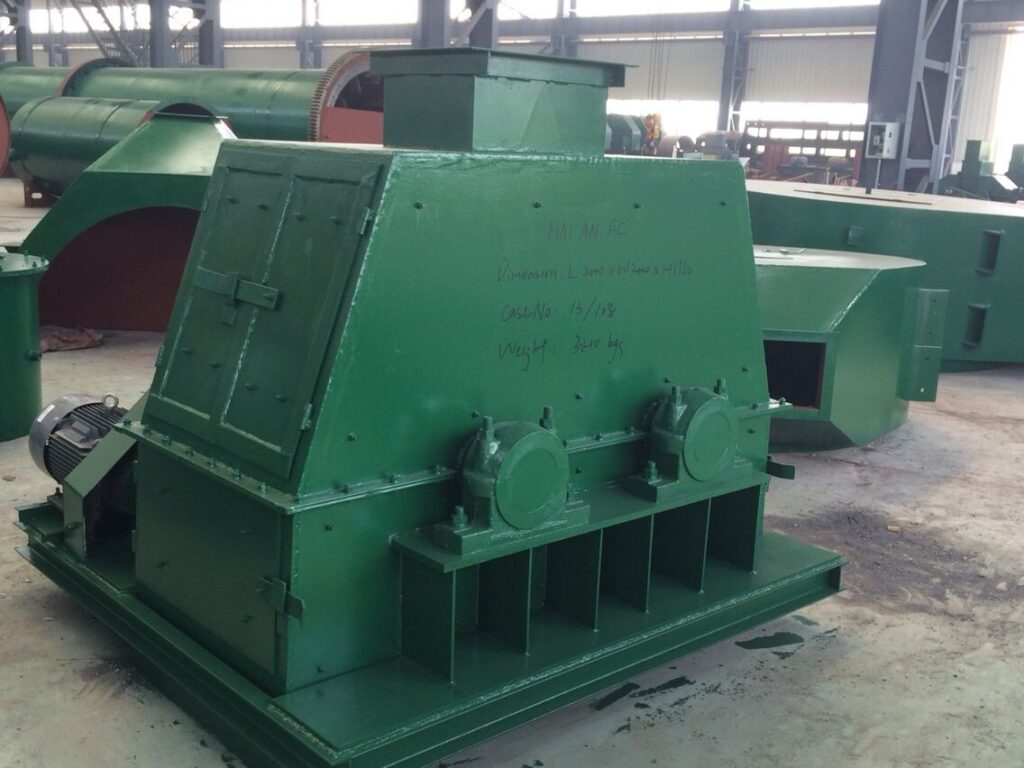
The core component, consisting of a main shaft, rotor discs, hammer pins, and the hammers themselves.
The primary wear parts, made from high manganese steel or other wear-resistant alloys, mounted on the rotor.
Stationary wear plates against which the material is crushed, lining the interior of the housing.
A curved grid of bars located at the bottom of the crushing chamber that controls product size.
A split or solid housing that provides structural integrity and contains the crushing chamber, often with replaceable liner plates.
A motor, V-belts, and sheaves (or a direct drive coupling) that power the rotor at high speed.
Guides material into the impact zone of the hammers.
Supports the entire assembly and allows for secure mounting.
Allow for inspection, maintenance, and replacement of hammers and grates.
Technical Data
| Model Type | DMT-60 | BMT-80 | |
| Production capacity | ≤25t/h | ≤40t/h | |
| Motor power | Hammer roller | 45kw n=1480rpm Y225S-6 | 0.8~1.2 |
| Ratter | 5.5kw n=960rpm Y132Mz-6 | 0.8~1.2 | |
| Oil pump | N=0.75kw n=910kw Y90M-6 | 0.8~1.2 | |
| Feeding size | ≤100mm | ≤100mm | |
| Discharge size | 1mm,2mm,4mm, 70~90% | 1mm,2mm,4mm, 70~90% | |
| Feed moisture | <5% | <5% | |
| Machine weight | 4500kg | 6000kg | |
Key Differentiators vs. Other Crushers
- vs. Jaw Crusher
- vs. Cage Crusher
- vs. Two-Stage Crusher
- vs. Chain Crusher
- Overall Position
A secondary/tertiary crusher for smaller feed and higher speeds, while a jaw crusher is a primary crusher for very large, hard lumps. Hammer crushers produce more fines and offer less precise size control but have higher capacity for their size and cost.
Offers higher reduction ratios and capacity for tougher materials but generally produces a broader particle size distribution with more fines. The cage crusher is more selective for friable materials and generates a more uniform, cubical product.
A single-stage impact crusher. The Two-Stage Crusher combines mechanisms for more complex, often organic materials, potentially offering better clog resistance but may not match the pure impact crushing power and simplicity of a dedicated hammer mill for hard minerals.
Hammer Crushers use solid hammers for dense, hard materials, while Chain Crushers use chains for lightweight, brittle, organic materials. They serve largely non-overlapping application niches.
It is the most common and versatile choice for general-purpose, high-volume secondary crushing in fertilizer plants, balancing high capacity, mechanical simplicity, and the ability to process a wide variety of intermediate materials.