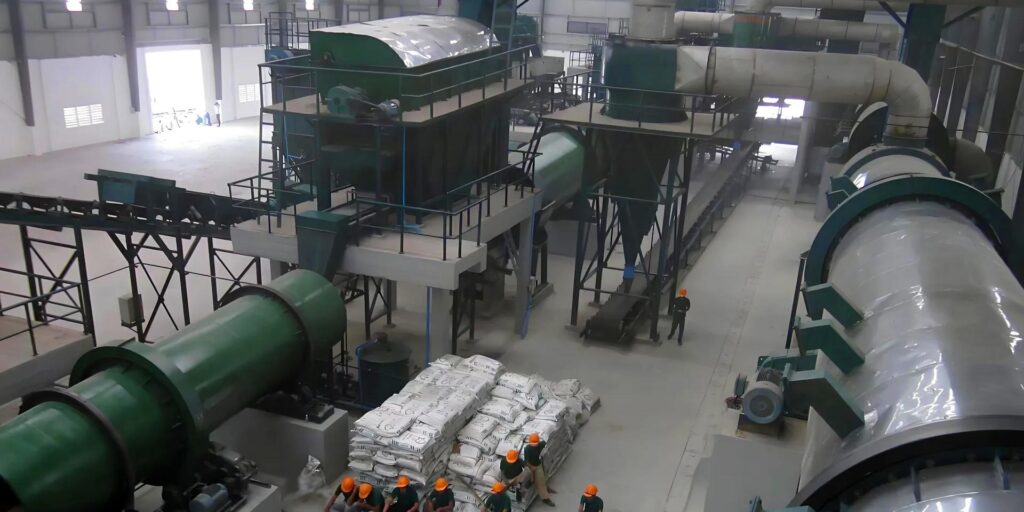
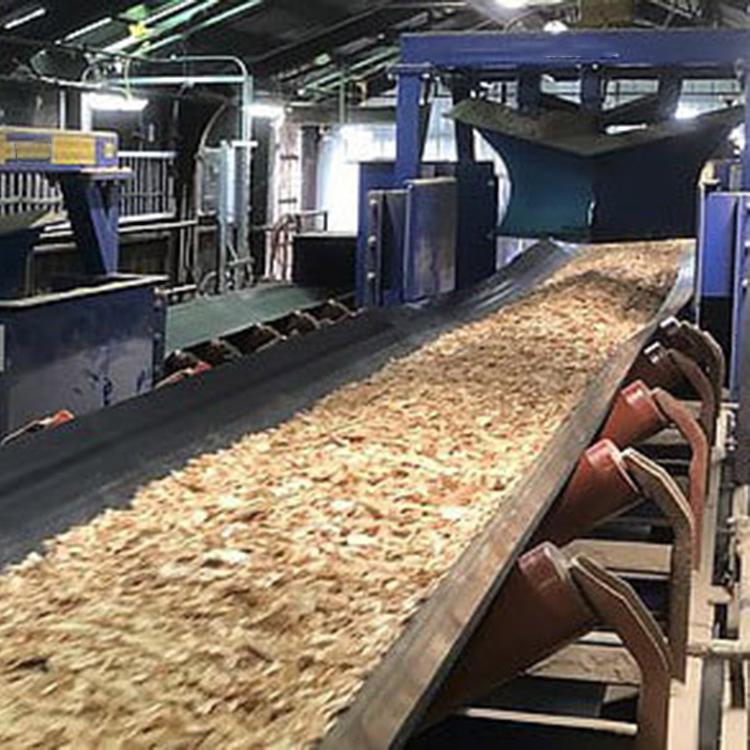
Compound Fertilizer Production Line

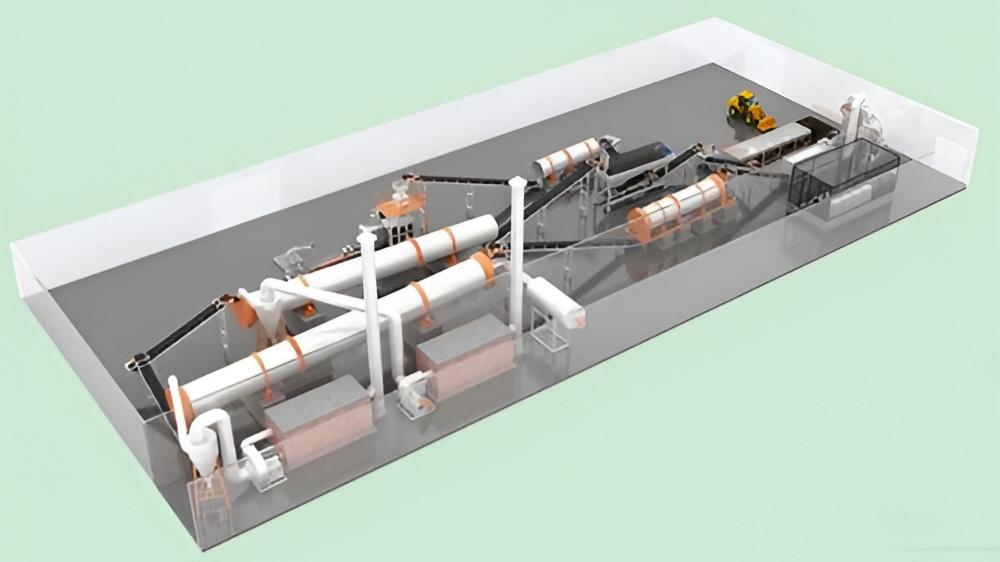
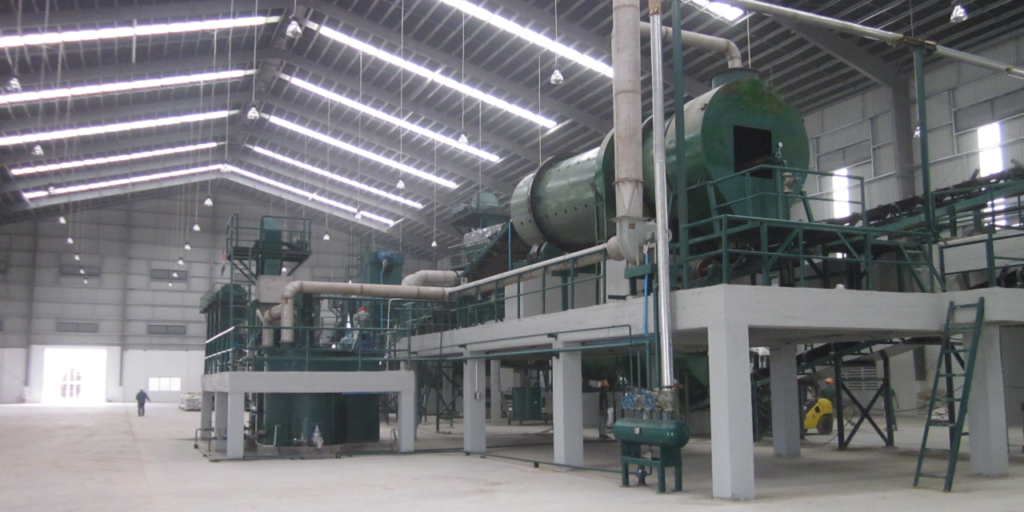
A turnkey solution engineered for high-efficiency, flexible, and eco-friendly production of various NPK, DAP, and MAP fertilizers. Our line integrates robust machinery with intelligent control to ensure superior granule quality and maximum operational ROI.

Compound Fertilizer Production Line Equipment List

Raw Material Feeding System
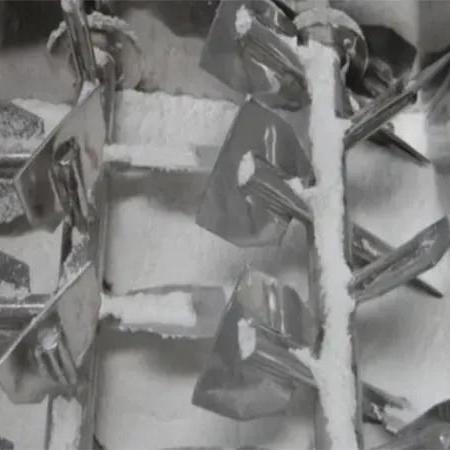
Raw Material Feeding System

Crusher & Mixer

Crusher & Mixer

Granulation Unit

Granulation Unit

Drying & Cooling Machine
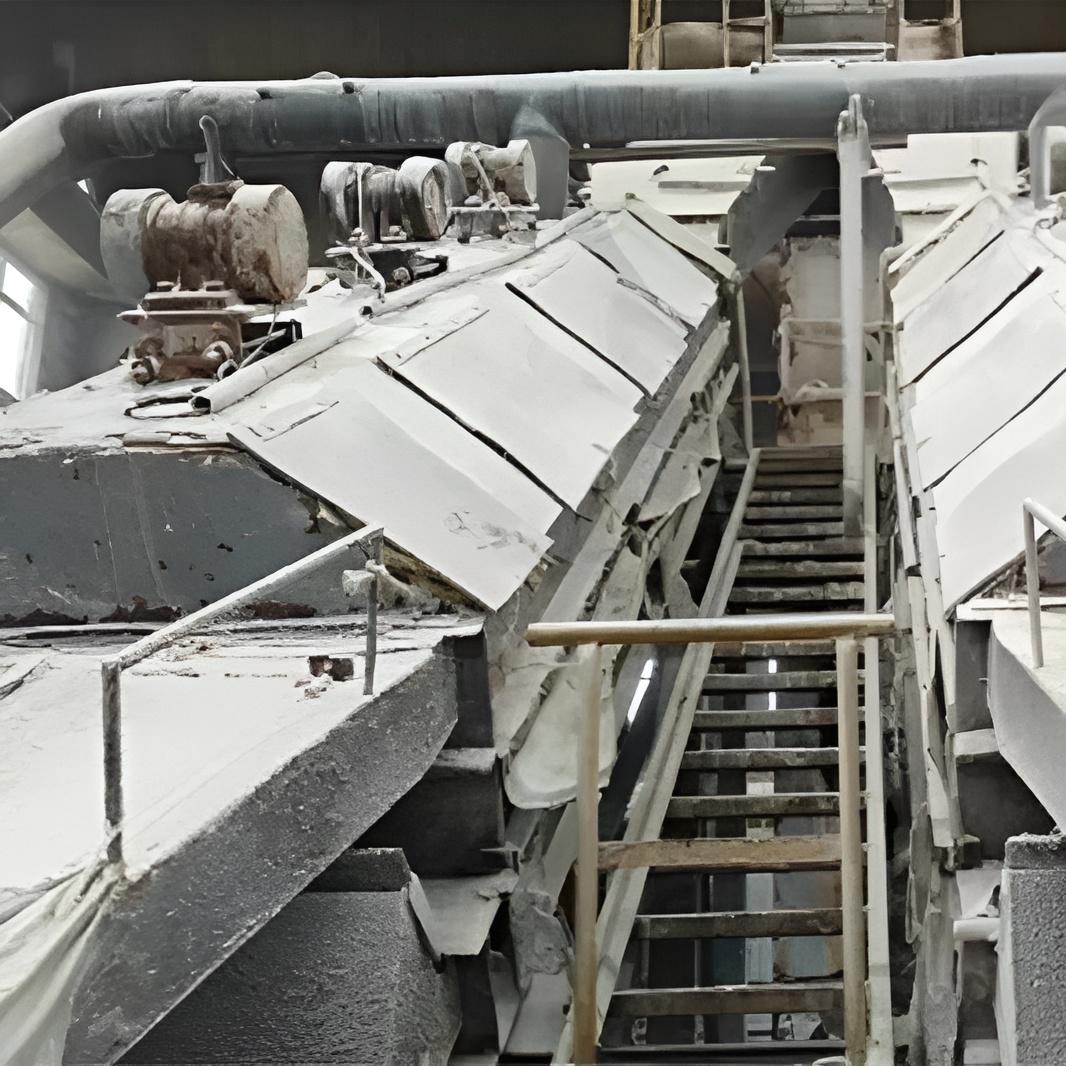
Drying & Cooling Machine

Screening & Recycling System
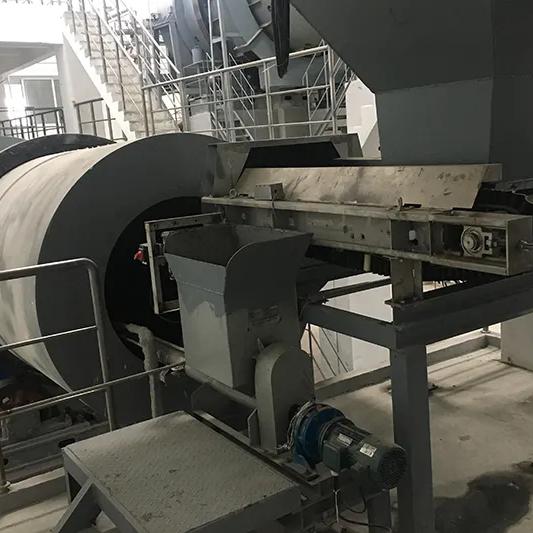
Screening & Recycling System

Coating Machine
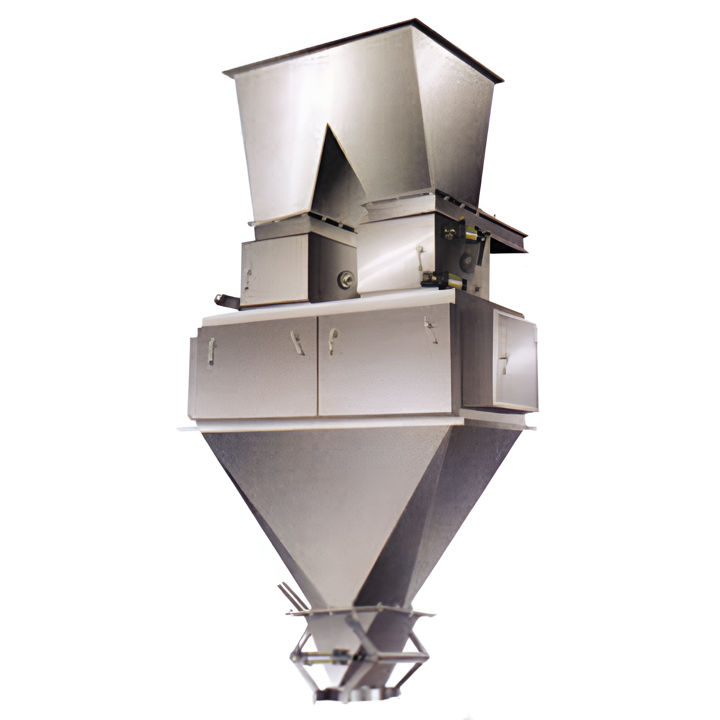
Automatic Packaging Scale

Automatic Packaging Scale

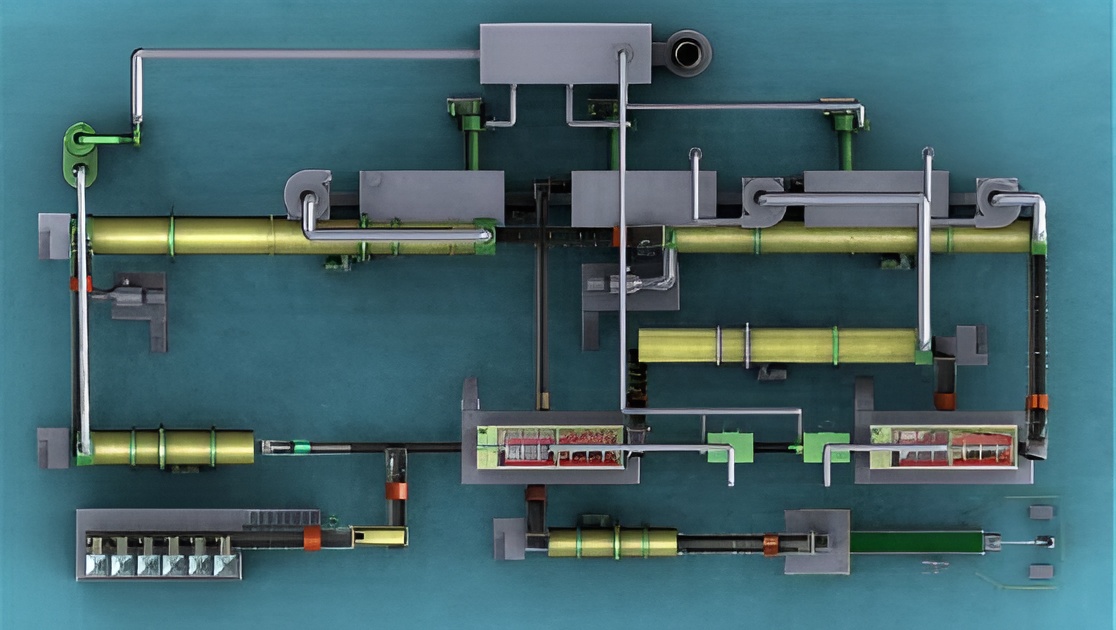
Dust Collection System
Dust Collection System

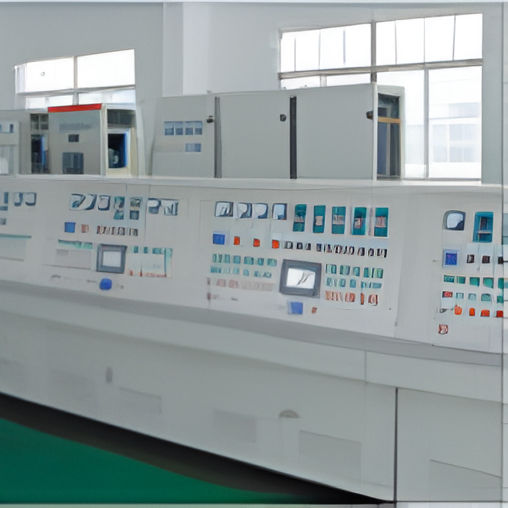
Central Control Panel
Central Control Panel

Compound Fertilizer Production Line Technical Parameters

Parameter

Value / Description

Capacity

10–50 tons per hour (customizable)

Power Consumption

50–300 kW (depending on configuration)

Granulation Rate

≥ 95%

Final Moisture Content

≤ 2%

Particle Size Range

2–5 mm (customizable)

Automation Level

Semi-automatic / Fully Automatic (PLC with SCADA)

Plant Area Required

800 – 3000 m²

Key Material of Construction

Carbon Steel Q235 / Stainless Steel 304 contact parts for corrosion resistance

Raw Materials For Compound Fertilizer Production Line

  • Nitrogen (N) Sources

    Urea, Ammonium Sulfate, Ammonium Nitrate.

  • Phosphorus (P) Sources

    Monoammonium Phosphate (MAP), Diammonium Phosphate (DAP), Single Superphosphate (SSP)

  • Potassium (K) Sources

    Muriate of Potash (MOP), Sulfate of Potash (SOP)

  • Fillers & Carriers

    Dolomite, Clay, or other inert materials

  • Binders (for drum granulation)

    Water, Steam, or chemical binders

  • Coating Agents

    Anti-caking oils, waxes, or polymer coatings

Compound Fertilizer Production Process

Raw materials are automatically conveyed from silos to electronic batching scales via belt conveyors or screw feeders, ensuring precise formula adherence.

Materials are crushed to a uniform fineness and then intensively mixed in a horizontal mixer for 3-5 minutes to achieve perfect nutrient distribution.

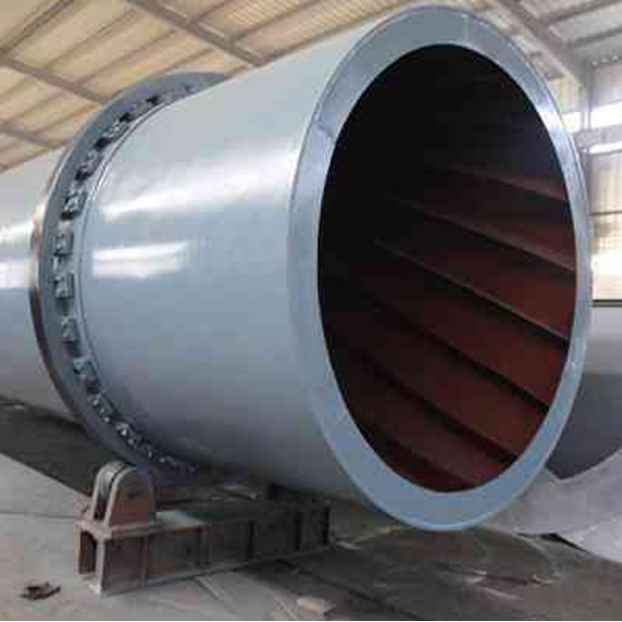
Rotary Drum Granulation: The mixed powder is agglomerated into spherical granules in a rotating drum using a liquid binder (steam/water). The tumbling action forms uniform, round granules.

Double Roller Extrusion Granulation: Dry powder is compressed into dense sheets by two counter-rotating rollers, then crushed and sieved into uniform, irregularly shaped granules. Ideal for heat-sensitive materials.

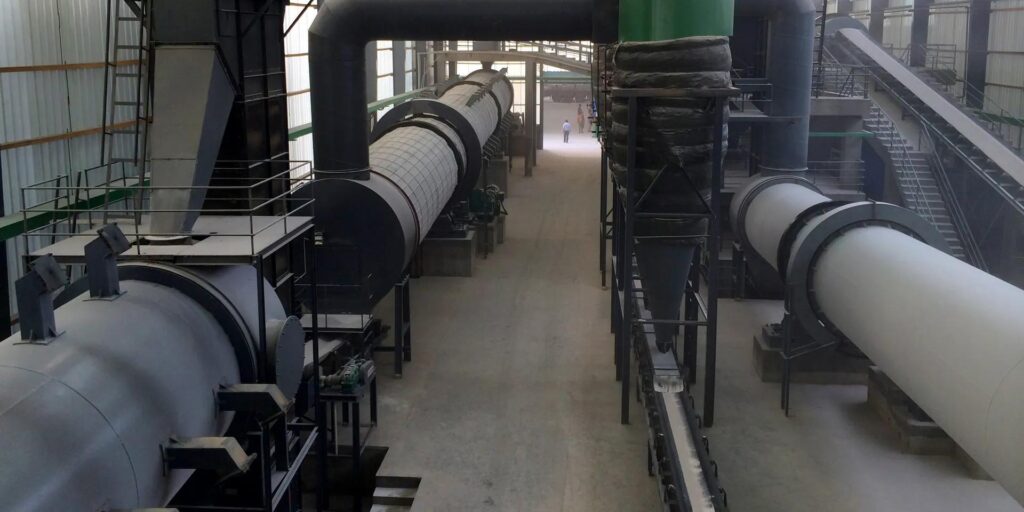
Moist granules are dried in a rotary dryer fueled by hot air to reduce moisture to <2%. They are then cooled in a rotary cooler to ambient temperature to solidify strength and prevent caking.

Cooled granules are classified by a vibrating screen. On-size product proceeds; oversize is crushed and undersize powder is recycled back to the mixer, maximizing yield (>95%).

Qualified granules are coated in a polishing drum with a thin layer of anti-caking agent to enhance flowability, reduce dust, and improve storage stability.

Finished granules are automatically weighed, filled into bags (woven/valve), sealed, and palletized for storage or shipment.

Compound Fertilizer Production Line

Advantages

Unmatched Formulation Flexibility

Produce a vast range of NPK grades (e.g., 15-15-15, 20-10-10) with precise nutrient control. High granulation rate and uniform particle size ensure premium product quality.

Superior Energy & Cost Efficiency

Integrated heat recovery systems redirect waste heat from the cooler to the dryer, cutting thermal energy consumption by up to 25-30% and significantly lowering operating costs.

Built for Durability & Uptime

Critical wear parts (granulator liner, crusher blades) are made from high-chrome alloy or ceramic, ensuring extended service life, minimal maintenance, and maximum production continuity.

Intelligent Plug-and-Play Automation

Centralized PLC control with user-friendly HMI allows for one-stop monitoring and adjustment. Reduces labor dependency and ensures consistent, repeatable quality.

Eco-Compliant Operation

Closed-loop design with efficient baghouse dust collectors and optional odor scrubbers ensures emissions meet strict international environmental and safety standards.